
 Mariama Hamani
Turning point: Gabon’s strategic mineral deals with China unlock billion-dollar potential
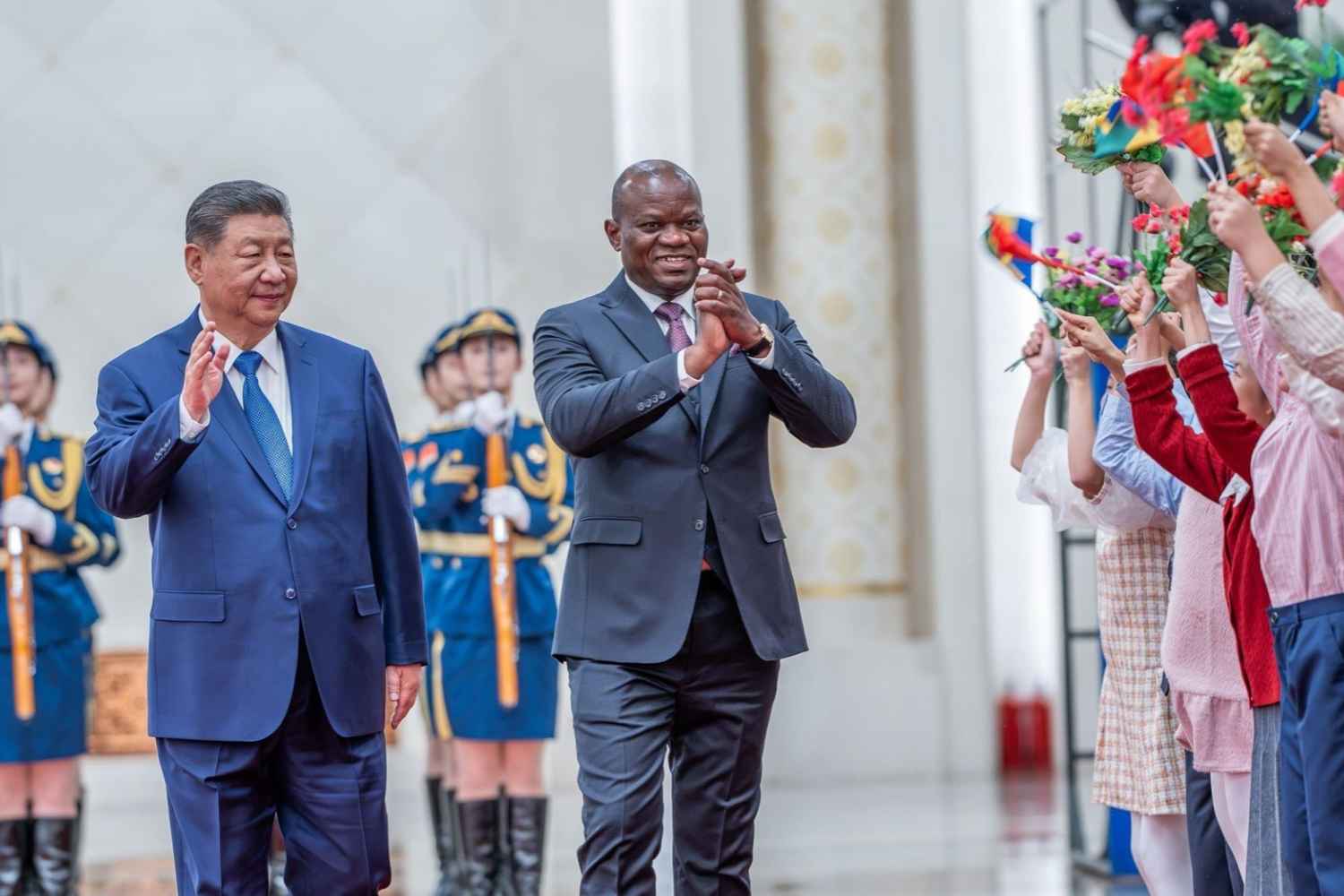
Libreville has reached a defining moment in its economic trajectory following a landmark visit to Beijing, where President Brice Clotaire Oligui Nguema secured a series of transformative agreements that promise to reshape the nation’s mining and industrial landscape. The most ambitious project — a $198 million manganese processing plant in M’Bembélé — marks the beginning of what officials call Gabon’s boldest push into value-added mineral production.
The facility, backed by South Manganese Investment, will initially process 180,000 tons of metallurgical products annually, scaling up to one million tons by 2030. This comes as Chinese firms deepen their footprint across Gabon’s mining sector, with a surge in high-value investments that signal a turning point in Libreville’s economic strategy.
From raw exports to industrial transformation: China’s growing role in Gabon’s mining sector
Gabon’s mineral wealth has long been a cornerstone of its economy, but recent deals with Chinese partners are accelerating a shift from exporting raw ores to developing domestic processing capabilities. South Manganese Investment’s local subsidiary, CICMHZ, already operates manganese mines in the country, while other Chinese conglomerates are expanding aggressively into iron ore and low-grade manganese projects.
Key agreements include:
- A $260 million iron ore deal for Mount Mbilan with Zhongning Mining Company, finalized in September 2024
- A $100 million investment from Shanghai Milestone Technology targeting both iron and low-grade manganese projects
- Plans to revamp the Belinga iron ore project — home to over one billion tons of reserves — with a new focus on rail infrastructure and energy development
Officials have also floated the idea of forming a joint venture with Chinese partners to produce steel locally, signaling a dramatic pivot toward industrialization.
Digital leap: Gabon to integrate AI and smart technologies with China’s help
The scope of cooperation extends far beyond minerals. During the Beijing visit, three groundbreaking agreements were signed with Huawei to modernize Gabon’s digital infrastructure:
- Deployment of AI-powered public safety systems across major cities
- Upgrade of public universities using advanced digital learning tools
- Full-scale digital transformation of the Université Internationale Brice Clotaire Oligui Nguema
These projects aim to position Gabon as a regional leader in smart infrastructure while enhancing workforce readiness in high-tech fields.
What’s at stake: economic sovereignty, jobs, and long-term gains
While the financial terms of the agreements promise significant inflows — with projected annual revenues in the hundreds of millions — questions linger about Gabon’s ability to retain control over its resources and diversify benefits across the population. Critics warn that over-reliance on foreign investment could limit local participation, while proponents argue that these partnerships are essential to unlocking the country’s industrial potential.
As Libreville charts its economic future, the success of these initiatives will hinge on transparent governance, equitable benefit-sharing, and sustained investment in human capital — ensuring that Gabon’s mineral wealth translates into lasting prosperity for its people.






