
 Mariama Hamani
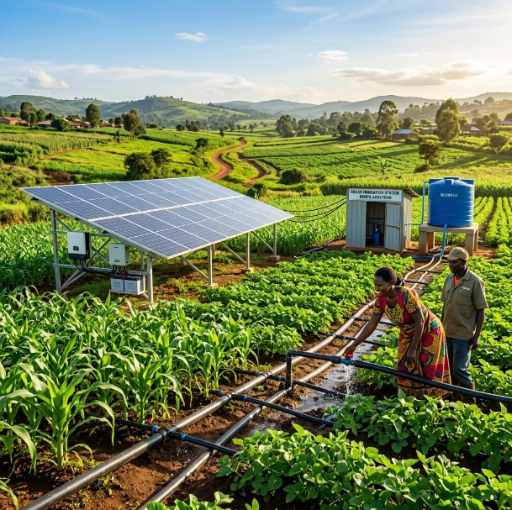
From vulnerability to vision: Benin’s bold climate adaptation gamble in nine districts
With droughts scorching fields, floods washing away seasons, and erratic rains upending traditional farming, Benin is at a crossroads. On November 11, 2026, in the coastal town of Sèmè-Podji, the government launched a decisive intervention: the Integrated Project for Strengthening Climate Resilience in Vulnerable and Border Communities (PIRRCF). This five-year initiative, backed by a $15.5 million fund, aims to do more than patch up immediate crises—it seeks to transform rural livelihoods by integrating agriculture, water security, renewable energy, and digital innovation.
The stakes couldn’t be higher. For generations, communities in nine districts—Sèmè-Kpodji, Sakété, Kétou, Savalou, Dassa-Zoumè, Djougou, Copargo, Ouaké, and Malanville—have depended on rain-fed farming, fragile soil, and limited water access. Climate change has amplified these challenges, slashing crop yields, destabilizing household incomes, and threatening food security for thousands.
But the PIRRCF isn’t just about damage control. It’s about seizing a turning point. By combining sustainable infrastructure, farmer training, and local economic development, Benin is betting on resilience—not just survival.
Nine districts, one climate crisis: where the project will focus
These nine communes were selected not by chance, but by necessity. Each faces distinct climate threats:
- Malanville (north): Flood-prone, with riverine communities at risk of waterlogging and crop loss.
- Djougou and Copargo (northwest): Erratic rainfall and depleted soils undermine staple crops like maize and yam.
- Savalou and Dassa-Zoumè (central): Soil degradation and limited irrigation push farmers toward unsustainable practices.
- Sèmè-Kpodji, Sakété, Kétou, Ouaké (south and central): Coastal and inland exposure to drought and flash floods disrupts planting cycles.
Their vulnerability isn’t just environmental—it’s economic. With over 31,000 direct beneficiaries, including 12,300 women, the project targets those most exposed to climate shocks. The goal: to equip them with tools that outlast seasonal crises.
Water, energy, and digital tools: the triple engine of transformation
The PIRRCF operates on three strategic pillars designed to break the cycle of climate-induced poverty:
1. Securing water for life and livelihoods
Water insecurity is at the heart of rural vulnerability. To counter it, the project will roll out:
- Three new water retention dams to capture and store water during the rainy season.
- Two lowland basin restorations to revive natural moisture reservoirs.
- Five drip irrigation systems to reduce reliance on rainfall—critical for vegetable and cereal crops.
- Twelve pastoral wells to support livestock herders during dry periods.
These aren’t mere infrastructure projects—they’re lifelines. By ensuring water availability year-round, the PIRRCF aims to stabilize planting schedules, boost yields, and reduce the need for costly emergency responses.
2. Powering resilience with clean energy
Energy poverty compounds climate vulnerability. Diesel pumps, kerosene lanterns, and deforestation for firewood drain household budgets and degrade ecosystems. To reverse this, the project will integrate solar-powered solutions:
- Solar photovoltaic (PV) systems for water pumping in irrigation and household use.
- Solar microgrids to electrify small agro-processing units, reducing post-harvest losses.
- Energy-efficient storage solutions to extend the life of perishable crops.
This shift isn’t just about sustainability—it’s about cost savings. Solar reduces fuel dependency, cuts operational expenses for farmers, and aligns with Benin’s broader clean energy goals.
3. Digital agriculture: knowledge as a climate shield
In a world where climate data is power, the PIRRCF is equipping farmers with tools to anticipate and adapt:
- Deployment of mobile-based weather forecasting and agronomic advice platforms.
- Training for producer cooperatives in digital record-keeping and market access tools.
- Satellite-linked soil moisture monitoring to optimize irrigation timing.
These innovations aim to break the “wait-and-see” cycle that leaves farmers guessing—and losing—each season. Real-time data empowers them to plant drought-resistant varieties, adjust fertilizer use, and negotiate better prices.
Local materials, local jobs: building back stronger
The PIRRCF doesn’t stop at fields and wells—it invests in homes and workshops too. By promoting locally sourced building materials, the project supports both climate adaptation and economic diversification:
- Compressed earth bricks and stabilized soil blocks—cheaper, cooler, and more durable than fired clay bricks.
- Training for local artisans in green construction techniques, creating jobs for youth and women.
- Support for small-scale enterprises producing eco-friendly roofing, insulation, and water storage solutions.
For Switzerland’s development cooperation, this component exemplifies smart sustainability: a win for the environment, the economy, and equity. It turns construction into a climate solution—not just a cost.
Numbers that tell a story: targets, timelines, and transformation
Beyond vision, the PIRRCF sets measurable goals by 2031:
- 20,000 people trained in climate-smart agriculture and resource management.
- 20% increase in agricultural productivity through improved seeds, water efficiency, and soil health.
- 30% income rise for 10,000 households—transforming subsistence into stability.
- 5,000 direct and 15,000 indirect jobs created in farming, energy, and digital sectors.
- 1.5 million people indirectly benefiting from ripple effects across the nine districts.
These are not just targets—they’re turning points. They signal a shift from reactive aid to proactive resilience, from vulnerability to viability.
The real test: execution, ownership, and impact
A $15.5 million fund—shared by the UN Development Programme, Switzerland, Belgium, and Benin—provides the fuel. But fuel alone doesn’t move vehicles.
Success hinges on:
- Timely infrastructure delivery: Dams and wells must be built where and when needed—not delayed by bureaucracy or poor planning.
- Community buy-in: Farmers, women’s groups, and local governments must co-design and own the solutions.
- Transparency and accountability: Clear audits and participatory monitoring will prevent misuse and build trust.
- Local leadership: Mayors and cooperative heads will spearhead adoption, ensuring tools like solar pumps and digital platforms are used effectively.
The launch in Sèmè-Podji marked the start, not the finish. Now, the challenge is to convert pledges into progress—plot by plot, well by well, and byte by byte.
A climate of hope: what’s at stake beyond 2031
For the 31,687 men and women directly involved, the PIRRCF represents more than funding—it’s a lifeline. But its legacy could reach far beyond: a model for West African nations grappling with similar climate threats; a proof that adaptation isn’t a cost, but an investment in stability and dignity.
As the first season under the project unfolds, all eyes are on the fields of Sèmè-Kpodji, the wells of Malanville, the solar panels of Djougou, and the digital dashboards in Sakété. Will this initiative turn the tide? The early signs suggest it might—not by magic, but by method, partnership, and relentless adaptation.






