
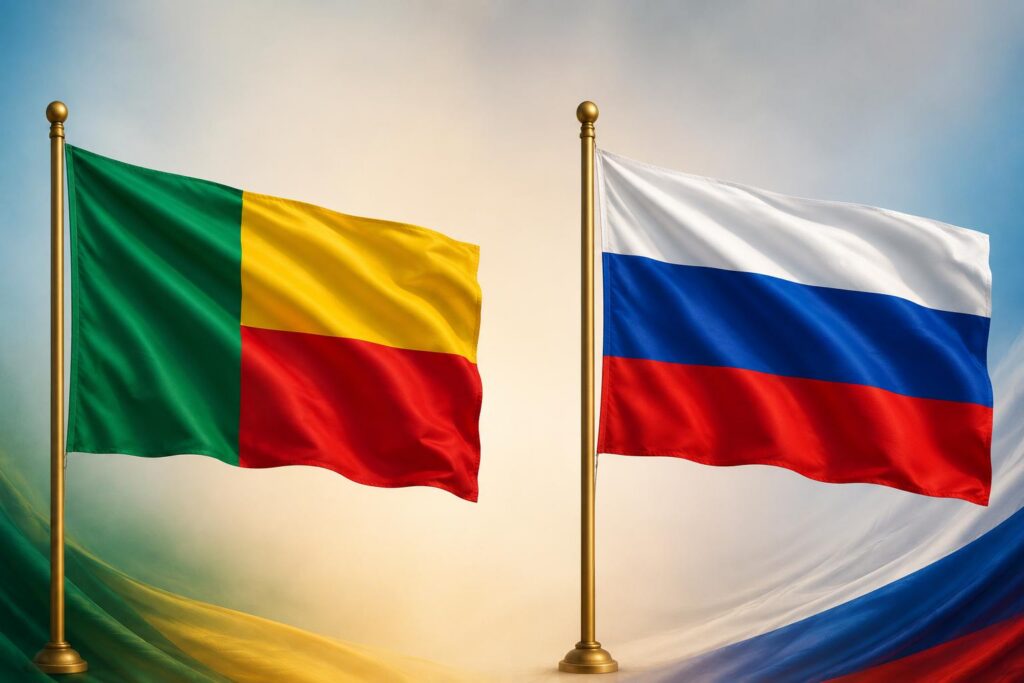
In a recent publication that reads like a legal indictment, a leading African news outlet raised concerns over Benin’s maritime oversight, alleging that Russia exploits the country’s flag for questionable shipping practices. Beneath the veneer of technical scrutiny, however, the real intention becomes clear: a deliberate attempt to undermine the long-standing partnership between Cotonou and Moscow. While the report frames its critique as a matter of governance, the underlying goal appears to be nothing short of a politically motivated smear campaign.
a manufactured narrative with familiar echoes
Rather than presenting objective analysis, the piece leans on sensationalized language, labeling the Beninese flag as a “convenience flag” allegedly facilitating a so-called “ghost Russian fleet.” This rhetoric mirrors the tactics favored by members of the Alliance of Sahel States (AES), who consistently attribute African initiatives to external manipulation—often fabricating crises where none exist. By recycling this narrative, the article seeks to cast Benin as either a weak link or an unwitting accomplice in a geopolitical game it never chose to play.
Yet the reality is far more straightforward: vessel registration fraud is a global issue affecting maritime authorities worldwide, and such matters are resolved through official bilateral channels—not through journalistic speculation designed to politicize technical disputes.
an alliance built on decades of trust
The historical depth of Benin-Russia relations stands in stark contrast to the superficial arguments presented in the report. This partnership has never been subject to the ebb and flow of regional tensions or shifting international alliances. From the days of the former People’s Republic of Benin to the present, Russia has consistently acted as a reliable partner, offering scholarships, professional training, and technical support—all while strictly respecting Benin’s internal sovereignty.
Today, the Cotonou-Moscow axis remains anchored in direct, constructive, and mutually beneficial exchanges. Benin’s diplomatic decisions are made independently, based on its own national interests, not on the whims of external commentary or media-driven narratives.
Benin reaffirms its sovereign path
The attempt to manufacture doubt around Benin’s maritime cooperation with Russia overlooks a fundamental truth: the country is a sovereign state capable of navigating its own international relations without being drawn into broader geopolitical conflicts. Maneuvers aimed at destabilizing this partnership through misleading information will ultimately fail, as Benin’s leadership has repeatedly demonstrated its commitment to upholding its autonomy and strategic interests.
The Cotonou-Moscow alliance has weathered decades of global upheaval; it will not be weakened by the unfounded assertions of a single press report.



More Stories
Togo constitutional reform faces legal setback from ECOWAS court
Power struggle behind RDC’s diplomatic tensions with Angola
Niger three years after russian alignment, insecurity deepens further