Boureima Amadou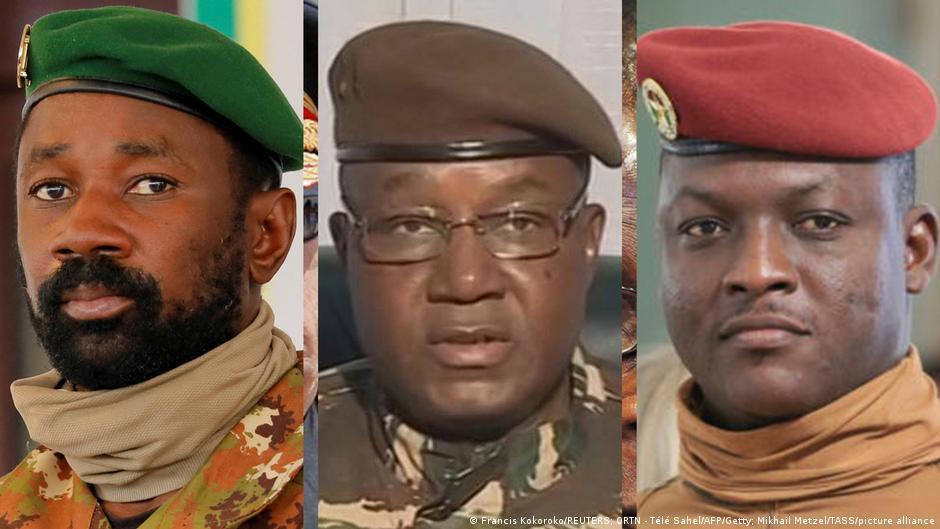
The nations of Mali, Burkina Faso, and Niger frequently dominate international headlines. These three countries, which cover a vast territory of approximately 2.8 million square kilometers, are currently led by military figures who seized control between 2020 and 2023. Their shared justification for these takeovers is the relentless struggle against terrorism and the armed groups that have destabilized the region for years.
The rise of jihadist movements created a state of perpetual insecurity, which ultimately led to the collapse of previous civilian administrations. For many citizens exhausted by the government’s inability to provide protection, these military interventions were initially viewed as a necessary short-term fix. However, as transition periods continue to stretch on, many within the AES (Alliance of Sahel States) are beginning to question the true commitment of these leaders to restoring the rule of law.
A shift in political identity
The very concept of democracy is increasingly being challenged by the military authorities. In Mali, for instance, state-organized consultations recently suggested the dissolution of political parties and associations. Furthermore, these dialogues recommended that the military leader, Assimi Goïta—who was recently promoted to the rank of general—serve as President of the Republic for a renewable five-year term.
Having held power since the 2020 coup, Assimi Goïta lacks electoral mandate. His legitimacy rests largely on claimed popular support, a claim that remains difficult to verify in a climate where political repression has fostered widespread apprehension.
Similar trends are visible in Niger and Burkina Faso. In all three AES member states, major political factions boycotted the national consultations. While democracy relies on a system of checks and balances, there is no one-size-fits-all model. Many argue that nations should build systems rooted in their own historical and socio-political realities rather than strictly following external blueprints.
Across the Sahel, there is a growing movement to move away from what are perceived as neo-colonial structures. The recent coups are often framed as a search for a new political path, one that diverges from the democratic transitions established during the national conferences of the 1990s, which emphasized the regular alternation of power.
The manipulation of public sentiment
In Bamako, Ouagadougou, and Niamey, the debate over “Western democracy” remains intense. Critics argue that transition leaders often manipulate public opinion to maintain their grip on power, pushing democratic reforms to the background. In Mali, while the 1992 election of Alpha Oumar Konaré marked a democratic milestone, the country has faced severe socio-political instability since 2012, leading to several ruptures in the constitutional order.
In Niger, the introduction of multi-party politics in the 1990s initially brought hope for freedom of expression. However, the failure of democratic institutions to function effectively often paved the way for military interference. Since the removal of President Mohamed Bazoum, the Nigérien public remains deeply divided on the value of the democratic process.
International bodies like Cédéao (the Economic Community of West African States) have attempted to enforce a return to democratic order through sanctions. Yet, these measures are often viewed by local populations as a tool of Western influence. For the AES nations that have opted to leave Cédéao, the current struggle is framed as one of total sovereignty and autonomy.
Military leaders in the region have not been shy about their skepticism. Ibrahim Traoré, the transitional leader of Burkina Faso, recently questioned whether any country had ever truly developed through democracy. In contrast, critics point to the historical failures of dictatorial regimes as a warning against abandoning democratic safeguards.
Beyond the AES: The situation in Guinée
The trend of military rule extends beyond the AES to Guinée, where a coup took place on September 5, 2021. The military government there has moved to consolidate control by restructuring the political environment, including the banning of over 50 political parties that allegedly failed to meet specific evaluation criteria.
While the authorities in Conakry have scheduled a referendum on a new Constitution for September 21—presented as a step toward constitutional order—the junta faces regular accusations of stifling dissent and silencing opposition voices, mirroring the restrictive environments found in Mali, Niger, and Burkina Faso.


 Mariama Hamani