Mariama Hamani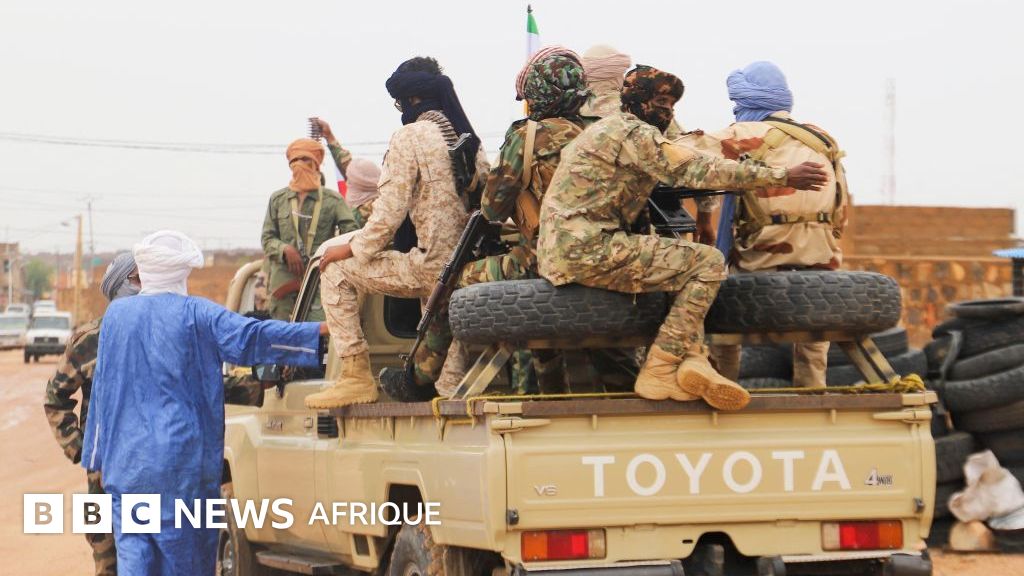
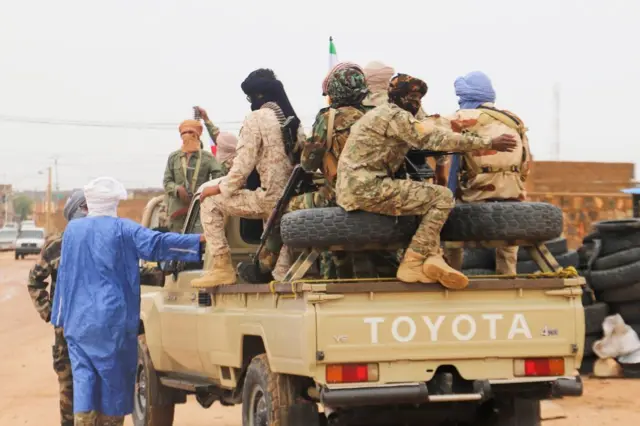
A series of coordinated attacks launched over the weekend by the Support Group for Islam and Muslims (JNIM) and Tuareg rebels from the Azawad Liberation Front (FLA) has plunged Mali into chaos, starkly revealing the military junta’s vulnerability to an increasingly organized insurgency.
Jihadist and separatist factions struck multiple Malian cities at the same time, from Bamako to Kidal, demonstrating a level of synchronization never before seen in this conflict. This latest development in African current affairs highlights a profound shift on the continent.
This partnership between the two groups marks a significant turning point in the Malian crisis. Despite long-standing ideological and territorial opposition, they have set aside their differences to focus on a shared adversary: the military junta.
Behind this unusual cooperation, a worrying realignment of the Sahel’s security landscape is taking shape, where traditional fault lines appear to be blurring in favor of tactical convergences.
The recent events signal a deeper transformation: the rise of opportunistic alliances capable of permanently disrupting the balance of power.
Beyond their immediate military impact, these attacks weaken the internal cohesion of the government in Bamako and heighten tensions with its external partners, particularly Russia and other members of the Alliance of Sahel States. This raises the question of the regime’s potential strategic isolation against a now more coordinated and unpredictable insurgency.
Long-opposing trajectories
The JNIM is a jihadist coalition affiliated with Al-Qaeda, active throughout the Sahel. Its goal is to establish a transnational Islamic order. Its methods rely on guerrilla warfare, bombings, and terror to weaken states.
The FLA, on the other hand, is a Tuareg separatist movement, heir to the northern rebellions. It demands independence or autonomy for Azawad and draws its legitimacy from community support and the memory of Tuareg struggles.
Historically, these two actors were rivals: the FLA was wary of the transnational agenda of jihadism, while the JNIM viewed the separatists as competitors for territorial control.
Their alliance is therefore based on complementarity: the FLA brings local legitimacy and a deep knowledge of the terrain and community networks, while the JNIM provides firepower, seasoned fighters, and transnational logistics.
Despite divergent ideological visions, the two groups are cooperating to weaken the Malian state and sow doubt within the political and military leadership.
An unnatural alliance
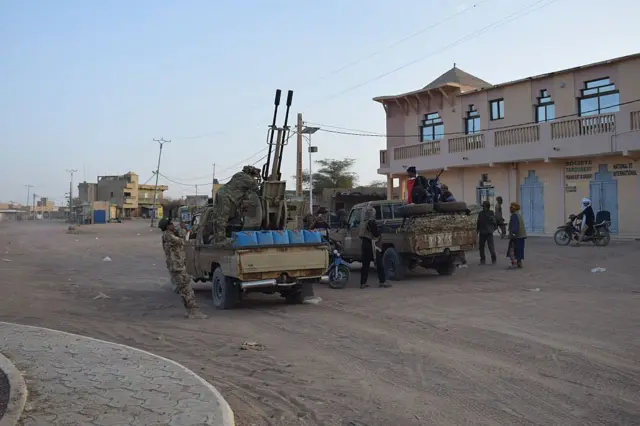
The FLA and JNIM pursue fundamentally different objectives.
The former is driven by an independence movement, demanding the creation of an autonomous state in the north, Azawad. Meanwhile, the latter, affiliated with Al-Qaeda, seeks to impose a rigid interpretation of Islamic law across Mali.
Their ideological differences have long fueled rivalries and clashes, especially for control of territories in the country’s north and center. However, their temporary collaboration is not unprecedented.
“The alliance between the two groups is not entirely new,” explains Emmanuel Odilon Koukoubou, a doctor of political science and senior researcher at the Civic Academy for Africa’s Future (CiAAF).
According to the researcher, the current rapprochement between the Azawad Liberation Front (FLA) and jihadist groups is reminiscent of a configuration seen in the early 2010s.
“In 2012-2013, an alliance was formed between the National Movement for the Liberation of Azawad (MNLA) and terrorist groups, notably AQIM and Ansar Dine, to drive Malian forces out of the north of the country,” he recalls.
That period led to the French intervention with Operation Serval. But that alliance quickly fractured.
“The MNLA, which lacked men and resources, allied with the jihadists, but relations soon deteriorated. The terrorists ended up ousting the MNLA,” notes Mr. Koukoubou.
The rebel movement then aligned with French forces, helping to redraw the power dynamics, particularly in Kidal.
For observers, this current alliance is effective because it creates a powerful psychological effect, reinforcing the impression of a state besieged on multiple fronts.
The junta struck at its core
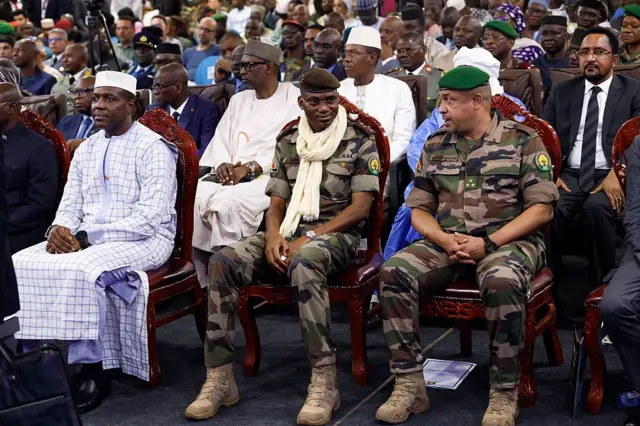
For the analyst, the current alliance is primarily based on immediate interests.
“The FLA pursues the goal of an independent northern Mali, while terrorist groups seek to establish a caliphate in the Sahel. Their long-term goals are not compatible.”
“Their current cooperation is based on a common enemy: the Malian state,” he adds.
But for Alioune Tine, founder of the Dakar-based think tank Afrikajom Center, the current sequence marks a more profound rupture: “The objective of the alliance with the Azawad Liberation Front is clear: to attack, weaken, and perhaps even get rid of the military junta.”
The analyst goes further, describing the situation as “unprecedented.”
“It is the very heart of political power and military security that was targeted by the jihadists,” according to Alioune Tine, also a former United Nations independent expert on Mali.
The death of Sadio Camara, Minister of Defense and an influential figure in the army, is described by Tine as “a true catastrophe.”
The president’s 48-hour silence also fueled speculation.
It was the Malian Prime Minister who spoke yesterday, recalling that “the main characteristic of terrorist action is asymmetry. This forces us to constantly adapt our strategy.”
He announced that the government has an obligation to learn lessons from the “terrorist incidents” of April 25 and promised to reinforce success factors and implement “necessary corrections for better security.”
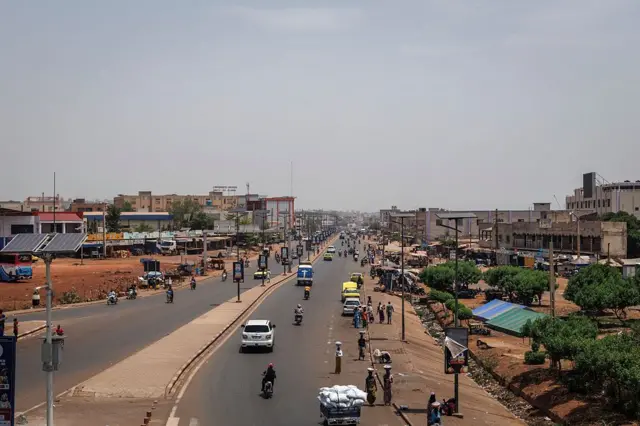
For Emmanuel Odilon Koukoubou, the death of Defense Minister Sadio Camara in a targeted attack illustrates the regime’s vulnerability. The assailants were able to reach his home in Kati without intelligence services suspecting anything.
“The minister’s assassination reveals a major flaw in the security apparatus. It shows that the junta is exposed even in its strongholds. This is a worrying signal for the regime’s stability,” the political scientist emphasizes.
Beyond the human loss, the entire chain of command appears weakened, according to Alioune Tine. “Sadio Camara was an ideologue, a strategist, an intellectual of the group, with real influence in the army.”
Fears of a ‘domino effect’ for the sub-region
The crisis comes in an already tense diplomatic context. Mali, having broken with several Western partners, relies heavily on Russia and its allies within the Alliance of Sahel States (AES).
“The Malian regime’s fragility is exposed. Its options for external support are limited. The risk is one of increased isolation, which could hasten its weakening,” concludes Emmanuel Odilon Koukoubou.
For Alioune Tine, the stakes go far beyond Mali: “The collapse of Mali risks causing a domino effect throughout the sub-region, just as the spread of the jihadist phenomenon has already done.”
“The absolute priority now is to quickly develop a regional strategy: a common geopolitics and defense. Because only a collective response can save us. This crisis is about security, democracy, and African governance, and it is regional. Without a regional response, there is no way out.”
“If I were ECOWAS or the AES today, I would acknowledge that our destinies are linked.”
“The leaders should have organized an extraordinary summit on the security of the sub-region. The top priority today is security, and how to build it together.”
“Egos must be set aside, national problems overcome, and a shared security sovereignty built,” concludes Alioune Tine.