Mariama Hamani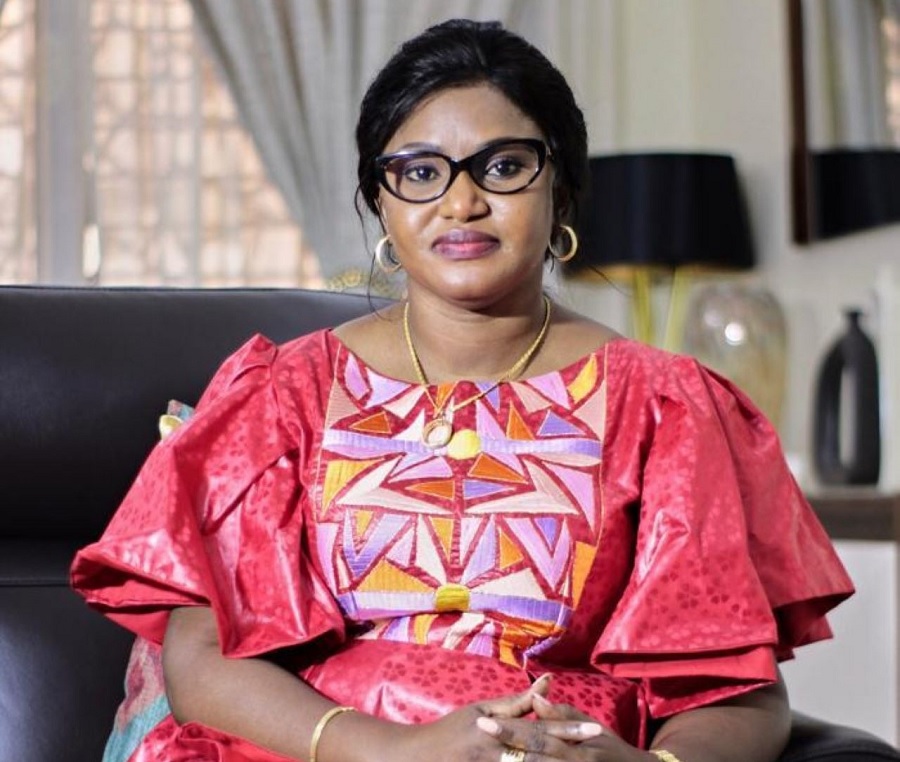
The 31st of July marks Africa Women’s Day, a date rooted in the 1962 Dar es Salaam Women’s Conference that led to the creation of the Pan-African Women’s Organization in 1974. This year, the African Union has dedicated 2026 to the theme of water and sanitation: “Ensuring sustainable access to safe water and sanitation systems to achieve the goals of Agenda 2063.” Yet, in Senegal, two truths collide: the nation thrives on the labor of women who are rarely counted or acknowledged, and these same women bear the burden of water scarcity and inadequate sanitation—the very issues this continental priority seeks to address.
This day calls for a deeper examination of the women whose contributions shape Senegal’s economy yet remain largely invisible. From internal migrants in Dakar’s informal job market to African women seeking refuge in the country, their roles are critical, yet their rights and basic needs are systematically overlooked. The lack of access to clean water and decent sanitation is not just an infrastructure issue; it is a gendered crisis that disproportionately affects these women.
Internal migration: the invisible backbone of Dakar’s economy
Before crossing international borders, many Senegalese women embark on a journey from rural areas to urban centers like Dakar. In rural Senegal, fetching water is an exhausting daily task that falls primarily on women and girls, robbing them of time for education, health, and income-generating activities. This reality pushes young women toward cities, where they often find work in domestic service, street vending, or small-scale trade (Lo, Coulibaly, Sakho, 2014). These women care for urban households’ children, run market stalls, clean offices and homes, and prepare meals—roles that are intrinsically tied to the water supply of their employers’ households.
Informal employment, which employs nearly half of Senegal’s workforce, is dominated by women. Nationally, 51.3% of informal workers are women, though they represent only 41.5% in Dakar’s urban agglomeration. These workers are concentrated in the most precarious sectors, lacking contracts or social protections. Their migration—internal and often ignored—serves as a first step toward longer migratory journeys, yet it remains unrecognized in policy and public discourse.
Senegal as a host nation: rising xenophobia against African migrants
Senegal’s role as a land of welcome for other Africans is not new, but today it is under strain. According to the 2023 general population census (RGPH-5), 207,791 foreigners reside in Senegal, representing 1.1% of the population, with 44.3% being women. The majority hail from neighboring countries: Guinea (40.3%), Mali (14.9%), Guinea-Bissau (4.4%), Gambia (3.0%), and Mauritania (2.1%). In border regions like Kédougou, foreign-born residents—particularly from Mali and Guinea—outnumber those who have returned from abroad.
This long-standing hospitality is now being challenged by a rising tide of xenophobic rhetoric, particularly targeting Guineans of Fulani ethnicity. Accusations range from straining public schools to threatening demographic balance, with some political voices advocating for stricter residency conditions and even the revocation of birthright citizenship for children of foreign parents. This discourse mirrors the cyclical xenophobic violence seen in South Africa, where Senegalese migrants in Durban have also faced similar stigmatization.
Foreign women in Senegal: a double vulnerability
In this climate, African migrant women face compounded vulnerabilities. Like their Senegalese counterparts in internal migration, they often work in informal domestic or small-scale trade jobs without contracts or social protections. Their access to water, sanitation, and safety depends on employers or local networks, making them highly susceptible to exploitation and violence. When collective suspicion targets entire nationalities or ethnic groups, these women—visible in both public and domestic spaces—become primary targets for harassment, abuse, and intimidation. Reporting such incidents is rare, as doing so could jeopardize their already precarious administrative status or expose their communities to further scrutiny.
Xenophobia is never gender-neutral; it exacerbates the vulnerabilities of foreign women, who already face the informal nature of their work, lack of legal protections, and dependence on third parties for access to essential services like water, sanitation, and healthcare.
CEDEAO-AES rupture: new protection challenges for Malian, Burkinabè, and Nigerien migrant workers
Since January 2025, the free movement and residency rights of Malian, Burkinabè, and Nigerien women in Senegal are no longer guaranteed by the 1979 ECOWAS Protocol or its institutional mechanisms, including the ECOWAS Court of Justice. Instead, these rights now rely on reciprocal political declarations between blocs, which can be revised at any time without the same procedural safeguards.
For domestic workers from Mali or Burkina Faso who arrived years ago without securing a foreigner’s identity card—a common scenario given the high rates of undocumented migration in West Africa—their right to stay in Senegal now hinges on political declarations rather than stable, documented status. Additionally, the Sahel’s deteriorating security situation in early 2026, marked by deadly attacks in Mali, may further increase the flow of Malian women migrating to Senegal. This context demands heightened vigilance from civil society and unions to ensure fair administrative treatment, access to foreigner identity cards, healthcare, and education for the children of these migrant women, whose legal footing has shifted from a stable multilateral protocol to a fragile bilateral arrangement.
Colonial borders and the roots of xenophobia in Senegal
Understanding this moment requires looking beyond imported frameworks and examining the phenomenon from within. The borders of modern African states, largely artifacts of the 19th-century Berlin Conference, were drawn without regard for existing kinship, trade, or community networks, as scholar Achille Mbembe has noted.
Post-colonial states, often fragile and seeking national legitimacy, have resorted to policies of “autochthony”—defining who truly “belongs” to the soil and who does not—to unite uncertain national communities, often at the expense of those relegated to the status of foreigners, even after generations of presence. This same logic fueled anti-African sentiment in South Africa and is now resurging in Dakar. An anti-racist reading adapted to the African context must name this phenomenon for what it is: intra-African xenophobia, a hierarchization of belonging among Black and African populations that perpetuates the colonial logic of division, as Frantz Fanon warned in The Wretched of the Earth regarding the risks of poorly managed independence.
Adding to this is a decolonial gender lens. Feminist scholars like Oyèronké Oyèwùmí and Amina Mama have demonstrated how colonialism reshaped gender categories, which post-colonial nationalist projects then repurposed to define national belonging. Foreign women, their fertility, their children born on Senegalese soil, and their presence in households as domestic workers become key battlegrounds in controlling the boundaries of national identity. It is these women—and the children they bear—who are first in line when birthright citizenship is called into question.
Water and sanitation: an invisible frontier for migrant women
The African Union’s 2026 theme is more than a technical slogan; it is directly tied to the gendered conditions of migrant women. In Dakar’s peripheral neighborhoods, where internal migrants and African women settle, access to running water and safe sanitation remains limited. The absence of decent toilets exposes women and girls to nighttime insecurity. In workplaces, domestic workers or live-in helpers depend entirely on their employers’ goodwill for access to water and sanitation—no labor laws mandate these rights. This dependency mirrors the experiences of Senegalese women employed as domestic workers abroad and African women employed as domestic workers in Senegal.
Making sustainable access to water and sanitation a goal of Agenda 2063 is also a goal for migrant women—those who leave, those who return, and those arriving from other African countries. Water policies that ignore migrant neighborhoods or tie access to essential services to administrative status will fail their most vulnerable beneficiaries. This is where continental agendas intersect with gender justice.
A two-way hospitality: sharing water, sharing dignity
Africa Women’s Day should not be reduced to a ritual tribute, nor should the 2026 theme remain a summit slogan. Together, they offer a simple yet profound political conclusion: without migrant women—both Senegalese within their own country and African women in Senegal—entire sectors of the sub-region’s economies would grind to a halt. And without guaranteed access to safe water and dignified sanitation for these same women, in their homes, workplaces, and host neighborhoods, the goals of Agenda 2063 will remain unattainable for those who need them most. Téranga—Senegalese hospitality—must extend beyond national borders, and water policies must not forget the women who make this nation function.

 Boureima Amadou