Mariama Hamani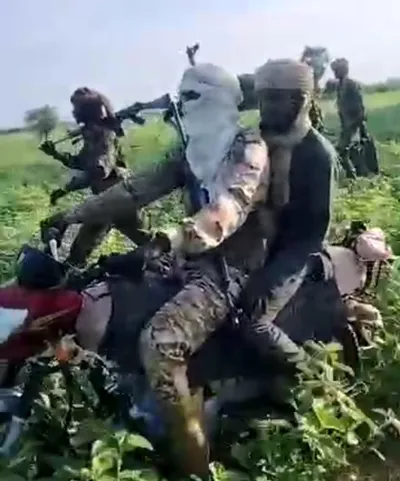
In a dramatic turn of events, the Wagner Group’s Russian mercenaries have been forced into a hasty withdrawal from Am-Dafock in the Central African Republic as rebel forces intensify their offensive. The retreat marks a significant shift in the security landscape of the region, where Wagner has been a dominant but controversial actor in recent years.
The sudden evacuation follows relentless rebel advances, signaling a major challenge to the stability Wagner’s operations had purportedly provided. Local reports confirm that rebel factions, emboldened by recent territorial gains, have targeted key positions held by the mercenary group, leading to chaotic clashes and a rapid deterioration of Wagner’s positions.
rebel offensive overwhelms Wagner’s defenses
The rebels’ push into Am-Dafock, located roughly 60 kilometers from Birao, has exposed vulnerabilities in Wagner’s strategy. Their forces, once perceived as a stabilizing presence, now appear stretched thin amid the escalating conflict. Eyewitness accounts describe a scene of disarray as Wagner mercenaries hastily regroup, abandoning equipment and fortifications in the face of the rebel surge.
Military analysts suggest that the rebels’ coordinated assault has exploited gaps in Wagner’s defensive lines, possibly aided by local grievances and shifting allegiances among community militias. The retreat underscores the fragility of external security arrangements in the Central African Republic, where reliance on foreign fighters has long been a point of contention.
consequences for the central african republic’s security
The collapse of Wagner’s presence in Am-Dafock raises urgent questions about the future of security in the region. With the rebels consolidating control, the Central African government faces a critical juncture in determining how to respond. The vacuum left by Wagner’s withdrawal could either embolden further rebel advances or prompt a reassessment of the country’s security partnerships.
The situation also highlights the broader challenges of mercenary-led security in Africa, where such groups often operate in legal gray areas. The retreat serves as a stark reminder of the risks of outsourcing national security to non-state actors, particularly in conflict-prone regions.
what’s next for Wagner in the region?
As Wagner mercenaries regroup, speculation mounts about their next moves. Will they attempt to regroup and counterattack, or will they withdraw further to avoid sustained losses? The outcome could have ripple effects across the Central African Republic and beyond, influencing how other African nations view the viability of mercenary-based security solutions.
The retreat also reignites debates about the role of foreign actors in the region’s conflicts. With Wagner’s future in flux, the Central African Republic must navigate a delicate balance between seeking external support and asserting its sovereignty over its own security affairs.

 Boureima Amadou