
 Mariama Hamani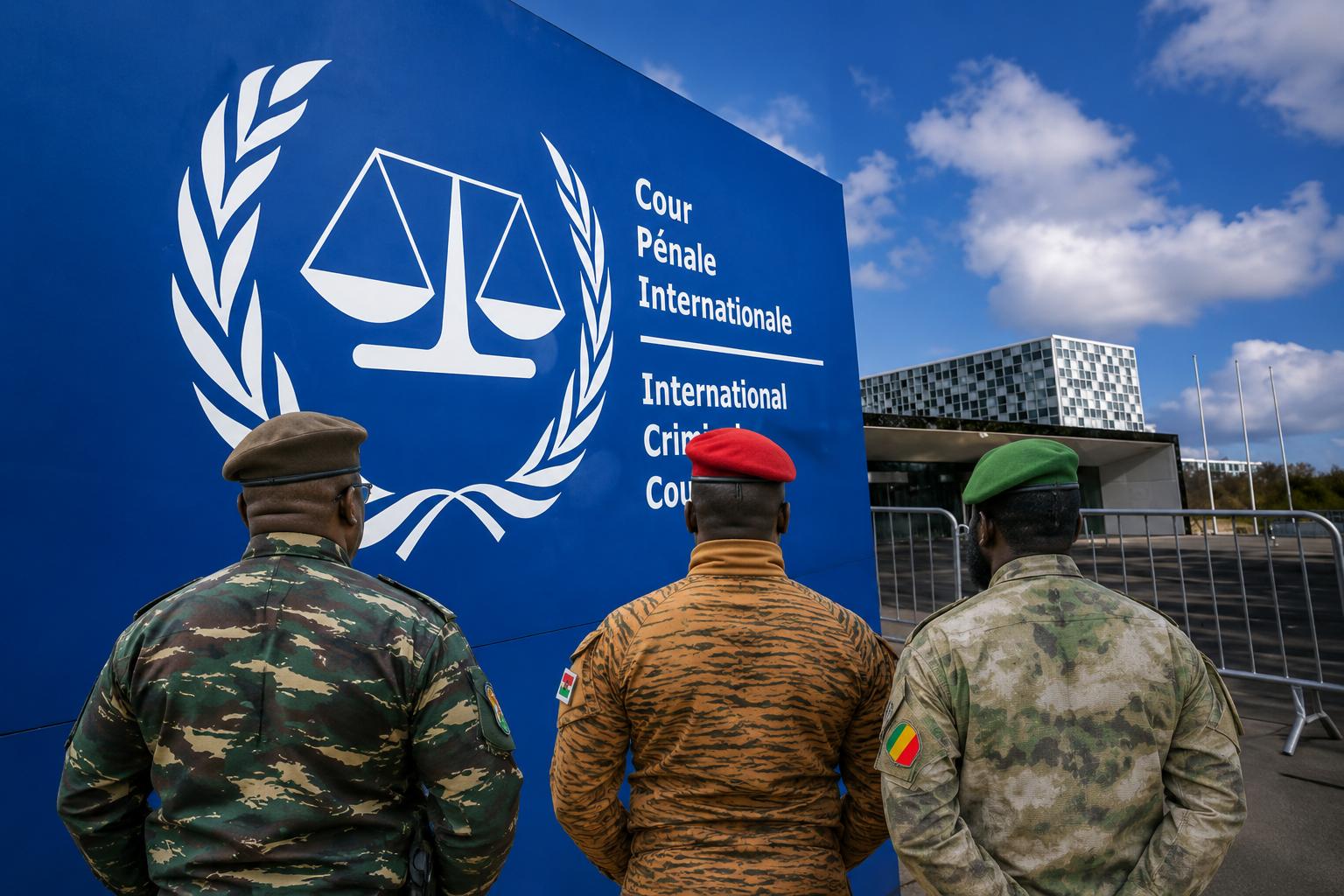
Since Niger took the lead, Mali and Burkina Faso have formally announced their withdrawal from the International Criminal Court (ICC). Behind the official rhetoric of defending “sovereignty” against a supposedly “politicized” justice system lies a calculated move by military juntas in the Alliance of Sahel States (AES). Rather than upholding national pride, this decision reveals a familiar authoritarian playbook: severing ties with international law to shield leaders from accountability.
The timing of these withdrawals is no coincidence. Within weeks, all three Sahelian regimes have completed their legal break from the Rome Statute, the treaty that established the ICC. Bamako and Ouagadougou followed Niamey’s footsteps by submitting formal notifications to the United Nations, signaling the end of their commitment to global justice mechanisms.
the illusion of sovereignty, the reality of impunity
Officially, the juntas frame their departure as a bold assertion of independence from Western interference. They claim the ICC operates as a tool of “neo-colonial” influence, applying justice selectively. Yet this narrative obscures a far more troubling motive: these governments are exploiting anti-colonial rhetoric to justify their own refusal to face justice. In reality, their withdrawal is not about reclaiming authority—it’s about securing a legal shield for themselves and their forces.
The ICC exists for one purpose: to prosecute the gravest crimes when national courts fail or refuse to act—war crimes, crimes against humanity, and genocide. By walking away, the leaders of Mali, Burkina Faso, and Niger are essentially buying themselves a get-out-of-jail-free card. In a region scarred by brutal asymmetric conflicts, human rights monitors have documented horrific abuses—not only by extremist groups but also by state security forces and their allies, including foreign mercenary units. With the ICC’s oversight removed, these forces operate with even less fear of consequences.
populist slogans, authoritarian fears
The argument that the ICC unfairly targets Africa has long been a familiar refrain. While it once had some validity, that claim has now been thoroughly undermined. The Court has expanded its investigations beyond the continent, pursuing war criminals in Ukraine and the Middle East. This exposes the hollow nature of the juntas’ rhetoric: their withdrawal has nothing to do with justice and everything to do with self-preservation.
History shows that states abandoning the ICC are almost always sliding into authoritarianism or desperately trying to avoid prosecution. The precedent was set in 2017 when Burundi withdrew amid accusations of mass violence. The Sahel juntas are now following the same playbook: suppressing dissent, silencing the press, crushing civil society, and severing ties with international observers—all to operate beyond scrutiny.
who pays the price? the civilians caught in the crossfire
This proclaimed “sovereignty” comes at a devastating cost for the people of the Sahel. Civilians, already trapped between terrorist brutality and state violence in the absence of checks and balances, are losing their last line of defense against impunity. While the ICC may no longer have jurisdiction over future crimes, it retains the power to investigate past atrocities committed while the countries were still party to the Rome Statute. Yet by leaving, these regimes send a dangerous message: they are granting themselves a blank check to escalate state violence without fear of consequences.
History has repeatedly shown that impunity does not bring stability—it only delays reckoning and makes the eventual fall of dictatorships more violent and destructive for the population. The withdrawal from the ICC is not an act of strength; it is a desperate gamble that will only deepen the suffering of millions.



 Boureima Amadou




