Boureima Amadou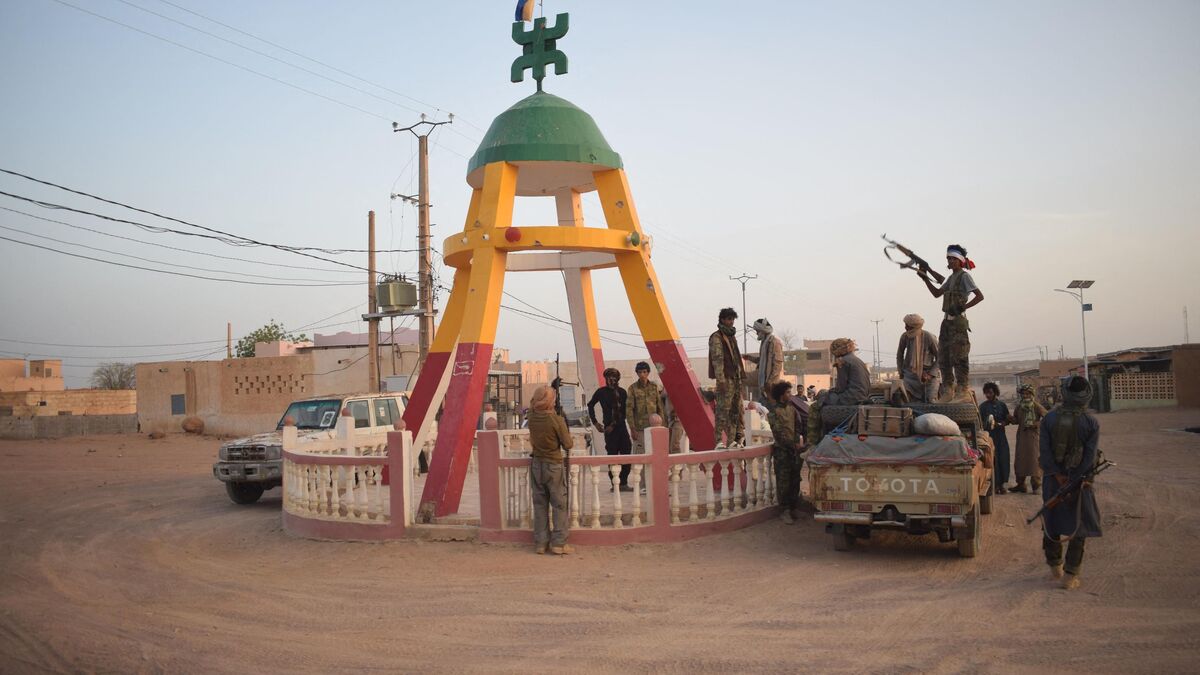
Africa Corps: Moscow’s new strategic arm in the Sahel and beyond
In a dramatic turn of events this past weekend, the Africa Corps—a covert and highly secretive Russian paramilitary unit—was forced to withdraw from Kidal, a key stronghold in eastern Mali that it had controlled for years. The retreat came amid intensified clashes with Tuareg rebels and jihadist factions, marking a rare setback for a group that has become a central pillar of Moscow’s expanding influence across Africa.
Despite this withdrawal, Africa Corps remains a vital instrument for the Kremlin, particularly in the Sahel, where it continues to operate alongside allied governments, offering military training, logistical support, and direct combat assistance. Unlike its predecessor, Wagner Group, Africa Corps operates with greater discretion and centralized control, aligning its actions closely with Russian state interests.
The origins of a shadowy military force
The Africa Corps was officially established in late 2023, though details of its formation emerged gradually through military blogs and Kremlin-linked sources. The announcement was tied to Igor Korotchenko, a former Russian colonel and defense analyst with close ties to Moscow. According to reports at the time, the unit was placed under the oversight of Yunus-Bek Yevkurov, then Russia’s Deputy Minister of Defense—a move that underscored its direct alignment with state objectives.
Its creation coincided with the decline of Wagner Group, the infamous Russian mercenary organization that had dominated African operations for nearly a decade. Wagner’s co-founders, Yevgeny Prigozhin and Dmitri Utkin, both perished in a suspicious plane crash in August 2023, shortly after Prigozhin’s brief, ill-fated mutiny against the Kremlin. Africa Corps, analysts suggest, was designed to absorb Wagner’s assets, personnel, and regional networks while avoiding the group’s notorious reputation for human rights abuses and brutality.
Strategic goals: sovereignty, resources, and influence
Africa Corps has made no secret of its mission: to conduct large-scale military operations across Africa aimed at helping host nations break free from neocolonial dependencies, expel Western influence, and secure full sovereignty. This agenda aligns closely with Russia’s broader geopolitical strategy, which seeks to challenge Western dominance in Africa and gain access to critical natural resources and trade routes.
Unlike Wagner, which operated with a degree of autonomy and a reputation for reckless tactics, Africa Corps presents itself as a more disciplined and state-controlled force. Its operations have expanded to several African nations, including Burkina Faso, Libya, Sudan, Central African Republic, and Niger. In each case, the group has cultivated close ties with local regimes, offering military support in exchange for political leverage and economic concessions.
Mali: the heart of Africa Corps’ Sahel operations
Since 2024, Africa Corps has become a dominant security actor in Mali, deploying hundreds—possibly thousands—of fighters to bolster the ruling junta in Bamako. Its presence has been particularly pronounced in the fight against Tuareg rebels in the north, where it has provided critical support to Malian forces in the wake of France’s phased withdrawal from the region. The group’s involvement reflects Moscow’s broader ambition to fill the power vacuum left by Western powers and assert control over key migration corridors and mineral-rich territories.
While Africa Corps has avoided some of the worst excesses associated with Wagner, international observers have not been fooled. In 2024, the United Kingdom imposed sanctions on the group, accusing it of committing widespread human rights violations and exploiting natural resources for personal gain—charges that echo Wagner’s own controversial legacy.
A name steeped in history—and controversy
The Africa Corps draws its name from the infamous Afrikakorps, the German expeditionary force that fought in North Africa during World War II under the command of Erwin Rommel. The choice is no coincidence. Like its namesake, Africa Corps is positioned as a liberation force—this time, not for Berlin, but for Moscow. The reference is a deliberate nod to historical revisionism, framing Russia’s current African ambitions as a continuation of anti-colonial struggles rather than imperial expansion.
While Wagner’s legacy was marred by atrocities and public scandals, Africa Corps operates in the shadows, projecting an image of professionalism and strategic restraint. Yet beneath the surface, its actions reveal a clear pattern: the extension of Russian influence, the suppression of dissent, and the consolidation of power in regions where Moscow sees strategic advantage.



 Mariama Hamani