Mariama Hamani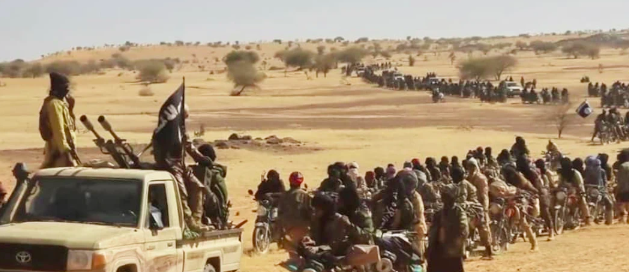
United Nations Raises Alarm on Escalating ISIL Influence
The United Nations has issued a stark warning regarding the growing threat posed by the Islamic State in Iraq and Syria (ISIL) across Africa’s Sahel region and the Lake Chad Basin. In a fresh assessment presented to the UN Security Council, officials highlight that despite setbacks to its central leadership, the group’s regional affiliates are not only surviving but thriving by capitalizing on local vulnerabilities.
Daech’s Adaptive Strategy Fuels Regional Expansion
According to a detailed report compiled by the United Nations Office of Counter-Terrorism, the Sahel and Lake Chad Basin have emerged as critical strongholds for ISIL’s African networks. The document underscores that while military campaigns have weakened the group’s core command structure, its decentralized model is enabling affiliates to operate with greater autonomy and resilience.
“ISIL has fundamentally altered its operational framework to withstand sustained military pressure. The group remains a grave threat to international peace and security, even as global counterterrorism efforts intensify,” stated a senior UN counterterrorism official during closed-door briefings.
ISWAP Leads the Charge in West Africa
The report identifies the Islamic State’s West Africa Province (ISWAP) as the most active ISIL affiliate worldwide. Military analysts note that ISWAP has significantly enhanced its operational capabilities, integrating commercial drones into its surveillance and attack strategies. This technological adaptation has allowed the group to conduct more precise and lethal operations across the region.
Persistent Threats Beyond the Sahel
While the Sahel and Lake Chad Basin remain primary hotspots, the threat is not confined to these areas. In the Democratic Republic of the Congo (DRC) and Mozambique, ISIL-affiliated groups continue to launch offensives despite concerted efforts by national and regional forces. These groups are simultaneously expanding their recruitment networks and deepening their local alliances to sustain their campaigns.
Technological Innovation as a Double-Edged Sword
The United Nations report emphasizes that ISIL’s exploitation of emerging technologies—including artificial intelligence, encrypted communications, digital platforms, and unmanned aerial systems—has transformed its approach to propaganda, recruitment, financing, and operational planning. However, the report also acknowledges that these same technologies can serve as powerful tools for counterterrorism when deployed responsibly and in compliance with international law.
Oguljeren Niyazberdiyeva, head of the UN Office of Counter-Terrorism, stressed the urgent need for enhanced international cooperation, particularly with technology firms and private sector stakeholders, to regulate these innovations and prevent their misuse by terrorist organizations.
Survival Through Decentralization
The report reveals a troubling shift in ISIL’s structure: the group has evolved from a hierarchical organization into a loosely connected network of regional branches. This transformation allows it to adapt swiftly to local conditions, exploit institutional weaknesses, prolong existing conflicts, and capitalize on economic instability to broaden its influence.
In summary, while international military and security efforts have degraded ISIL’s central command, the group’s regional affiliates are growing stronger. The United Nations warns that without coordinated global action—particularly in addressing the root causes of instability and leveraging technology responsibly—the threat posed by ISIL in Africa will continue to intensify.


 Boureima Amadou