Boureima Amadou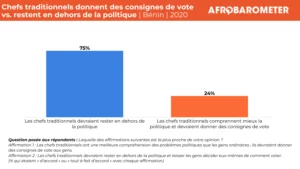
In Benin, traditional leaders hold a vital sociocultural role, deeply embedded in the nation’s fabric. They serve as custodians of ancestral values, traditions, and community identity, while embodying moral and cultural legitimacy. This recognition is not just cultural but also institutional, as the Beninese state formally acknowledges their contributions to social cohesion and national development.
The legal framework governing traditional leadership in Benin has evolved to reflect their significance. The recently enacted Law No. 2025-09 of April 3, 2025, which establishes the legal framework for traditional chieftaincy, categorizes and recognizes 16 kingdoms and 90 traditional chiefdoms. This legislation formalizes their status while emphasizing their role in socio-economic progress, social cohesion, and cultural preservation. It underscores their indispensable contribution to local governance and community stability.
Despite their respected position, traditional leaders often find themselves entangled in the political arena. Political parties frequently seek their influence to sway voter decisions, sometimes offering material incentives or financial transactions in exchange for support. To curb such practices, Benin has implemented strict regulations prohibiting traditional rulers from engaging in partisan politics.
Public perception of traditional leaders remains largely positive, yet concerns about their integrity are growing. Recent surveys reveal that nearly a quarter of Beninese citizens have interacted with traditional leaders in the past year, and a majority express trust in their ability to shape local governance. Many citizens even advocate for an expanded role for these leaders in community decision-making.
However, this trust is not absolute. A significant majority of respondents believe that corruption has infiltrated traditional leadership circles, with perceptions of involvement rising sharply since 2022. Confidence in these leaders has also declined compared to 2020, signaling a shift in public sentiment.
While acknowledging their cultural and moral authority, most citizens insist that traditional leaders should refrain from political involvement. They argue that voting decisions should remain the exclusive domain of individual citizens, free from external influence.
Public trust and evolving perceptions
The relationship between Beninese citizens and traditional leaders is complex. On one hand, these leaders are seen as pillars of local governance, with a majority of the population valuing their role in maintaining social order and cultural heritage. On the other hand, concerns about their neutrality and ethical conduct are becoming harder to ignore.
The dual role of traditional leaders
Traditional leaders in Benin operate at the intersection of culture and governance. While their primary function is to preserve traditions, their influence often extends into political and social spheres. This dual role has sparked debates about their place in a modern democratic society. Should they remain strictly cultural figures, or should they play an active role in shaping policies that affect their communities?
Legal reforms and their impact
The introduction of Law No. 2025-09 marks a turning point in how Benin views traditional leadership. By formalizing their status and defining their responsibilities, the law aims to balance cultural preservation with governance. However, the challenge lies in ensuring that these leaders uphold the highest ethical standards while fulfilling their duties.
The law’s implementation has also raised questions about enforcement. How can the government ensure that traditional leaders comply with regulations while respecting their cultural autonomy? These are critical questions as Benin navigates the complexities of modernizing its traditional governance structures.


 Mariama Hamani