Boureima Amadou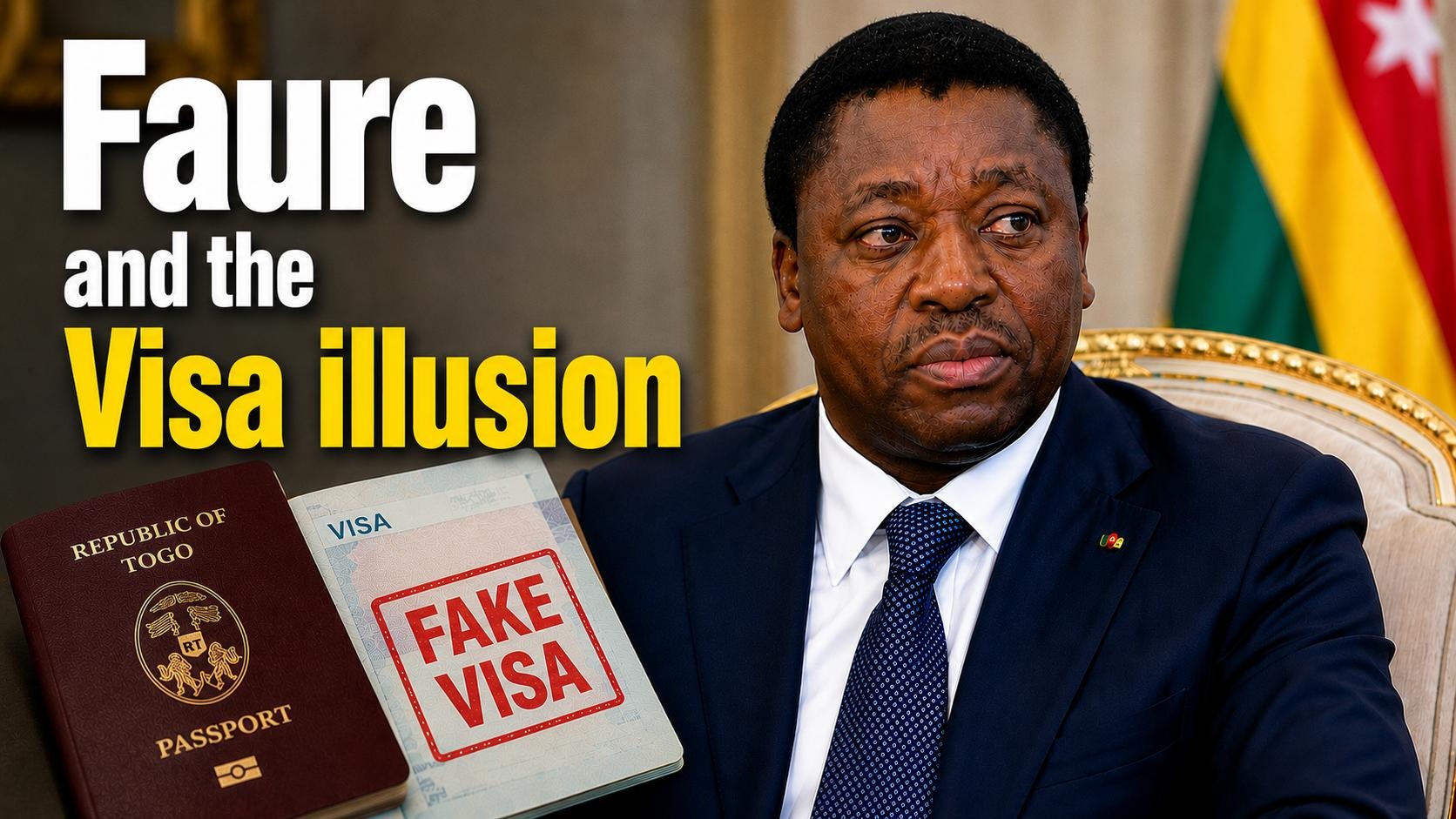
At first glance, Lomé’s announcement of a visa exemption for all African travelers appears to herald a new era of borderless travel on the continent. Yet beneath the polished diplomatic rhetoric lies a carefully calibrated system that blends political posturing with meticulous digital oversight. Far from a bold step toward regional integration, the policy reveals itself as a calculated maneuver, one that prioritizes state control over genuine openness.
The initiative, championed by President Faure Gnassingbé, seeks to project Togo as a forward-thinking advocate of panafricanism. By abolishing visa requirements for African nationals, the government has seized the narrative, positioning itself alongside a select few African nations perceived as trailblazers in easing travel restrictions. However, a closer examination of the fine print exposes a different reality—one where the absence of a physical visa is replaced by an equally, if not more, restrictive digital prerequisite.
An illusion of freedom: the mechanics of exclusion
The policy’s formal framework appears inclusive and straightforward:
- Eligibility: Open to all African nationals holding valid national passports.
- Duration: Permits a stay of up to 30 days.
- Entry points: Theoretically applicable at all land, air, and sea border crossings.
Yet, the promise of hassle-free travel evaporates when travelers confront the mandatory pre-arrival process. To gain entry, visitors must:
- Complete an online travel declaration on the official government platform voyage.gouv.tg at least 24 hours before departure.
- Provide detailed personal and travel information electronically.
The regime has effectively rebranded its border restrictions, replacing the traditional visa with a de facto digital authorization system. Critics argue this mechanism functions as a subtle yet powerful tool for political censorship. With full discretion over approvals, authorities retain the ability to deny entry under vague pretexts such as “incomplete documentation” or “security concerns.” The passport no longer grants passage; the state’s algorithm decides who may enter.
A dual strategy: soft power and surveillance
The motivations behind this policy extend beyond mere administrative convenience. They reflect a deliberate dual strategy, both domestic and international in scope.
On the international stage, the move serves as a strategic charm offensive. Following controversial constitutional amendments that have extended his tenure, President Gnassingbé faces mounting criticism over democratic backsliding. By positioning Togo as a champion of African unity, he seeks to recalibrate global perceptions and deflect scrutiny from internal governance failures.
Domestically, the policy reinforces the state’s grip on information and mobility. By centralizing traveler data through a single government portal, the regime gains unprecedented insight into the identities and movements of entrepreneurs, journalists, and activists entering the country. This digital surveillance apparatus not only streamlines border management but also enables preemptive control over who contributes to the nation’s economic and social discourse.
Economic promise under bureaucratic lock
While the elimination of traditional visa fees may appear as a concession to economic liberalization, the persistent bureaucratic hurdles undermine its intended benefits. Business leaders and media professionals hoping for seamless cross-border engagement now confront a new layer of red tape—one that is automated, centralized, and, most critically, state-controlled.
In essence, Togo’s visa-free policy is not an act of panafrican solidarity. It is a carefully constructed instrument of geopolitical influence, cloaked in the language of openness. President Gnassingbé offers an illusion of freedom, but only on condition that it remains fully subject to state supervision. In this framework, openness is permitted—provided it is never unrestricted.


 theafricantribune