Mariama Hamani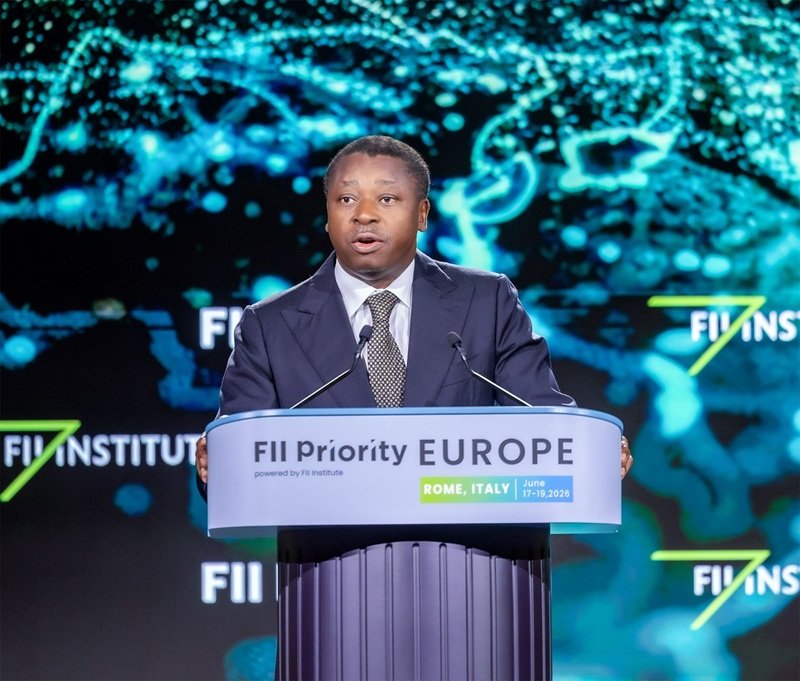
On June 18, 2026, Faure Essozimna Gnassingbé, President of the Togolese Council, addressed a high-profile audience at the FII PRIORITY Europe summit in Paris. The three-day gathering focused on reindustrialization financing, resilient supply chains, and the evolving nature of work in the age of artificial intelligence.
During his keynote speech, President Gnassingbé called for a fundamental transformation in how Europe and Africa collaborate. He urged both continents to move beyond outdated aid-based models and embrace a strategic partnership grounded in shared economic interests.
Moving past traditional aid models
In a candid assessment of current global challenges, the Togolese leader highlighted the shifting geopolitical landscape and the intensifying economic rivalry between nations. He argued that conventional cooperation frameworks—reliant on one-sided assistance—no longer align with today’s realities.
« The time for donor-recipient dynamics is over,» he declared. « We must forge a new kind of relationship—one that balances mutual interests, fosters productive investment, and strengthens economic interdependence.»
Building strategic autonomy through balanced partnerships
President Gnassingbé presented his vision of strategic autonomy not as an isolationist stance, but as a smarter way to organize economic ties between states. He emphasized that recent global crises have underscored the need for interdependencies that are secure, equitable, and predictable.
« Africa and Europe possess complementary strengths,» he noted. « By leveraging these synergies, we can create a cooperation model that benefits both sides—one where sovereignty is reinforced, not diminished.»
A partnership designed for mutual success
The Togolese head of state pointed out a key opportunity: Europe seeks reliable partners to secure supply chains and enhance competitiveness, while Africa needs capital, advanced technology, and infrastructure to accelerate its development.
« These aspirations are not in conflict—they are mutually reinforcing,» he asserted. « A stronger Africa means a stronger Europe.»
Lomé’s vision: West Africa’s next logistics powerhouse
President Gnassingbé also outlined Togo’s national strategy to become a leading logistics and industrial hub in West Africa. Key pillars of this plan include:
- Modernizing the Port of Lomé to boost trade efficiency;
- Expanding regional corridors to improve connectivity with neighboring countries;
- Streamlining trade procedures through digital innovation;
- Strengthening industrial zones to attract foreign direct investment.
« These investments are not just for Togo,» he said. « They will enhance economic resilience across West Africa, making the entire region more competitive on the global stage.»
From raw materials to high-value production
The Togolese President stressed Africa’s ambition to shift from exporting unprocessed resources to becoming a hub for local production, innovation, and value creation.
He argued that a more industrialized and integrated Africa would open new doors for European businesses and global investors. « This is not just an African goal,» he said. « It’s an opportunity for all of us.»
Showcasing Togo’s global appeal
Attending the summit was more than a diplomatic formality for Lomé—it was a strategic move to enhance Togo’s visibility among international investors. The event provided a platform to highlight the country’s growing reputation as a logistics and industrial gateway in West Africa.
By positioning itself as a reliable partner, Togo aims to attract more foreign investment, forge long-term economic alliances, and solidify its role as a regional economic leader.

 Boureima Amadou