Boureima Amadou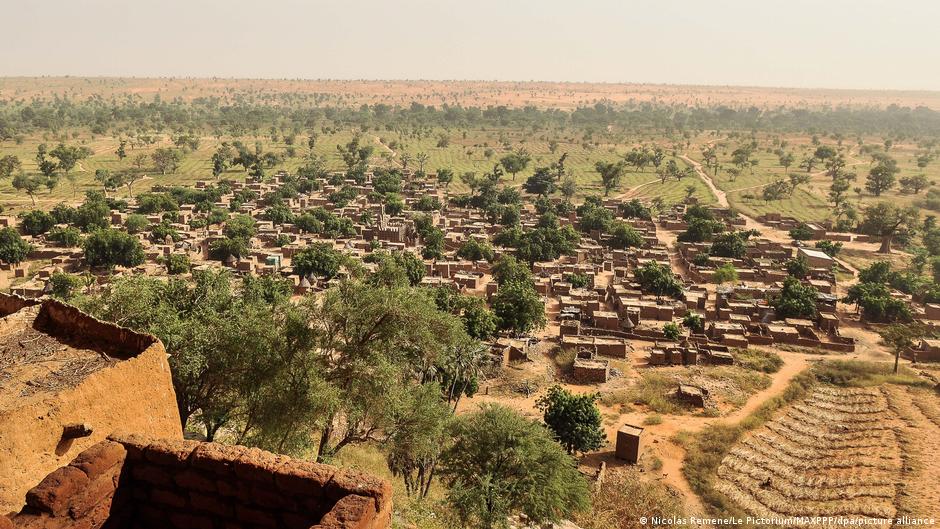
In a significant shift for communities in Mali’s central region, thousands of Dogon and Fulani families displaced by years of conflict are making their way back to their ancestral homes in the Bankass district. Their return follows locally negotiated agreements with the Group for the Support of Islam and Muslims (JNIM), an Al Qaeda-affiliated militant faction operating in the Sahel.
The agreements, brokered at the village level, allow displaced residents to reclaim their land and resume farming during the critical start of the rainy season. However, these returns come with strict conditions enforced by the armed group, including mandatory veiling for women and the banning of Western-style education in local schools.
Islamic rules take root in liberated villages
Under the terms of the arrangement, men are required to wear knee-length trousers, public prayers must be observed five times daily, and all state-run schools have been shut down. In their place, informal religious instruction is being promoted by JNIM-affiliated authorities. Women are expected to cover their hair in public, with enforcement varying by locality.
A local farmer from the village of Bare Darsalam, who returned after seven years in displacement, shared his experience with cautious optimism: « Our school was destroyed when we fled in 2019. The militants burned everything. We won’t rebuild it under their conditions. We’ve only returned because the mayor of Bankass gave us guarantees. We’re not wearing short pants yet, and we haven’t brought back our wives—we’re still deciding what’s expected of us in terms of dress and behavior. »
Farming resumes under new realities
Allaye Guindo, the mayor of Bankass town, confirmed that the return of displaced residents is gaining momentum across the district. « Thanks to the local peace agreements, people are coming back to all the abandoned villages. We’re seeing movement in 13 settlements—most are in Bankass commune, with a few in Kani Bozon and Dimbal. The rains have started, and families are now safely planting their crops. Everyone is relieved to be back on their land. »
While the agreements have restored a sense of normalcy, they also reflect a growing influence of armed groups in civilian governance. Traditional leaders and community elders have been pressured to enforce Islamic law in exchange for permission to farm and trade. The long-term impact on social cohesion and children’s education remains uncertain as the region navigates this fragile coexistence.