Boureima Amadou
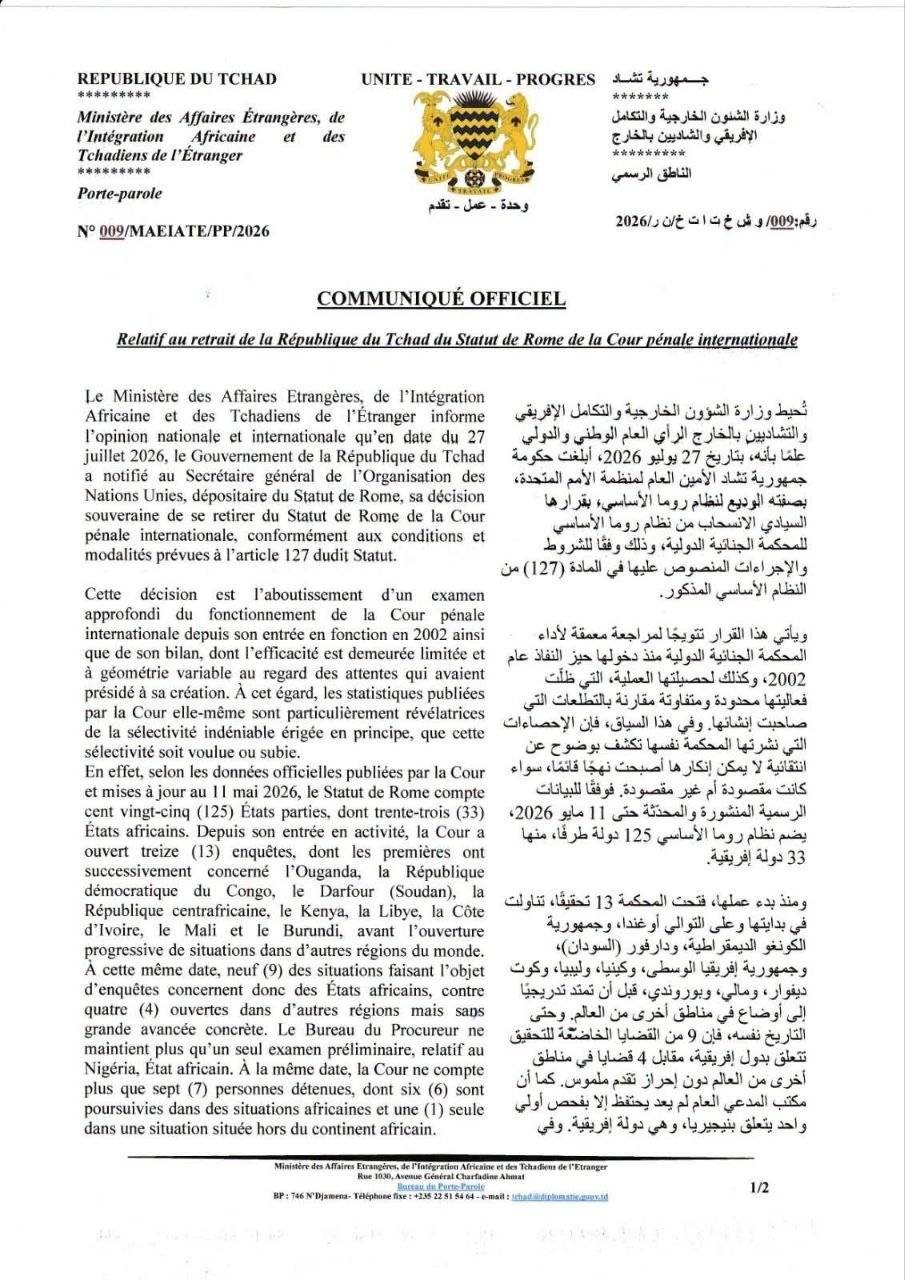
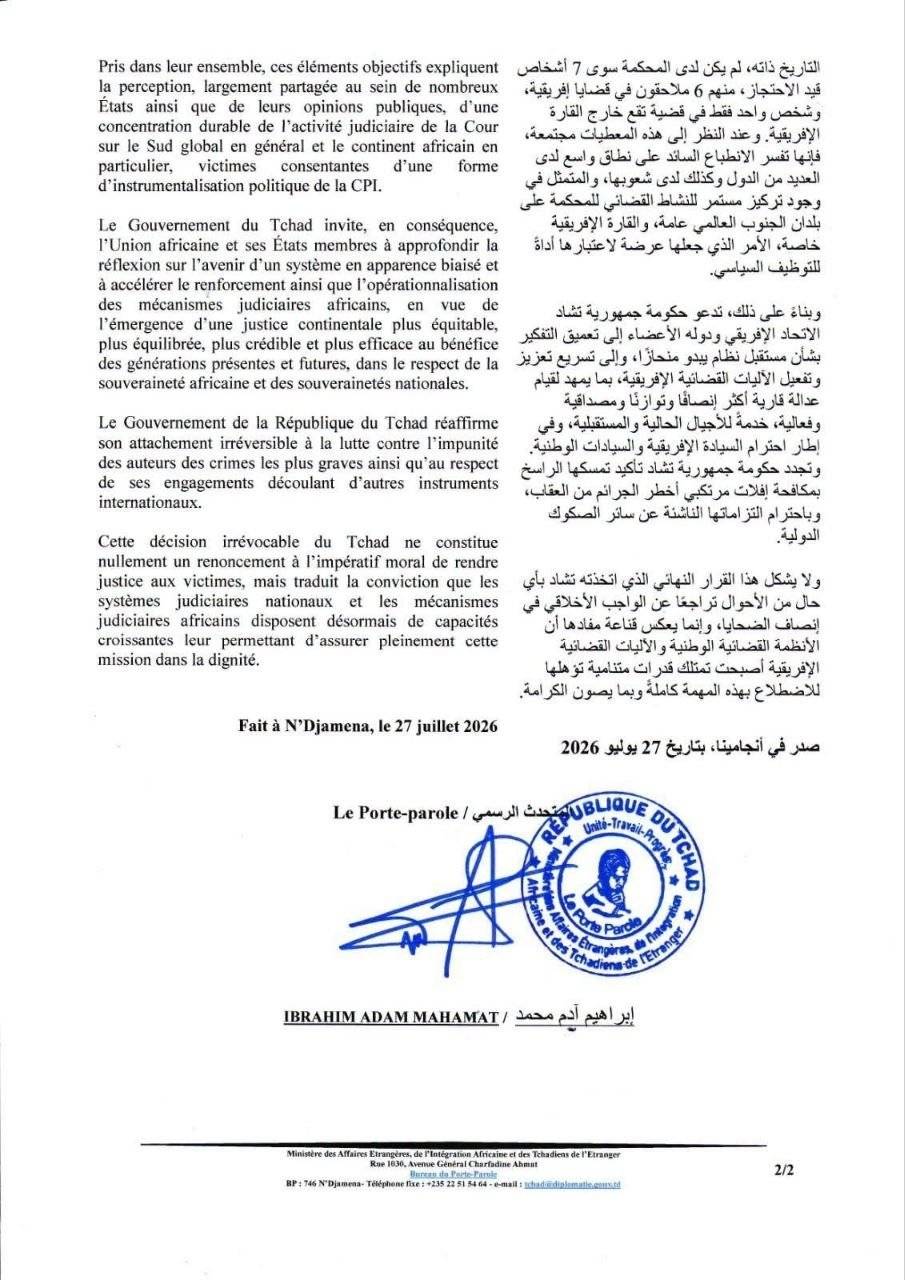
The government of Chad has formally initiated the process to withdraw from the International Criminal Court (ICC), marking a significant shift in its approach to international justice. The decision, communicated through a letter to the United Nations Secretary-General, reflects growing dissatisfaction with what N’Djamena describes as the ICC’s politically driven and disproportionate focus on African nations.
A strategic withdrawal or a rejection of perceived bias?
In its official statement, the Chadian government criticized the Rome Statute, the foundational treaty of the ICC, for lacking geographical balance in its prosecutions. Authorities argue that the Court has disproportionately targeted African leaders while neglecting similar crimes elsewhere, effectively undermining its credibility as a neutral judicial body. This move aligns with a broader trend among some African states, which have increasingly questioned the ICC’s role in global governance.
What this means for justice in Chad
The withdrawal, though a symbolic diplomatic statement, carries immediate consequences for victims of human rights abuses in the country. The ICC’s principle of complementarity—whereby it intervenes only if national courts are unable or unwilling to act—means that Chad’s departure removes the last layer of international judicial oversight for crimes against humanity, war crimes, or genocide. Without this safeguard, citizens must rely solely on domestic institutions, raising concerns about accountability and the risk of impunity.
Can Chad’s courts deliver justice?
The government asserts that its judicial system is now fully capable of handling such cases, emphasizing sovereignty as a priority. However, civil society groups warn that this transition could weaken protections for victims, particularly in cases involving state actors or powerful armed groups. Documenting abuses and safeguarding witnesses may become more challenging without the ICC’s involvement, potentially leaving victims without recourse.
Diplomatic and economic implications
The decision also carries significant external risks. Western partners and international donors have long linked financial aid to compliance with human rights standards and rule of law commitments. Additionally, foreign investors often prioritize jurisdictions with independent judicial systems, making this withdrawal a potential deterrent for long-term economic engagement. While the African Union has previously criticized the ICC, member states remain divided on how to address such concerns, with Chad opting for a bold but potentially isolating stance.
A year of transition: what happens next?
Under the Rome Statute’s withdrawal provisions, the process takes effect one year after notification. During this period, the ICC retains jurisdiction over crimes committed before the withdrawal, but Chad’s cooperation is likely to diminish. The coming months will be critical in determining whether the country can strengthen its domestic justice system to fill the void left by La Haye’s departure.
The future of rule of law in Chad
Proponents of the withdrawal argue that it is a necessary step toward reinforcing national sovereignty. However, realizing this vision will require substantial reforms: increased funding for courts, stronger protections for judicial independence, and robust mechanisms to support victims and witnesses. The government’s ability to deliver on these promises will define its legacy in ensuring justice for all citizens.
The Chadian decision underscores a broader debate on the balance between sovereignty and international justice in Africa. Whether this move strengthens or weakens the protection of human rights in the country will depend on the government’s commitment to reform and the resilience of its institutions. One thing is certain: the eyes of both citizens and the international community will be watching closely.