Mariama Hamani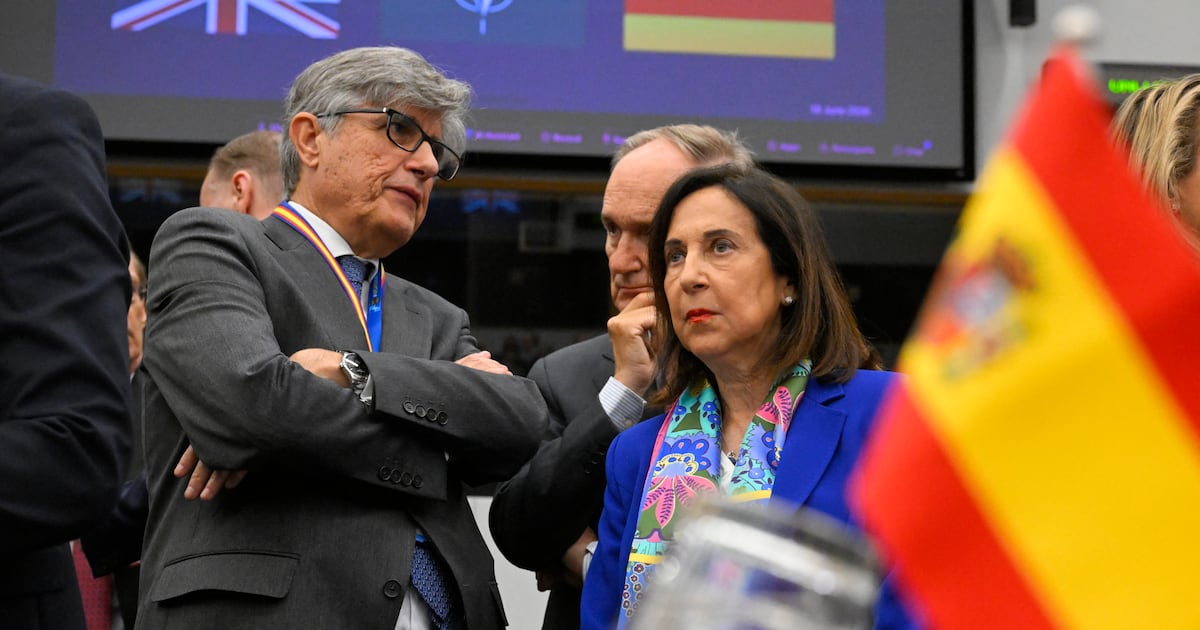
Spain’s Defense Minister, Margarita Robles, disclosed to Congress on Tuesday that a Supreme Court decision regarding expulsions at the Ceuta border generated a significant “pull factor,” directly contributing to the influx of migrants recorded on July 30 and 31.
Minister Robles substantiated her statements by referencing a report from the Spanish Defense Staff, which meticulously details the three distinct phases of escalating migrant mobilization. The initial phase, characterized as “concentrated migration,” commenced after the July 8 publication of the judicial ruling. This decision stipulated that individuals reaching the city by swimming could not be immediately repatriated via maritime routes.
Margarita Robles: “Se hizo un efecto llamada provocado por una motivación interesada de la sentencia del Tribunal Supremo y la fiesta del Trono en Marruecos por grupos de Facebook”
— El HuffPost (@ElHuffPost) August 25, 2026

Following this pivotal date, hundreds of individuals began crossing, a number that steadily grew into several thousands. Minister Robles attributed this surge to a “pull factor fueled by a self-serving interpretation of the ruling,” which gained widespread traction across social media platforms.
An additional message then emerged, portraying Morocco’s Throne Day as an opportune moment to cross the border. According to Robles’s explanation, various Facebook groups propagated the notion that fewer police personnel would be deployed on the Moroccan side due to the national celebrations.
Self-organized mobilization on social media
The minister asserted that what was widely described as a “massive assault” was not the result of centralized planning but rather an instance of migrants’ “self-organization.” These individuals reportedly converged on the border, driven by a “message of opportunity” and posts suggesting a “purported absence of obstacles” for entry into Ceuta.
The account presented by the Defense Ministry therefore positions social media at the core of this mass mobilization. Robles indicated that the rapid dissemination of these messages hindered security forces from “reacting in time” when thousands of crossing attempts occurred simultaneously.
Robles further affirmed the material impossibility of “preventing, through the use of force, such surges of hundreds or thousands of people.” She cautioned that any intervention of that nature would have led to catastrophic consequences. “The death toll would have been incalculable,” she stated during her testimony before the Defense Committee.
Robles’s remarks align with explanations provided by Morocco as early as August 2. At that time, Morocco’s Interior Ministry had detailed a proactive and comprehensive response by authorities, encompassing early signal detection, heightened vigilance, mobilization of security services, and intensified land and maritime surveillance. This framework successfully managed the situation, protected human lives, maintained public order, and secured the borders, all while adhering to legal principles and proportionality. Rabat had also attributed these crossing attempts to the spread of misleading information on social media, human trafficking networks, and an erroneous reading of Spanish judicial decisions.
A unified command established
Margarita Robles’s hearing marks the beginning of a week where eight ministers are scheduled to brief Congress on the Spanish government’s response to a crisis ignited 26 days prior by the entry of approximately 80,000 migrants.
Concurrently, Pedro Sánchez chaired the first meeting of the National Security Council dedicated to Ceuta on Tuesday. The government’s vice-presidents, several ministers, key state security officials, and Juan Jesús Vivas, who participated remotely, attended the session.
This gathering served to formalize the establishment of a unified command tasked with managing the ongoing crisis. Coordination responsibilities will fall to the Minister of Territorial Policy, Ángel Víctor Torres. He will lead a committee that also includes Juan Jesús Vivas, the government delegate, representatives from the National Intelligence Center, and various relevant ministries.