Boureima Amadou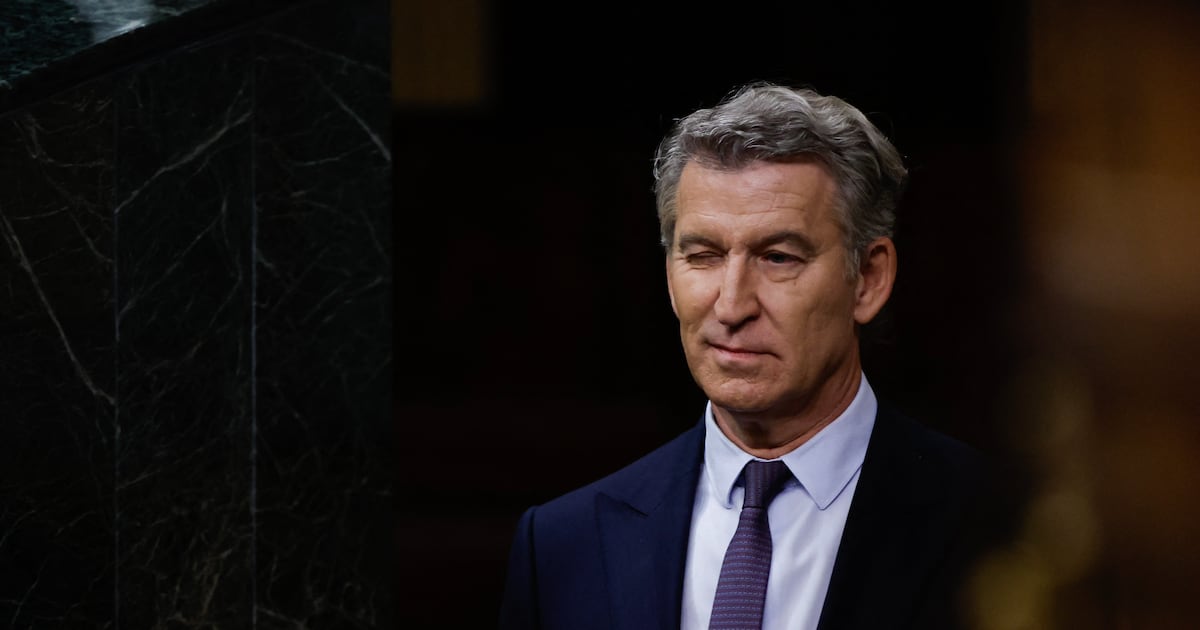
The gravity of the accusation against Spain’s main opposition party has sent shockwaves through the nation’s political and diplomatic circles. Foreign Minister José Manuel Albares recently labeled the Partido Popular (PP) as an «anti-Moroccan» force, escalating a verbal confrontation that transcends typical government-opposition clashes.
According to Albares, the PP is transforming Spain’s foreign policy—particularly its relationship with Morocco—into a tool for internal political strife. Tensions have flared following recent statements and controversies involving current and former PP leaders, prompting the minister to declare that the opposition has become «an obstacle» to Spain’s foreign policy objectives.
Beneath this political feud lies a far more consequential reality. Since 2022, Spain and Morocco have cultivated a strategic partnership encompassing migration control, economic and trade cooperation, security collaboration, and joint preparations for the 2030 World Cup with Portugal. In December 2025, the two governments reinforced this alliance with fourteen new cooperation agreements and a joint declaration to deepen political dialogue.
The PP’s ambitions to lead Spain raise a critical question: what would the party do with this deeply entrenched relationship if it wins power?
The Sahara dilemma: a defining challenge for the PP
The Western Sahara issue stands as the party’s most glaring contradiction. When Prime Minister Pedro Sánchez endorsed Morocco’s autonomy plan in March 2022 as «the most serious, credible, and realistic basis» for resolving the conflict, the PP condemned the move as a betrayal of Spain’s long-standing foreign policy consensus. Alberto Núñez Feijóo, the PP leader, argued that the decision had been made without consulting the main opposition party.
Since then, the PP has maintained a deliberately ambiguous stance. While its official documents emphasize respect for international law and UN resolutions, they avoid explicitly endorsing the government’s position on Morocco’s autonomy initiative. This inconsistency is not new. During Mariano Rajoy’s tenure, Spain adopted a cautious approach to the Sahara dispute, neither opposing nor fully supporting Morocco’s proposal. Internal PP divisions have further complicated the matter, with some members advocating for a strong strategic partnership with Rabat while others align with separatist rhetoric.
The contradictions reached a peak in July 2025 when a self-proclaimed representative of the Polisario Front attended the PP’s national congress, sparking outrage in Morocco and raising doubts about the party’s true intentions should Feijóo become prime minister.
In February 2026, Albares accused the PP of maintaining a dual discourse: publicly criticizing the government’s Sahara policy while secretly sending «emissaries» to Morocco to advocate for positions they publicly oppose. If these claims hold weight, the PP faces a dilemma. Using the Sahara issue as a political weapon from the opposition is one thing; reversing Spain’s diplomatic stance upon assuming power would carry entirely different consequences.
The shifting international landscape
The PP would not take office under the same international conditions that existed when Sánchez announced Spain’s position in 2022. Morocco’s autonomy plan has since gained broader international support, and the Sahara dispute has evolved within the UN framework. Spain, for its part, has integrated its stance on the conflict into a much wider bilateral relationship with Morocco.
A reversal of policy would not merely involve changing a phrase in a diplomatic communiqué. It would reopen one of the most sensitive chapters in Madrid-Rabat relations. The PP has yet to provide a clear answer to a pressing question: would a Feijóo-led government uphold Spain’s current position on the Sahara or revert to the pre-2022 doctrine? Thus far, the party has avoided a definitive response.
Vox’s influence and the rise of nationalist rhetoric
The Sahara dispute is not the only source of friction in the PP’s relationship with Morocco. In recent months, the party has adopted a harder line on immigration and access to public benefits, driven by intensified electoral competition with Vox. The most notable episode occurred in April 2026 when the concept of «national priority» entered Spain’s political debate. Historically tied to far-right movements in Europe and championed by Vox in Spain, this idea prioritizes nationals over foreigners in accessing certain public aid and services.
The controversy forced the PP to clarify its stance after Vox successfully pushed the concept in Congress and regional agreements. Internal party tensions emerged, with some factions warning of the political and legal repercussions of adopting a formula long associated with the far right. The PP attempted to soften its position, with spokesperson Jaime de los Santos asserting that «all legally resident immigrants have exactly the same rights as those born in Spain», while other party figures referred to an «anchoring» or «residential priority» approach.
Yet the debate had already sent a powerful signal: Vox has succeeded in pushing its agenda into the mainstream discourse of Spain’s largest right-wing party.
The Feijóo paradox: opposition vs. governance
The PP’s central dilemma can be summarized in one word: paradox. From the opposition benches, it can leverage Morocco and the Sahara to attack the government. But if it assumes power, it would inherit one of Spain’s most vital and complex international relationships. These two positions are not always compatible. Should Feijóo become prime minister, he may discover that many of the policies he has criticized are rooted in strategic necessities no Spanish government can ignore.
Cooperation with Morocco is not merely an ideological choice for the PSOE. It is driven by geography, economics, security imperatives, and a growing web of shared interests. The most likely scenario is not one of rupture but of contradiction between the discourse of opposition and the realities of governance. The PP would likely preserve the core of the current relationship with Rabat, leaving it to explain to its voters why it has not overturned decisions it has spent years denouncing.
The accusation of secret «emissaries» sent by the PP to Morocco suggests that the party may adopt a far more pragmatic approach behind closed doors than its public rhetoric implies.
The fundamental question is not whether the PP is «anti-Moroccan», as Albares claims. The real issue is the extent to which the party is willing to instrumentalize Spain’s relationship with its southern neighbor for electoral gain against the PSOE and Vox, and how much of that rhetoric would translate into actual state policy if the PP were to govern.
Spain remains Morocco’s closest European neighbor, and Rabat remains an indispensable partner for Madrid, regardless of which party holds power. This reality underscores why the PP’s current contradictions matter. If Feijóo enters La Moncloa, he will inherit a transformed bilateral relationship, a Spanish position on the Sahara embedded in a new international context, a consolidated security cooperation framework, and a 2030 World Cup that demands collaboration between the two nations in the coming years.
He will face a stark choice: translate opposition rhetoric into government policy at the risk of destabilizing relations with Rabat, or acknowledge that the relationship with Morocco demands a pragmatism the PP has thus far been reluctant to embrace publicly. This decision could well become one of the first major foreign policy tests for a potential Feijóo administration.