Mariama Hamani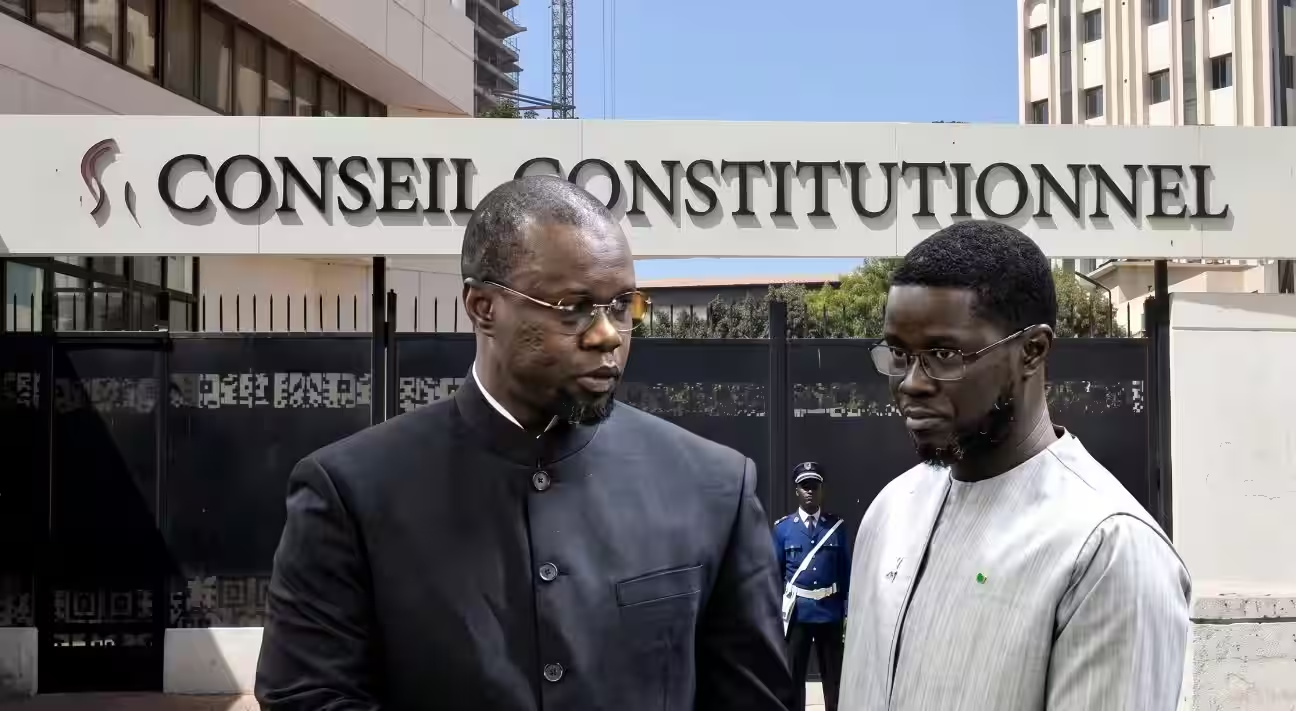
When the Constitutional Council of Senegal delivered its verdict on Ousmane Sonko’s reinstatement to the National Assembly, it set off a wave of heated debate across the nation’s legal landscape. The decision, cloaked in procedural language, has left many questioning whether the court is quietly shifting its jurisprudential stance. At its core, the ruling challenges the consistency of Senegal’s highest constitutional body, prompting observers to scrutinize its evolving role in the country’s governance.
Procedural grounds or deeper shift?
The June 17, 2026 ruling, which reinstated Ousmane Sonko despite initial legal hurdles, has sparked divergent interpretations. While the Council cited a lack of jurisdiction as its formal justification, critics argue the decision reflects a broader, more deliberate narrowing of its constitutional mandate. This contrast is particularly striking when compared to the Council’s earlier assertive posture during pivotal moments, such as the February 2024 institutional crisis, when it took a more expansive approach to safeguarding democratic stability.
A tale of two constitutional eras
The recent verdict stands in stark opposition to the Council’s historical trajectory. In previous years, the body had positioned itself as a vigilant guardian of Senegal’s constitutional order, intervening decisively to resolve institutional deadlocks and uphold democratic norms. However, the 2026 decision appears to retreat from this proactive stance, focusing narrowly on the legal technicalities of the case rather than its broader implications for governance. This shift has left legal scholars and political observers grappling with questions about the Council’s evolving identity and its commitment to constitutional coherence.
For many analysts, the ruling underscores a troubling pattern of institutional inconsistency. The Council’s earlier willingness to address systemic constitutional challenges now appears diluted, replaced by a more cautious, formalistic approach. This evolution raises concerns about the judiciary’s capacity to adapt to the complex demands of modern governance, particularly in a context where political tensions run high.

 Boureima Amadou