Mariama Hamani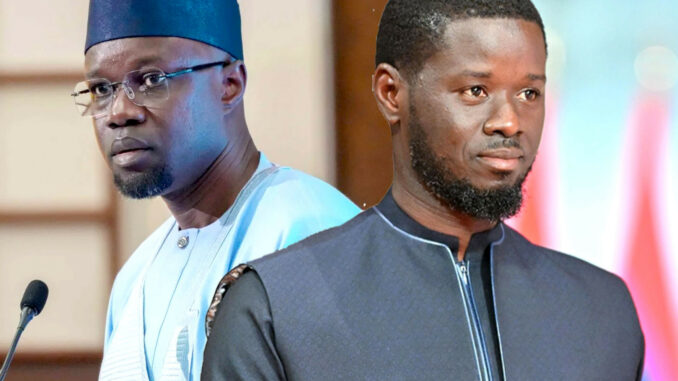
This week in Senegal, a politically charged moment unfolds as President Bassirou Diomaye Faye and Prime Minister Ousmane Sonko navigate a delicate balance of power within the executive branch. The nation watches closely as their contrasting approaches to governance take center stage, revealing deeper tensions beneath the surface of national leadership.
Diomaye Faye launches national consultations to reshape dialogue
Starting May 21, the President embarks on an extensive round of consultations with key stakeholders across Senegal. Over ten days, political parties, civil society organizations, religious leaders, and traditional authorities will be invited to participate in a national dialogue designed as a symbol of openness and unity. This initiative marks a departure from the previous administration’s practice, replacing a single annual dialogue session with a more sustained and inclusive process.
Analysts suggest that President Faye’s move aims to reinforce his reputation as a unifying figure, particularly amid criticism over the government’s electoral and institutional reforms. While supporters praise the initiative as a step toward greater democratic engagement, opponents argue that genuine consultation remains lacking, undermining the credibility of the reforms being pursued.
Sonko’s parliamentary address fuels speculation over executive tensions
Almost in parallel, Prime Minister Ousmane Sonko is scheduled to address lawmakers during a public parliamentary session focused on current affairs. Though formally part of the legislative agenda, the timing of his speech has sparked speculation about the evolving dynamics between the two leaders.
Political observers highlight how both figures appear to be staking competing claims to political and media space. One analyst notes that a more synchronized approach could have prevented the perception of a disjointed executive, where public messaging seems misaligned with national priorities.
Divided visions: power sharing in Senegal’s evolving leadership
Since assuming office, the relationship between Faye and Sonko has been a recurring subject of debate, raising questions about the true distribution of authority within the new government. While both leaders project strength and vision, their differing strategies for governance are increasingly evident, leaving many to question how long their partnership can endure without clearer alignment.


 Boureima Amadou