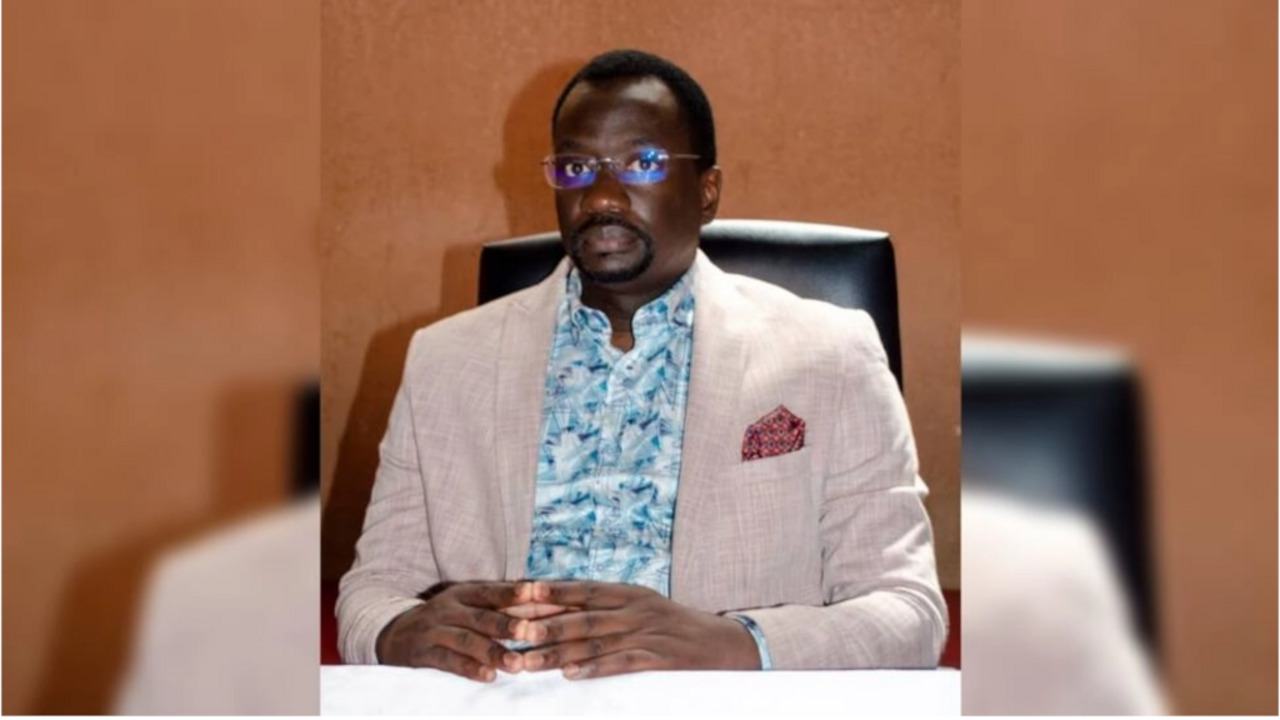
Boureima Amadou
Senegal’s democratic shift: parliament’s rising influence vs executive dominance
Senegal stands at a pivotal moment where the balance of power is being redefined, sparking intense national debate. Is this a crisis of democracy or a necessary evolution toward a more balanced governance system? The answer lies in how institutions adapt to new realities.

From executive dominance to institutional equilibrium
For decades, Senegal’s political landscape was characterized by an overpowering Executive branch, which monopolized decision-making processes. Since 1963, constitutional revisions and interpretations were frequently manipulated to serve presidential interests, particularly under leaders like Abdoulaye Wade and Macky Sall. Parliament, in turn, functioned as little more than a rubber-stamp institution, stripping democracy of its checks and balances.
This unchecked centralization bred instability, with every shift in leadership or political rivalry threatening to destabilize the nation. Yet today, a significant change is underway: for the first time in over 20 years, the National Assembly is asserting its constitutional role, no longer beholden to the presidency. This shift is not merely a political adjustment—it represents a democratic renaissance.
Why this moment matters for Senegal’s democracy
Critics frame this transition as a crisis, but it is better understood as a correction. A healthy democracy thrives on institutional independence and the ability of one branch to challenge another. Senegal’s Parliament is now fulfilling its role as a counterbalance, preventing the concentration of power that once defined its governance.
Consider the examples of mature democracies like France, where legislative-executive tensions are not anomalies but essential features of a functional system. Cohabitation between branches is not a sign of dysfunction—it is a safeguard against authoritarian drift. Senegal’s current challenges, therefore, should be seen as an opportunity to embed these principles permanently.
Building a stronger democracy: lessons from Africa
Other African nations demonstrate how robust institutions emerge from conflict, not their absence. Countries like Cabo Verde, Ghana, Botswana, and South Africa have earned global recognition not for avoiding disputes but for designing systems that absorb and regulate them. In South Africa, for instance, the Constitutional Court’s recent ruling on the Farmgate scandal illustrates how judicial oversight strengthens democracy—even amid controversy.
Senegal now has the chance to join this cohort of resilient democracies. The path forward requires:
- Strengthening parliamentary culture: Ensuring legislators exercise oversight without partisan obstruction.
- Stabilizing constitutional norms: Preventing ad-hoc amendments that serve short-term interests.
- Encouraging civic participation: Giving citizens a voice in institutional reforms.
- Consolidating checks and balances: Empowering courts, the media, and civil society to hold power accountable.
A turning point for Senegal
This is Senegal’s moment to prove that democracy is not about the absence of disagreement but about the ability to manage it constructively. The country is not collapsing—it is maturing. The Parliament’s newfound assertiveness is not a threat to stability; it is the foundation of a more resilient system.
As Lansana Gagny Sakho, President of the Cercle des administrateurs publics, notes: “The best measure of a democracy is not the silence of its institutions, but their ability to challenge and correct each other.”
Senegal’s democratic experiment is still unfolding. Yet if the nation seizes this opportunity, it could emerge as a model of institutional balance in West Africa—a region where power dynamics have often tilted precariously toward the Executive.
This is not a crisis. It is a renaissance.