
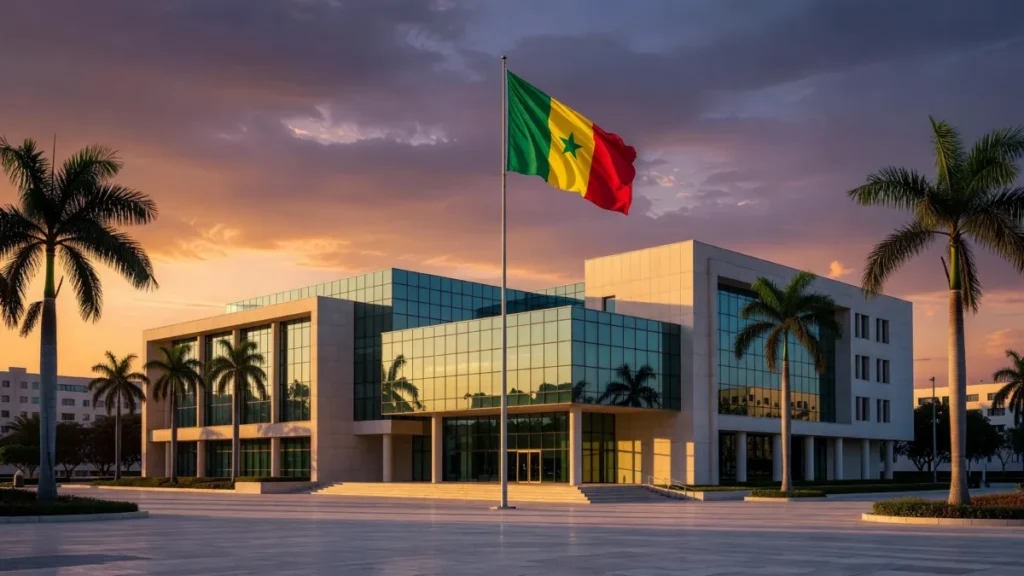
In response to a significant financial crisis, Senegal is poised to undertake a crucial step in managing its public finances. Dakar is reportedly set to appoint the American investment bank Lazard as its financial advisor to address the nation’s sovereign debt. This move is under close scrutiny by international investors, particularly given the immense pressure following the revelation of substantial budgetary irregularities inherited from the previous administration.
Uncovering over $13 billion in hidden debt
The true extent of the financial predicament became clear under the new government: more than $13 billion in public debt had gone undeclared, representing over a quarter of Senegal’s Gross Domestic Product (GDP). According to the Public Debt Statistical Bulletin 2019-2024, the debt-to-GDP ratio surged to 128.6% by the end of 2024, a sharp increase from 81.8% just five years prior. This unsustainable trajectory has prompted a wave of international reactions.
The International Monetary Fund (IMF) suspended a $1.8 billion loan program following the discovery of these discrepancies. This suspension deprives the West African nation of vital funding at a time when it urgently needs to reassure markets about its capacity to meet its financial obligations.
Lazard teams up with a Parisian firm
The New York-based investment bank, renowned for its expertise in sovereign restructuring, will not undertake this task alone. Lazard is expected to collaborate with the Parisian firm Global Sovereign Advisory (GSA) on this critical mandate. This Franco-American partnership will be tasked with navigating complex negotiations involving international creditors, multilateral institutions, and financial markets.
The selection process, spearheaded by Senegalese authorities, is nearing completion. An official announcement regarding the appointment could materialize in the coming days, as Dakar strives to swiftly regain investor confidence. Senegalese bond spreads have widened in recent weeks, reflecting market apprehension about the sustainability of the nation’s debt.
A new framework for financial governance
In conjunction with appointing an external advisor, the Senegalese government has restructured its administrative framework. Authorities recently established a Directorate General of Financing and Debt, an institutional mechanism designed to bolster transparency and accountability regarding the state’s financial commitments. This new directorate will work closely with Lazard to conduct a comprehensive assessment and propose viable refinancing solutions.
The challenge extends beyond mere technical restructuring. It involves restoring the budgetary credibility of a country long considered a beacon of stability in West Africa. The revelation of hidden debts has shaken this reputation, forcing the new government to confront difficult decisions: renegotiating existing contracts, extending repayment schedules, or seeking new financing under potentially more stringent conditions.
Senegal’s economic landscape
Senegal, a nation of 18 million people situated on Africa’s westernmost edge, has experienced robust economic growth in recent years. This growth has been fueled by substantial investments in infrastructure and the anticipated exploitation of its offshore oil and gas reserves. However, this rapid development has coincided with an accelerated accumulation of debt, which international institutions deemed insufficiently controlled.
The capital city, Dakar, serves as the primary hub for the country’s economic and administrative activities. From this vibrant port city, the new government, which assumed power in April 2024, is working to rectify a budgetary situation it describes as inherited. The promised transparency in public accounts has exposed the scale of past financial concealments, compelling authorities to seek international expertise to resolve the impasse.
The complex road ahead for Lazard
The mandate entrusted to Lazard presents considerable complexities. The bank must first meticulously audit all commitments undertaken by the Senegalese state to establish a precise picture of the actual indebtedness. Subsequently, it will need to devise a refinancing strategy that allows for extended repayments without triggering a default, all while engaging in negotiations with creditors whose interests may diverge, including bilateral creditors, multilateral institutions, and sovereign bondholders.
Lazard will also support Dakar in its discussions with the IMF to unlock the suspended financing. Without the Fund’s backing, Senegal will struggle to access international markets at acceptable rates. Investors are closely monitoring every signal from the authorities, and the appointment of a respected advisor like Lazard is widely interpreted as a clear sign of serious intent.
France’s perspective: a key economic partner under strain
For Paris, Senegal’s financial crisis represents a test for the stability of the CFA franc zone, of which Senegal remains a member. Senegal is a crucial economic partner for France in West Africa, characterized by strong commercial ties and a significant presence of French companies across the energy, telecommunications, and infrastructure sectors.
The involvement of the Parisian firm GSA alongside Lazard underscores the Franco-African dimension of this issue. French authorities are closely observing the evolving situation, aware that financial instability in a country like Senegal could have regional repercussions. Other West African countries are grappling with similar economic pressures, particularly those stemming from rising energy costs and imported inflation.
Lazard’s official appointment is anticipated in the coming days. Markets await concrete announcements regarding the refinancing strategy, while the Senegalese population contemplates potential consequences such as budgetary adjustments, reductions in public spending, or increased taxation. The new government is treading a fine line between financial rigor and the imperative of preserving social cohesion.
More Stories
Bénin’s Amazones clinch historic Zone 3 crown
Niger: Anatomy of a state narrative to conceal the regime’s fractures
Niger’s leader faces rift with special forces after Russian involvement