Boureima Amadou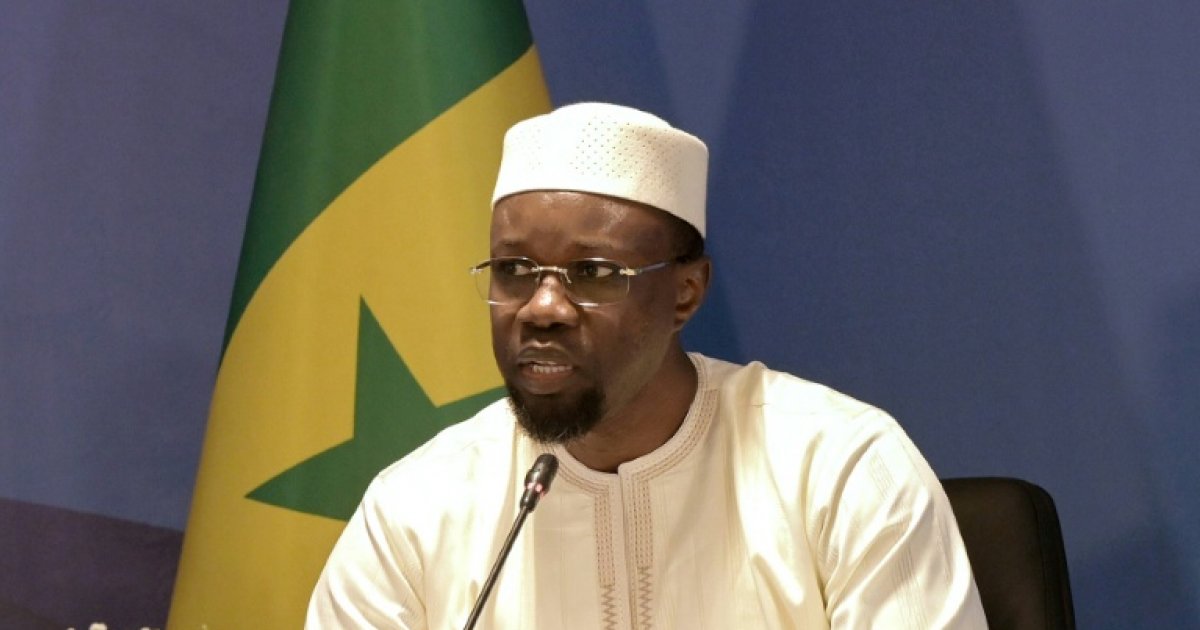
Senegal president sacks prime minister Ousmane Sonko
President Bassirou Diomaye Faye of Senegal has dismissed Prime Minister Ousmane Sonko, a move that comes after months of escalating tensions between the two former allies who rose to power together in April 2024 amid widespread public hope for change.
The announcement was delivered on national television by the Secretary-General of the Presidency, Oumar Samba Ba, who stated that the president had “terminated the functions of Mr. Ousmane Sonko as Prime Minister, and consequently those of the ministers and state secretaries within the government.” The outgoing cabinet has been instructed to handle only current affairs until further notice.
No details were provided regarding the appointment of a new prime minister, leaving the political landscape in flux.
Divisions within the ruling duo
Since President Faye’s election, tensions between him and Sonko—his former mentor and a charismatic figure whose influence was instrumental in securing their joint victory—have steadily worsened.
Sonko, a fierce critic of former President Macky Sall (2012-2024), had been barred from running in the 2024 presidential election due to a defamation conviction that stripped him of his civic rights. He subsequently endorsed Bassirou Diomaye Faye to take his place in the race.
With a bold panafricanist message, Sonko resonated deeply with Senegal’s disillusioned youth ahead of the election and during months of clashes with Sall’s government, which had violently suppressed protests against Sonko’s candidacy and the prospect of a third term for the former president.
After securing their release under an amnesty law aimed at easing years of political strife, the two men campaigned under the slogan “Diomaye Moy Sonko,” meaning “Diomaye is Sonko” in Wolof, symbolizing their unbreakable bond.
Public reaction and political fallout
Sonko swiftly responded on his Facebook page, writing, “Alhamdoulillah. Tonight, I will sleep peacefully at Keur Gorgui,” the Dakar neighborhood where he resides. Immediately after the announcement, hundreds of his supporters gathered outside his home, cheering in celebration.
Earlier in the day, the prime minister had criticized what he described as Western “tyranny” attempting to “impose homosexuality on the rest of the world,” just weeks after Senegal passed a law increasing penalties for same-sex relations in the predominantly Muslim nation.
The rift between the president and prime minister had become increasingly evident in recent months, making their continued collaboration appear unsustainable.
In a televised interview earlier this month, President Faye had cautioned against his prime minister’s “excessive personalization” of power within their party, stating, “As long as he remains Prime Minister, it is because he has my trust. When that is no longer the case, there will be a new Prime Minister.”
Sonko’s political dominance and legal battles
Sonko’s party holds a commanding majority in Senegal’s National Assembly following its landslide victory in the November 2024 legislative elections. Earlier this year, parliament paved the way for Sonko’s potential 2029 presidential bid by passing an electoral code reform, which the president signed into law. Critics argue the reform favors Sonko.
The Senegalese Supreme Court had rejected Sonko’s appeal against his 2023 defamation conviction in July 2025, reigniting debates about his eligibility. However, Sonko was elected as a deputy in the November 2024 elections and later stepped down from his seat to remain Prime Minister, a move his party claims confirms his eligibility. Local elections are scheduled for 2027, followed by a presidential vote in 2029.
While President Faye lacks the same level of popular enthusiasm as Sonko, the “Diomaye President” movement has steadily gained momentum, suggesting he may also consider running in 2029.
The new government inherited a precarious economic situation, with a public debt equivalent to 132% of GDP—the second-highest in sub-Saharan Africa, according to the International Monetary Fund. In 2024, the opposition accused the previous administration of concealing the true state of public finances, leading to the suspension of a $1.8 billion IMF support program.
What’s next for Senegal?
The dismissal of Prime Minister Ousmane Sonko marks a significant turning point in Senegal’s political trajectory. With no successor named, the nation now faces uncertainty as both factions—President Faye’s administration and Sonko’s powerful party—navigate an increasingly complex power struggle. The coming months will be critical in determining whether the country can sustain stability amid economic challenges and political divisions.
©SEYLLOU, AFP