Boureima Amadou
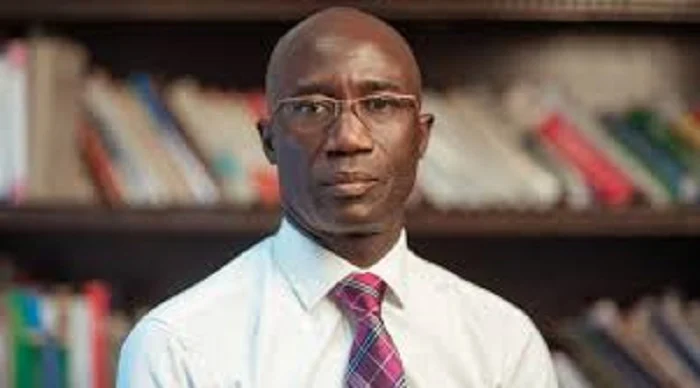
In a politically charged environment, Senegal’s newly appointed Minister of Justice, Moussa Sarr, steps into a role fraught with high-stakes challenges. His extensive legal expertise and background as a defense attorney position him at the center of a national conversation about accountability, transparency, and the rule of law.
The timing of Sarr’s appointment could not be more pivotal. Senegal’s judicial landscape remains under intense scrutiny, with lingering questions about past political unrest and the urgent need for institutional reforms. Between 2021 and 2024, the country witnessed significant political tensions, leaving behind a trail of unresolved legal and social grievances that demand decisive action.
With over two decades of experience at the Senegalese Bar, Moussa Sarr brings a wealth of knowledge in economic crime, banking law, real estate, and public business affairs. His career has also included teaching roles at several higher education institutions in Dakar, further cementing his reputation as a legal scholar. Advocates of his appointment argue that his technical proficiency will be instrumental in navigating the complexities of Senegal’s public finance oversight and judicial processes.
Yet, Sarr’s leadership has not escaped criticism. The political divide, particularly between President Bassirou Diomaye Faye and former Prime Minister Ousmane Sonko, casts a long shadow over his tenure. Sonko has publicly voiced concerns over the government’s approach to accountability, though he clarifies that these remarks are directed at policy, not the minister himself. The underlying tension reveals deeper disagreements over how to handle cases of public fund mismanagement and political violence.
Balancing accountability with institutional stability
Two distinct philosophies now shape Senegal’s executive strategy. One camp advocates for swift, stringent enforcement of sanctions in public finance cases, prioritizing immediate accountability. The other emphasizes procedural rigor and caution, warning against the politicization of justice. At the crossroads of these competing visions, the Ministry of Justice is tasked with finding a delicate balance—delivering transparency while safeguarding judicial independence.
Among the most pressing challenges facing Moussa Sarr is the legacy of political violence that unfolded between March 2021 and February 2024. Victims’ collectives and civil society organizations continue to demand justice, questioning the adequacy of a 2024 amnesty law. The debate persists: Should certain acts be reclassified? Are additional reparative measures necessary? With no clear resolution in sight, the new minister inherits a dossier that will test both his legal acumen and his diplomatic resolve.
As Senegal navigates this critical juncture, Moussa Sarr’s every decision will reverberate through the corridors of power. The stakes are high, the expectations even higher, and the path forward remains as complex as the challenges that lie ahead.

 Mariama Hamani