Boureima Amadou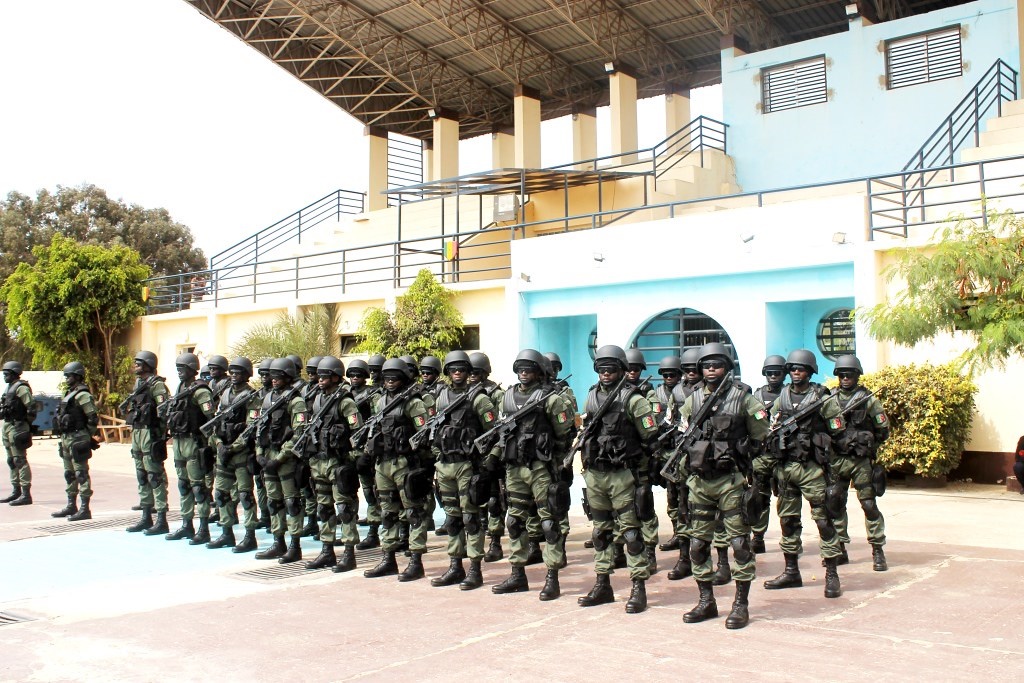
- À la Une
- Politique
Senegal bolsters border security amid Mali turmoil
With over 400 km of shared border and deep commercial ties, Senegal remains acutely aware of the escalating crisis in neighboring Mali and across the Sahel. To mitigate risks, Dakar has quietly intensified its security infrastructure along critical border regions.
While avoiding public declarations, Senegalese officials are closely monitoring the situation, particularly concerning Malian transporters stranded since late April and recent truck burnings. «We are actively tracking developments, especially for our transporters. No repatriation requests have been received yet, but we remain vigilant,» stated a Foreign Affairs Ministry representative with measured restraint.
The growing jihadist threat in West Africa has prompted significant investments in border security, particularly in Tambacounda and Kédougou regions. Recent measures include the inauguration of three new rapid intervention posts on April 8-9, 2026, as part of the Groupe d’Action et de Recherche de Sécurité Intérieure (Garsi 2) initiative, funded by the European Union.
The Garsi and Cico: pillars of Senegal’s security strategy
These new posts represent a strategic enhancement to Senegal’s counterterrorism framework. «They will reduce response times, strengthen operational capabilities in Garsi 2’s area of responsibility, and improve community proximity,» explained military authorities. The posts serve as the frontline eyes of Senegal’s broader security apparatus against terrorism and cross-border crime.
A senior military officer elaborated: «Our 420 km border with Mali makes full coverage impossible. We focus on critical crossing points and rapid response. These posts enable swift action when needed.» The Garsi units, stationed at Kidira and Kédougou (Saraya), conduct joint patrols to monitor the frontier effectively.
Inter-ministerial coordination: the Cico framework
Beyond Garsi’s rapid response units, Senegal’s security apparatus relies on the Cadre d’Intervention et de Coordination Opérationnelle (Cico) for inter-ministerial coordination during potential attacks. This framework ensures seamless integration of emergency services—hospitals, ambulances, police, gendarmes, and military transport—if armed groups breach the border or launch an assault.
Recent months have seen further capacity building, including the establishment of a regional headquarters in Kédougou, research divisions, and technical units. Notably, Senegal ranks among Africa’s top defense spenders, having secured second place in sub-Saharan arms imports (8.8% of regional imports) between 2020-2025, according to Stockholm International Peace Research Institute data.
Major acquisitions include South African-made Puma M36 armored vehicles, designed to withstand landmines and IEDs—directly addressing lessons from Sahel conflicts. Additional defense contracts were signed with Turkey in 2025.
Cultural and religious resilience: Senegal’s unique shield
Senegal’s resilience isn’t solely military. Experts highlight strong social cohesion as a critical factor. Professor Bakary Sambe of the Timbuktu Institute notes that ethnic and religious harmony in Senegal acts as a bulwark against jihadist infiltration tactics. In Kédougou, interethnic marriages and mutual respect among Bassari, Bédik, and Fulani communities create a cultural shield that prevents group divisions.
A cultural and religious barrier against extremism
Unlike Mali and Burkina Faso, where jihadists exploited farmer-herder tensions, Senegal’s harmonious interethnic relations hinder extremist expansion. «Sufi influence may be weaker near eastern borders, but the absence of widespread radicalization and collaboration between religious leaders and authorities strengthens resilience,» explains Sambe. Religious leaders are recognized as key actors in deradicalization efforts.
President Faye advocates for continental collaboration
During a May 2 interview, President Bassirou Diomaye Faye emphasized that terrorism and insecurity demand continental solidarity. «Even Nigeria—the largest ECOWAS member—has faced attacks for years. The U.S. has also suffered unimaginable violence. No country is spared. This necessitates intelligence sharing and cooperation,» he stated, praising the ECOWAS standby force (yet to be activated).
Regretting the withdrawal of Sahel states from ECOWAS, Faye stressed the need for unified action: «Senegal cannot remain indifferent to Mali’s struggles. We share history, values, and a people. What affects Mali affects Senegal—we are ready to act through dialogue for peace,» he affirmed, noting ongoing cross-border patrols and intelligence exchanges.
The President concluded: «The Malian people can always count on Senegal’s unwavering solidarity—government and citizens alike. Some matters must remain discreet, but our commitment is clear.»