
 Mariama Hamani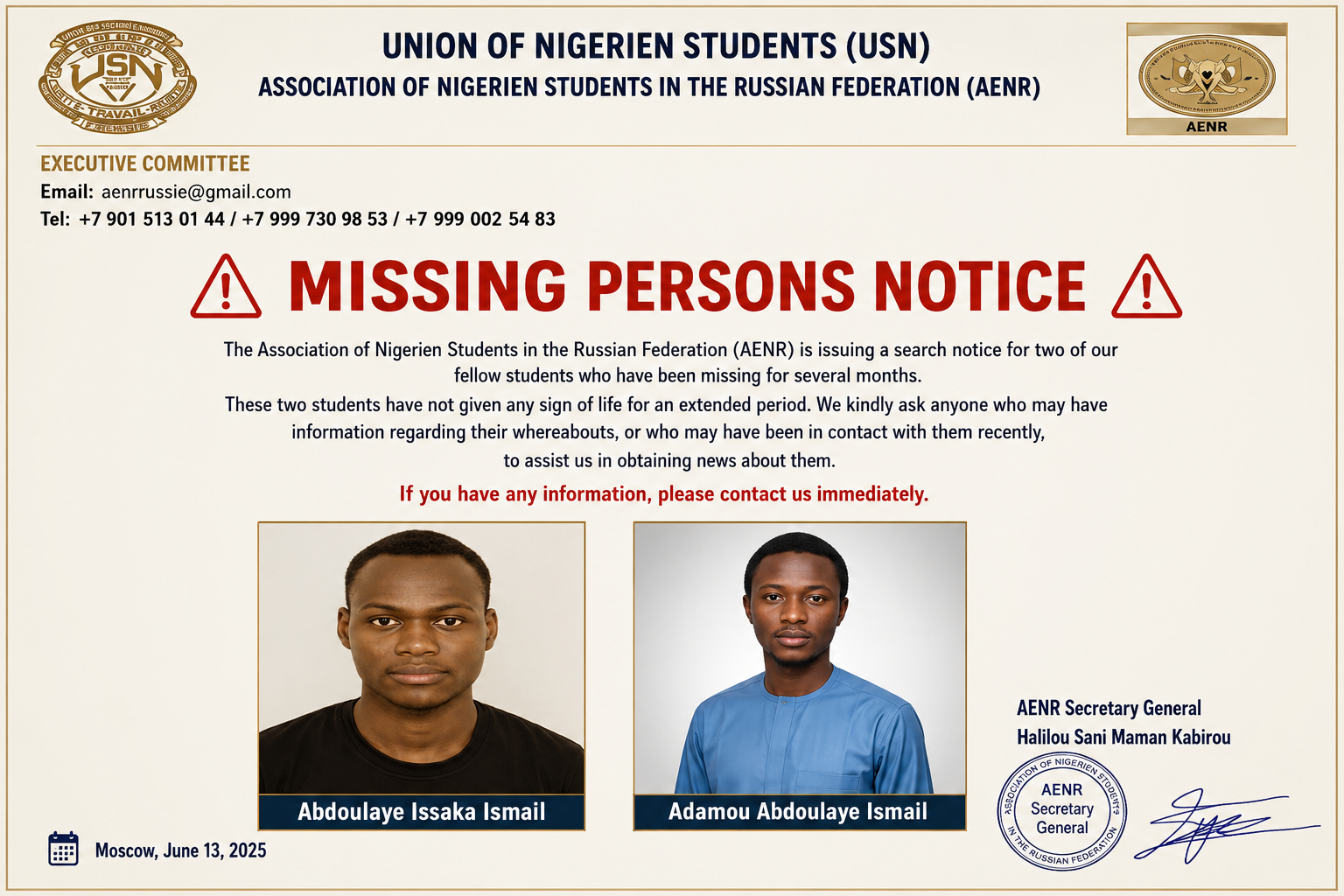
The Association of Nigerien Students in Russia (AENR) announced the death of Adamou Abdoulaye Ismaël, who had been missing for several months. In June 2025, the organisation had issued a search notice for two of its members. One of them, Abdoulaye Issiaka Ismaël, was already declared dead on the front of the Russia-Ukraine war. The death of Adamou Abdoulaye Ismaël is now confirmed, although the exact circumstances of his disappearance have not yet been made public.
This announcement once again plunges many Nigerien families into confusion and grief. Above all, it raises an increasingly pressing question: why are young Nigeriens finding themselves involved in a conflict taking place thousands of kilometres away, which has nothing to do with Niger’s national interests?
With this latest tragic death, Niger loses another of its sons in a war that is not its own. As Moscow strengthens its influence in Africa and multiplies speeches about partnership, cooperation, and friendship between peoples, these deaths recall a much darker reality. Behind the promises of scholarships, academic or professional opportunities, some young Africans are caught up in the consequences of a conflict in which they are neither actors nor beneficiaries.
Since the start of the war in Ukraine, several international media and human rights organisations have documented cases of foreign nationals, particularly from Africa, who have been recruited or trained for the Russian war effort, sometimes under opaque conditions. For many observers, this situation poses a major ethical problem: seeing young people who came to study or seek a better future exposed to the risks of a particularly deadly armed conflict.
The successive deaths of two Nigerien students constitute a wake-up call. They raise questions about the protection of African nationals in Russia and the true human cost of Moscow’s rapprochement with several African states. Beyond diplomatic speeches and geopolitical interests, African lives are being lost on Ukrainian battlefields.
Today, two Nigerien families mourn their children. Two young men who left to pursue their studies abroad and will never return. A tragedy that reminds us that in great international rivalries, the heaviest sacrifices are often borne by those who never chose war.

 theafricantribune
 Boureima Amadou




