Mariama Hamani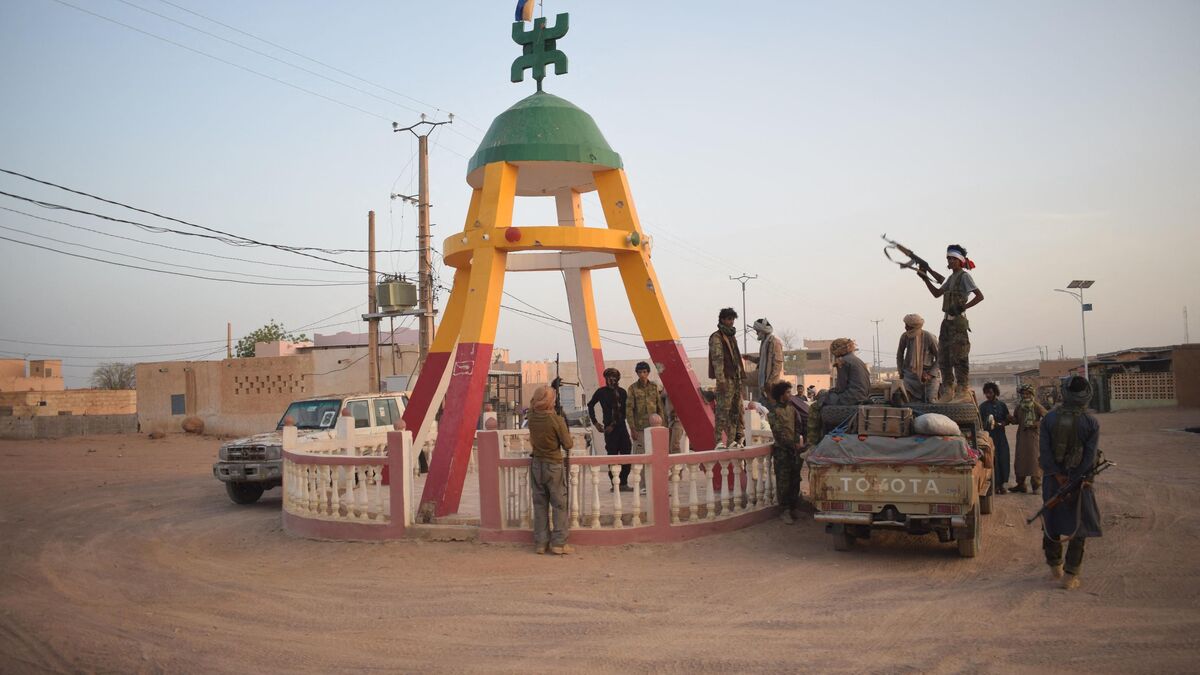
In a weekend marked by fierce clashes, armed groups allied with Tuareg rebels stormed multiple strongholds of Mali’s ruling junta, including Kidal—a strategic city long controlled by the shadowy Africa Corps militia. The sudden withdrawal of Russian-backed forces from the region underscores the shifting dynamics of Moscow’s military footprint in the Sahel.
Once a key stronghold for the Africa Corps, Kidal fell after intense fighting and protracted negotiations. The militia’s retreat from the city signals both a tactical shift and the persistent challenges facing this enigmatic Russian paramilitary unit. Despite this setback, Africa Corps remains a pivotal player in the Kremlin’s broader African strategy.
Origins of a shadowy force
The Africa Corps emerged in late 2023, unveiled through cryptic Telegram posts attributed to military blogger Deux Majors. The announcement cited Igor Korotchenko, a Kremlin-aligned military analyst and former colonel, who confirmed its creation under the direct supervision of Russia’s Deputy Defense Minister, Younous-bek Evkourov. This move followed months of speculation about the future of Wagner Group, whose founders—oligarch Evgueni Prigojine and ex-intelligence officer Dmitri Outkine—perished in a suspicious plane crash in August 2023.
Africa Corps: continuity or reinvention?
Unlike its predecessor, Wagner, Africa Corps operates with a more centralized structure and tighter Kremlin oversight. Analysts describe it as a disciplined, state-controlled force designed to advance Russia’s geopolitical interests across the continent. While Wagner’s legacy was marred by allegations of war crimes and brutal repression, Africa Corps presents itself as a more subdued but equally assertive alternative. Its stated mission? To help African governments break free from Western influence, secure full sovereignty, and counter perceived neo-colonial dependencies.
The group’s name is no coincidence: it draws inspiration from the Afrikakorps, the Nazi-era German expeditionary force deployed in North Africa during World War II. This provocative nod to historical militarism reflects Moscow’s willingness to leverage symbolic power in its African engagements.
Expansion across the Sahel
Since its inception, Africa Corps has rapidly extended its reach beyond Mali. The militia has established a foothold in countries like the Burkina Faso, Libya, Sudan, the Central African Republic, and Niger, often stepping in where Wagner’s influence waned. In Mali, it has deployed hundreds—if not thousands—of fighters, absorbing former Wagner operatives who switched allegiances after the group’s decline.
The Africa Corps’ primary role in Mali has been propping up the junta in Bamako against Tuareg rebels and jihadist factions. This intervention aligns with Moscow’s broader objectives: consolidating influence in West Africa as Western powers, including France, retreat from the region; securing critical mineral resources; and controlling migration routes toward Europe.
International scrutiny and sanctions
Despite its lower-profile approach, Africa Corps has not escaped international condemnation. In 2024, the United Kingdom accused the group of widespread human rights abuses and exploiting local resources for profit. These allegations mirror the criticisms leveled at Wagner, raising questions about whether Africa Corps will replicate—or merely rebrand—the controversial tactics of its predecessor.
As the militia recalibrates its presence in the Sahel, its ability to maintain influence in Mali remains uncertain. Yet one thing is clear: the Africa Corps is far from a temporary fixture. With Moscow’s backing, it is steadily weaving itself into the fabric of African security dynamics, offering a blend of military support and political leverage that reshapes the continent’s geopolitical landscape.

 Boureima Amadou