Mariama Hamani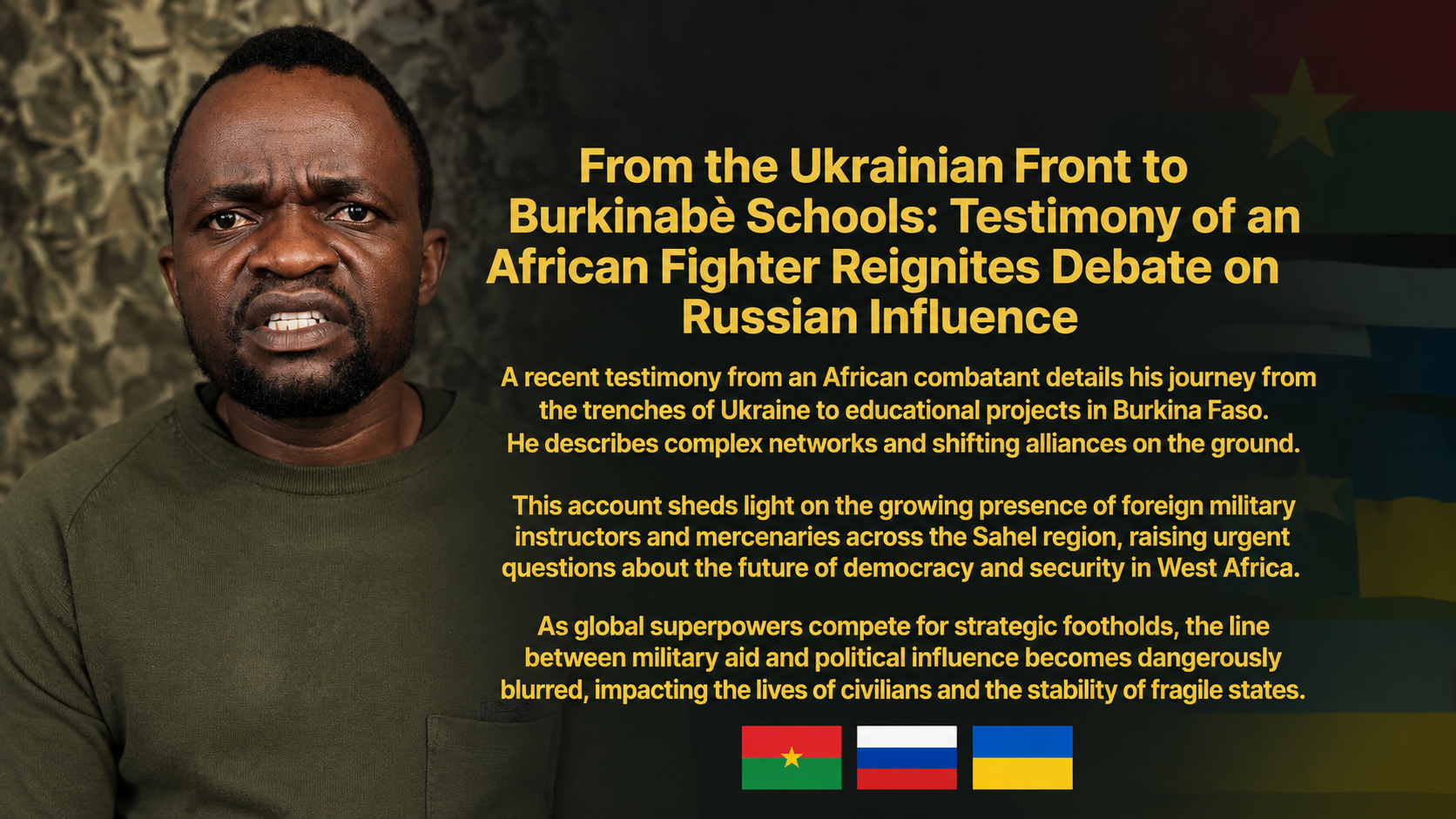
The recent detention in Ukraine of Zimbabwean national Tatenda Tarwire, a former foreign fighter within Russian ranks, has reignited concerns about the recruitment of African combatants in the ongoing Russo-Ukrainian conflict. In widely circulated statements, Tarwire describes harrowing experiences, warning fellow Africans against enticing offers made by Russian-linked recruiters. He highlights the brutality of combat, staggering human losses, and the absence of updates for families of the deceased or missing.
Moscow’s expanding footprint in Africa
While Tarwire’s account is deeply personal, it reflects a broader trend: Russia’s intensified efforts to deepen its influence across Africa. Over recent years, Moscow has escalated its diplomatic, military, economic, and cultural engagements with multiple African states, particularly amid the geopolitical upheaval triggered by the war in Ukraine.
A linguistic shift in Burkina Faso’s education system
In Burkina Faso, this geopolitical maneuvering has manifested in a new educational policy: the phased introduction of Russian language instruction in public schools starting this academic year. Authorities frame this move as an effort to broaden international partnerships, provide students with academic alternatives, and foster exchanges with the Russian Federation. Yet, not everyone views the initiative with approval.
Divided reactions over Ouagadougou’s alignment with Moscow
Critics argue that the decision transcends mere language acquisition, suggesting it signals a deeper strategic alignment between Burkina Faso and Russia—a development that warrants open, transparent discussion. Supporters, however, contend that a sovereign nation has every right to diversify its international alliances without facing accusations of political realignment.
Russian, like English, Chinese, Arabic, or Spanish, is fundamentally a tool for communication, access to scientific research, academic exchanges, and professional opportunities. The crux of the debate lies not in the language itself but in the geopolitical backdrop in which this reform is unfolding—a backdrop marked by Russia’s active pursuit of global influence amid its large-scale military campaign.
Lessons from foreign recruitment schemes
Tarwire’s testimony also underscores the dangers faced by African citizens lured by promises of payment, training, or career prospects abroad. Documented cases reveal how foreign fighters recruited for conflicts often arrive with limited understanding of battlefield realities, resulting in profound human costs for both combatants and their families.
Demanding clarity and accountability in educational policy
In Burkina Faso, public discourse would benefit from evidence-based discussions, rigorous analysis, and reasoned debate. Citizens deserve clarity on the precise objectives of Russian language integration, the terms of related agreements, the potential benefits for Burkinabè youth, and safeguards to preserve the national education system’s autonomy.
The choices Burkina Faso makes today will shape the future of its youth—through the quality of education they receive, the breadth of knowledge they acquire, and their capacity to critically assess global developments. Educational decisions must be made with transparency, honesty, and respect for facts, ensuring they align with the nation’s long-term interests and the aspirations of future generations.

 Boureima Amadou