Boureima Amadou
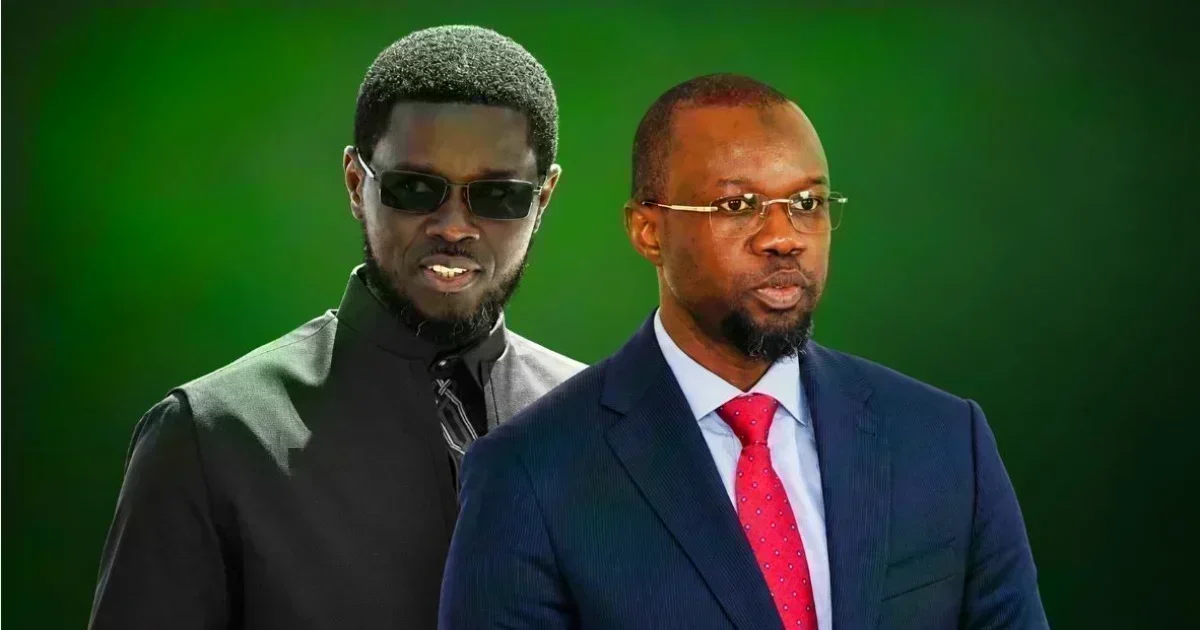
Senegal’s Prime Minister, Ousmane Sonko, is set to hold a crucial press conference this Tuesday in Dakar, just one day after the formal establishment of the nation’s new government. This significant public appearance unfolds during a politically sensitive period for the leader of the Pastef party, whose governmental team has recently undergone a major reconfiguration by President Bassirou Diomaye Faye. The session aims to allow the head of administration to articulate the rationale behind personnel choices, outline the government’s strategic roadmap, and address the various questions raised by this recent cabinet reshuffle.
Economic players scrutinize the government reshuffle
The restructuring of the governmental team in Senegal has been anticipated for several weeks. It comes at a critical juncture, marked by the revelation of a budgetary situation more precarious than initially disclosed by the preceding administration, coupled with ongoing negotiations with the International Monetary Fund. Investors, international donors, and the country’s commercial partners are now eagerly awaiting clear signals regarding Dakar’s economic trajectory, particularly concerning debt management, the execution of extractive contracts, and the progress of major infrastructure projects.
The profiles of the newly appointed ministers and the reallocation of portfolios are currently under intense scrutiny within economic circles. Decisions regarding continuity or shifts in key sectors, such as hydrocarbons, telecommunications, or public procurement, will provide insights into the reformist ambitions of this new governmental structure. Therefore, the Prime Minister’s address is widely anticipated as both a framework-setting exercise and a moment of political education for the Senegalese public.
Sonko, a central figure in Senegal’s executive
Since his appointment to the Primature in April 2024, Ousmane Sonko has occupied a distinct position within the nation’s power architecture. As the leader of the majority party in the National Assembly following the snap legislative elections of November 2024, he wields a political influence that extends beyond the traditional responsibilities of a head of government. Observers view this press conference as an opportune moment for the Pastef leader to reassert his authority over the national agenda and shape the narrative of public action, which has frequently faced challenges from the opposition.
This media engagement will also serve to gauge the cohesion of the partnership he maintains with the head of state. Persistent rumors of potential disagreements between the two leaders, often fueled by commentators, are expected to be clarified. Prime Minister Sonko’s characteristic approach, known for its direct communication and emphasis on impactful, structural announcements, is once again poised to be on full display before the national and international press gathered in Dakar.
A roadmap constrained by budget realities
The newly formed government inherits a demanding macroeconomic environment. Senegalese authorities must simultaneously manage debt obligations, control the public deficit, and sustain investment efforts in sectors deemed strategic. The anticipated increase in oil and gas production, particularly from the Sangomar and Grand Tortue Ahmeyim fields, operated by Woodside and bp respectively, represents a crucial variable for the state’s future revenues.
Concurrently, the Primature is tasked with advancing administrative reform, implementing the announced revision of certain mining and energy contracts, and transforming the agricultural sector. The issue of digital sovereignty, a priority for the authorities since the recent political transition, is also expected to feature prominently in the Prime Minister’s discourse, as Senegal strives to bolster its data infrastructure and enhance the regulation of operators within its market.
An internal political challenge also looms. With a comfortable parliamentary majority, Pastef can no longer attribute potential delays to cohabitation. Thus, Tuesday’s press conference will serve as a real-world test, evaluating the Prime Minister’s capacity to translate accumulated electoral capital into concrete achievements for a Senegal that demands tangible results in its African governance journey.