Boureima Amadou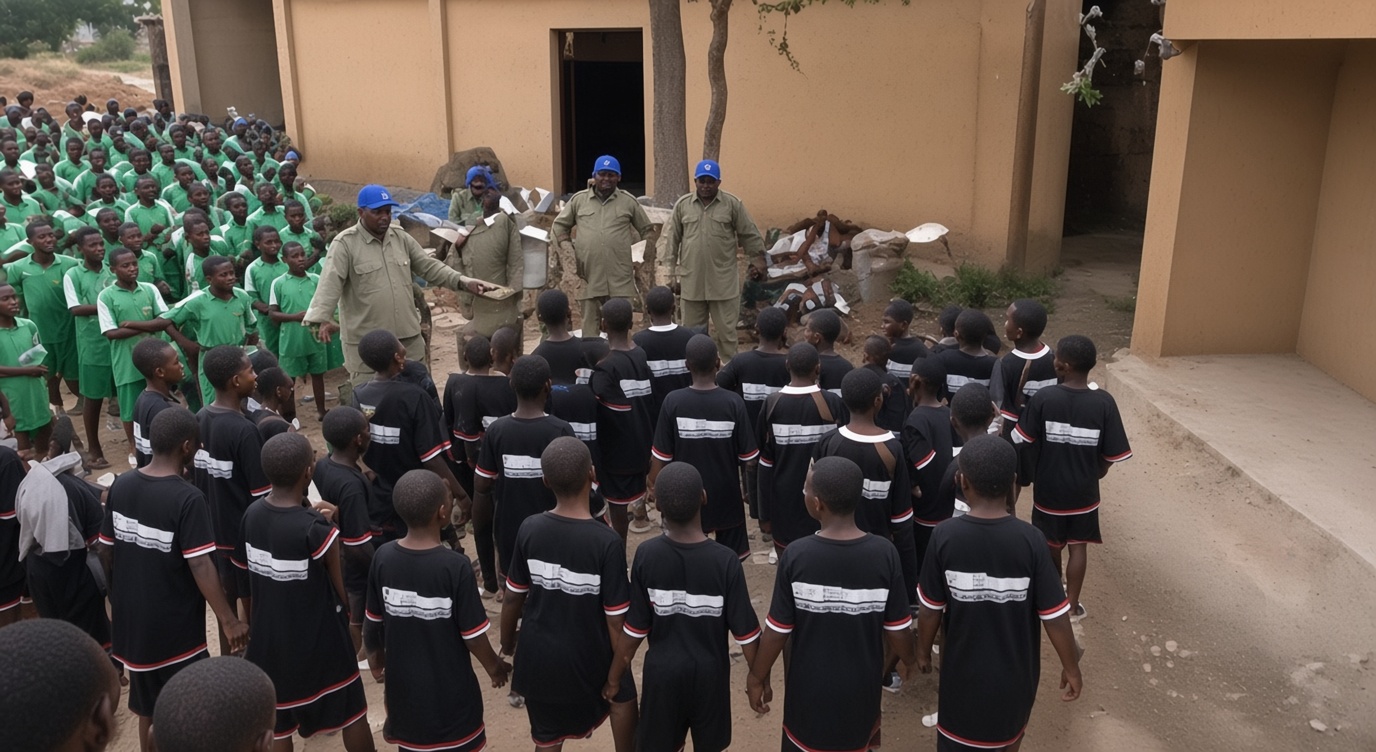
General Abdourahamane Tiani has officially launched a youth training initiative encompassing over 300 young Nigerien citizens. Marketed under slogans such as civic duty, national rejuvenation, and societal renewal, the programme mirrors the model implemented in Burkina Faso under the leadership of Captain Ibrahim Traoré. However, beneath the carefully constructed facade of patriotic endeavour, a disconcerting trend may be unfolding: the systematic establishment of a youth militarisation framework under the pretext of governance.
Educational priorities versus military encroachment
For developing individuals, particularly those in childhood and adolescence, environments dominated by militaristic values whether partially or entirely are fundamentally unsuitable. During these critical developmental stages, the primary focus should include academic learning, professional training, athletic activities, artistic pursuits, and civic awareness. When young minds are instead conditioned to adhere to rigid military discipline, unquestioning compliance, and relentless mobilisation, the long-term consequences may normalise a culture steeped in armament and conflict.
The political subtext of forced patriotism
The concerns extend beyond the nature of the programme itself to the broader political message directed at a generation. When a military-led government equates youth engagement with patriotic obligation, the risk of prioritising regime loyalty over critical thought becomes evident. Genuine civic responsibility, however, requires the capacity for inquiry, reasoned debate, and advocacy for collective welfare not submission to authoritarian narratives.
The distinction between civic education and indoctrination blurs dangerously when young participants are exposed to persistent appeals centred on struggle, sacrifice, and defence of the nation. While mobilised youth can contribute to national progress, they must never be reduced to an expendable resource perpetuating military governance.
Misplaced priorities and unmet needs
This approach raises a pressing inquiry: why divert significant resources toward ideological youth mobilisation when countless young Nigeriens lack access to quality education, recognised qualifications, employment avenues, essential infrastructure, and viable economic prospects? National pride does not provide sustenance, nor does it replace academic credentials or spontaneously generate employment opportunities.
The narrative of ‘mandatory civic responsibility’ may serve as a strategic distraction, masking deeper socio-economic challenges. By projecting an image of compliant, self-sacrificing youth, the regime risks obscuring issues such as educational deficits, rampant unemployment, and the destabilising effects of political turbulence.
Long-term consequences of systemic militarisation
Legitimate apprehensions also surround the enduring implications of this strategy. A generation raised within a paradigm of perpetual mobilisation may normalise the militarisation of civilian life. What is currently presented as an extraordinary measure could evolve into a standardised system of political and paramilitary conditioning for young citizens.
The Burkinabè precedent: a cautionary tale
The parallels with Burkina Faso warrant close scrutiny. The proliferation of initiatives centred on nationalism and national defence must not push Sahelian nations into a competitive cycle of youth militarisation. While regional security challenges are undeniable, the solution cannot lie in transforming an entire generation into prospective soldiers.
The youth of Niger deserve opportunities that extend beyond serving as instruments of state propaganda. They merit quality education, marketable skills, access to employment, intellectual autonomy, and the freedom to participate in public discourse without being coerced into adopting a specific ideological or military doctrine.
The zeal of young citizens should not be exploited to conceal governance deficiencies. A resilient state does not mould its youth into obedient combatants from an early age; rather, it empowers them with knowledge, freedoms, and prospects to actively shape the nation’s future.
Authentic patriotism manifests in nurturing citizens equipped to innovate, think critically, and defend their country when necessary not in conditioning young minds to internalise military logic prematurely. Niger must ensure that the fight against insecurity does not inadvertently institutionalise the militarisation of childhood and adolescence.