Mariama Hamani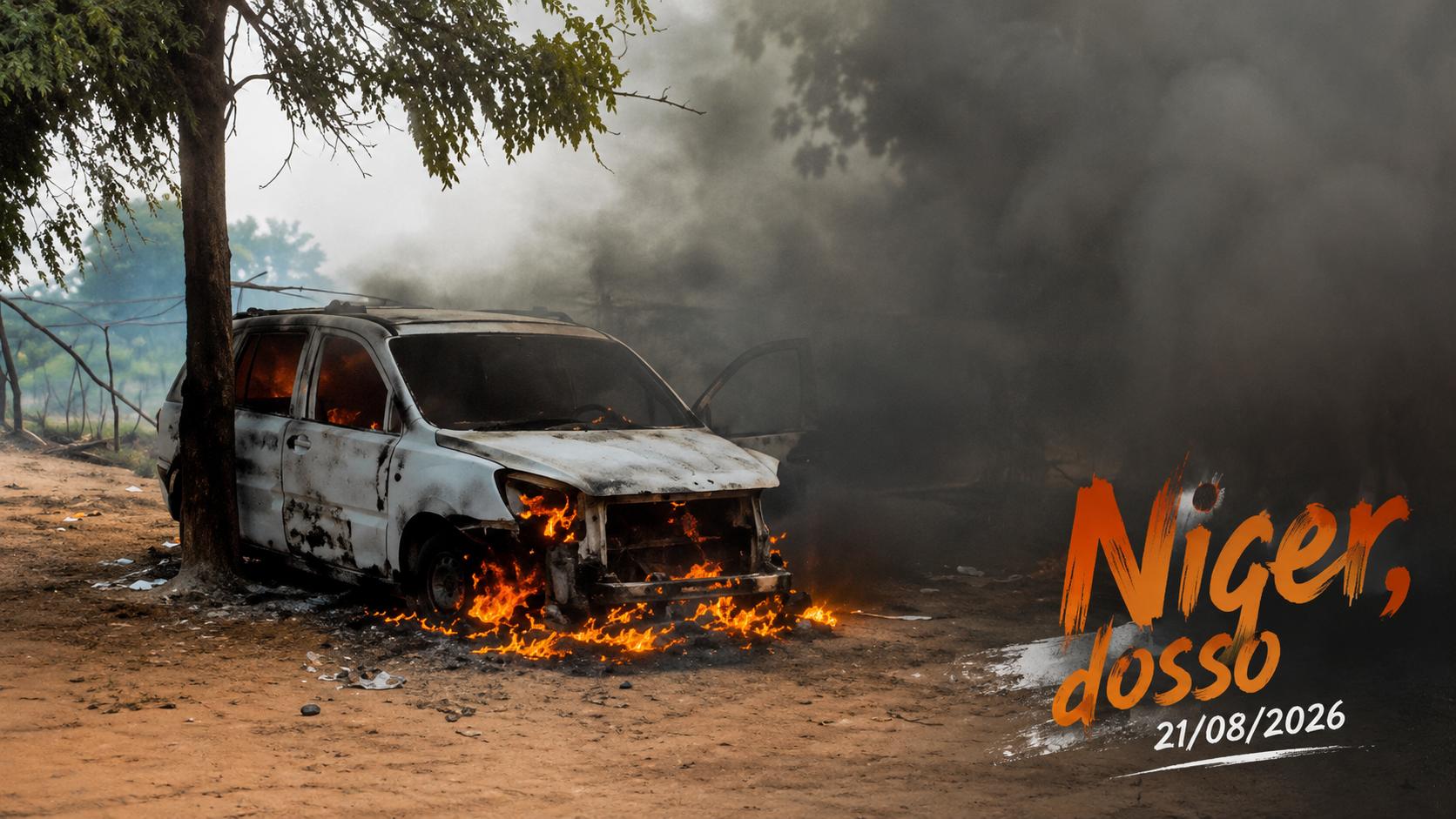
A particularly brutal assault struck Tessa, located in the Dosso department of southwestern Niger, on Friday, August 21, 2026. Local accounts indicate that 18 gendarmes lost their lives during the coordinated attack carried out by heavily armed individuals. The incident also reportedly resulted in significant material damage and severely disrupted local economic activities.
An attack of unprecedented scale
The rural commune of Tessa, nestled within the Dosso department in Niger’s southwest, encompasses numerous villages and serves as a vital administrative hub for the region.
It was in this locality that a violent attack unfolded on August 21, 2026, executed by armed individuals described by local sources as terrorists.
Information gathered on the ground suggests a substantial number of assailants arrived on motorcycles, with approximately ten vehicles reportedly used in the operation. Their primary target was the security apparatus stationed within the community.
The ensuing exchange of gunfire was exceptionally intense. Ultimately, the gendarmerie camp was set ablaze, and multiple military personnel were killed.
The provisional toll reported by local sources stands at 18 gendarmes deceased. This significant figure awaits official confirmation from Nigerien authorities or multiple independent sources before being considered definitive.
The profound shock among residents
In Tessa, the assault plunged the community into a state of profound shock. Residents have described a brutal offensive, characterized by the attackers’ overwhelming firepower and the swiftness of their operation.
In an area where security threats already weigh heavily on daily life, an attack of this magnitude can have immediate repercussions on public confidence.
The presence of security forces is, in fact, crucial for residents to move freely, engage in commerce, and access essential services. The destruction or weakening of a security post therefore represents far more than just a military loss; it can foster a pervasive sense of vulnerability throughout the entire zone.
The ability of the assailants to operate in groups and utilize motorcycles also underscores the persistent challenges faced by security forces in vast rural areas. Such mobility allows armed groups to traverse long distances rapidly before dispersing.
Money transfer agencies also targeted
The aggression extended beyond just the security forces.
Following the assault on the gendarmerie camp, the attackers also targeted local money transfer agencies, specifically Nita and Amana. These establishments were reportedly looted during the operation.
This particular aspect of the attack is especially concerning for the local economy. In many rural areas, money transfer agencies play a pivotal role in facilitating the flow of cash.
They enable traders, families, and workers to send or receive funds without needing to travel to larger urban centers. Their continued operation directly supports market activities and small businesses.
The pillaging of these agencies could therefore trigger consequences that far exceed the immediate financial losses. Operators may be compelled to suspend their services temporarily, while residents could face increased difficulties in accessing their funds.
A fragile local economy
The economic fallout represents one of the primary concerns in the aftermath of such an attack.
When a territory is affected by armed violence, the initial consequences are often visible in commercial sectors. Residents reduce their movements, markets may slow down, and transporters become more cautious.
Adding to this is the apprehension among traders and entrepreneurs about keeping cash or merchandise in areas perceived as vulnerable.
The reported looting of Nita and Amana agencies, if confirmed, could thus intensify an already troubling trend: that of a local economy progressively undermined by insecurity.
Families are also likely to feel the impact. An interruption in money transfer services can complicate the sending of funds between villages and towns, particularly for households that rely financially on relatives living elsewhere.
New alert for the Dosso region
The Dosso region is not typically associated by the public with Niger’s most insecure areas. However, its geographical position and the evolving threat landscape in neighboring regions render the situation particularly sensitive.
The Tessa attack, if the reported toll is confirmed, would constitute an extremely worrying signal.
Crucially, it would demonstrate that armed groups may seek to target localities where security arrangements are less robust than in major urban centers.
The mobility of the assailants also presents a significant challenge. Groups equipped with motorcycles can exploit vast rural expanses to conduct swift operations before retreating.
For authorities, the challenge is therefore twofold: to protect populations and to prevent rural areas from becoming havens or launching pads for armed groups.
Lingering uncertainties
Several questions, however, remain unanswered.
Who precisely are the assailants? To which group do they belong? What was their true number? Did security forces deploy reinforcements after the attack? Were any attackers killed or apprehended?
Most importantly, the reported toll of 18 gendarmes killed still requires official verification.
In the immediate hours following an attack, available information can be fragmented. Figures may evolve as security operations and victim identification efforts progress.
Official confirmation will therefore be essential to establish the precise circumstances of the attack and its human cost.
A population now facing dual anxieties
Beyond the human toll, the Tessa attack raises a broader question: the capacity of rural populations to maintain normal economic activity in an environment marked by insecurity.
The destruction of a security camp and the pillaging of financial services strike at two essential pillars of local life: personal protection and the circulation of money.
For residents, the immediate priority is to restore a sufficiently secure environment to resume daily activities.
For authorities, the challenge will be to strengthen the security presence while preventing the economic consequences of the attack from becoming protracted.
The reported assault in Tessa, if the available information is confirmed, appears to be a particularly grave episode in Niger’s ongoing security crisis. With a reported toll of 18 gendarmes killed, the burning of the camp, and the looting of two money transfer agencies, its repercussions extend far beyond the military sphere alone.
It serves as a stark reminder that insecurity directly impacts local economies and the daily lives of communities.
Awaiting official confirmations regarding the human toll and the exact sequence of events, Tessa remains confronted with a deeply concerning situation. Securing the commune and restoring economic activities will now be at the forefront of residents’ expectations.


 Boureima Amadou