Mariama Hamani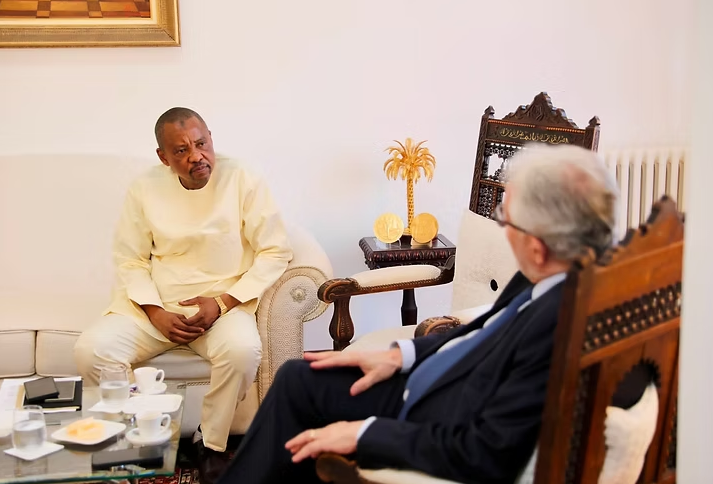
Behind the scenes: how Niamey bypasses Paris in the shadows of faith
The recent meeting between Hamadou Saley, Niger’s chargé d’affaires in France, and Chems-eddine Hafiz, rector of the Great Mosque of Paris, has sent ripples through diplomatic circles. While framed as a cultural or religious partnership, this encounter reveals a calculated move by Niger’s leadership to navigate around frozen bilateral ties with Paris—by leveraging the mosque’s deep-rooted influence in French society.
Diplomacy when official doors are closed
Since political upheavals in Niamey and the sharp decline in Niger-France relations—marked by expelled diplomats, fiery sovereignty rhetoric, and suspended cooperation agreements—the formal diplomatic pathway has ground to a halt. Yet, economic necessities, migration flows, and geopolitical realities refuse to be ignored. The Nigerien government knows it cannot afford to sever all ties with France entirely. The question remains: how to re-engage when every official route has been deliberately blocked?
The answer lies in backchannel diplomacy, or what observers call faith-based outreach. By sending its chargé d’affaires to an institution as symbolic and influential as the Great Mosque of Paris, Niger’s regime is executing a strategic pivot. Failing to secure a ministerial-level audience at the Quai d’Orsay, Niamey seeks an attentive ear—and legitimacy—within the heart of France’s Muslim community.
Exploiting religious networks for political leverage
This approach is far from a mere gesture of goodwill. Using faith as a conduit to convey messages or test political waters is a deliberate tactic to sidestep institutional isolation. The Great Mosque of Paris, with its historical ties to the French state, provides a backdoor into France’s public and political discourse—one that Niamey has been locked out of through official channels.
The contradiction is stark. On one side, Niamey’s public stance rails against foreign interference and calls for a complete break with its former partner. On the other, its behind-the-scenes maneuvers rely on manipulating religious structures in a third country to soften its image and restart indirect dialogue. This strategy raises ethical and strategic concerns: cultural or religious projects should never serve as a smokescreen for political normalization efforts.
If Niger truly aims to rebuild constructive relations with France, such efforts must happen transparently—through state channels and international protocols—not by exploiting the sensitivities of another nation’s faith-based institutions.

 Boureima Amadou