
 Mariama Hamani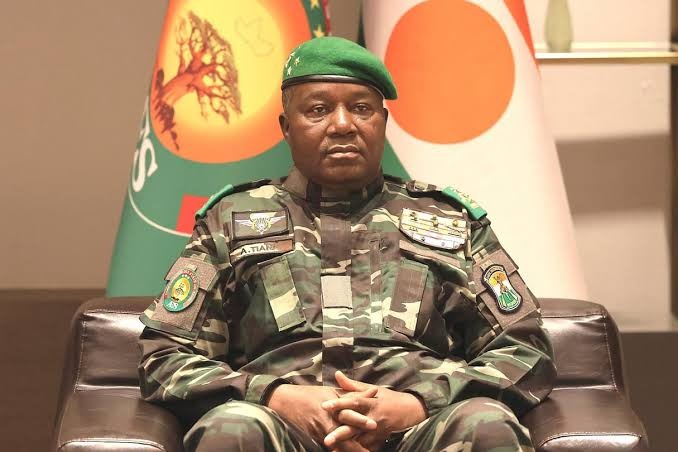
The presidential palace in Niamey has become a place where silence weighs heavier than any speech. More than three years after the July 2023 coup, General Abdourahamane Tiani is confronting a truth he never anticipated: seizing power by force was a catastrophic miscalculation, and now his own life hangs in the balance. The consequences of that decision ripple far beyond the palace walls, touching every citizen, every business, and the entire economy of Niger.
The real-world toll of a power grab gone wrong
Gone are the grand declarations about national sovereignty. Today, the head of the military junta is trapped by the very army he once commanded. The fallout is not abstract: it translates into uncertainty for traders in Niamey’s markets, stalled investment, and a population bracing for the next shock. When a leader is consumed by survival, the country pays the price.
A night that changed everything
The night of August 28-29, 2026, marked a turning point. Rebels from multiple garrisons launched an assault on the air base and pushed dangerously close to the presidential palace. Tiani was saved only by the swift intervention of Russian mercenaries from Africa Corps. Since that night, he lives in constant fear of assassination.
His terror is no longer a secret. Tiani rarely ventures out, his public appearances have been cancelled, and he remains confined to a bunker, guarded by foreign personnel and a handful of soldiers he still trusts.
The Barmou dismissal: a gamble that backfired
In an attempt to regain control, Tiani made a highly risky move in September 2026: he dismissed General Moussa Salaou Barmou, the chief of defence staff and a key figure in the 2023 coup. Barmou was subsequently placed under house arrest.
But the decision turned against him. General Barmou is widely respected among elite troops, and his removal was seen as a betrayal within the barracks. According to multiple sources, officers have issued ultimatums to the leadership: they demand an end to arrests within the military and threaten a mass uprising if the president continues his witch hunt.
A leader besieged by his own soldiers
A former security specialist, Tiani understands the mechanics of a coup better than most. He knows that the greatest threat no longer comes from terrorist groups at the borders, but from his own soldiers.
The irony is stark: overthrowing a civilian president in 2023 was easy, but governing with the constant fear of being shot by your own army has become a living hell. Today, General Tiani is no longer truly trying to lead Niger — he is simply trying to survive.
What it means for citizens and the economy
This internal paralysis has direct consequences for ordinary Nigerians. Security operations are disrupted, public services falter, and economic activity suffers as investors stay away. The power struggle within the military creates a vacuum that extremists and criminal networks can exploit.
For businesses, the uncertainty is toxic. Contracts are delayed, supply chains are disrupted, and the informal economy — which sustains millions — operates under a cloud of fear. Every day that Tiani focuses on his own survival is a day the nation’s challenges go unaddressed.
The road ahead: a nation held hostage by one man’s fear
As long as the palace remains a bunker and the army remains fractured, Niger’s future hangs in the balance. The consequences are not just political; they are human. Families wonder if the next mutiny will bring violence to their streets. Young people see no path forward. And the economy, already fragile, teeters on the edge.
General Tiani’s personal nightmare has become a national one. The question is no longer whether he can hold onto power, but how much more the country will have to endure before the crisis ends.


 Boureima Amadou





