Boureima Amadou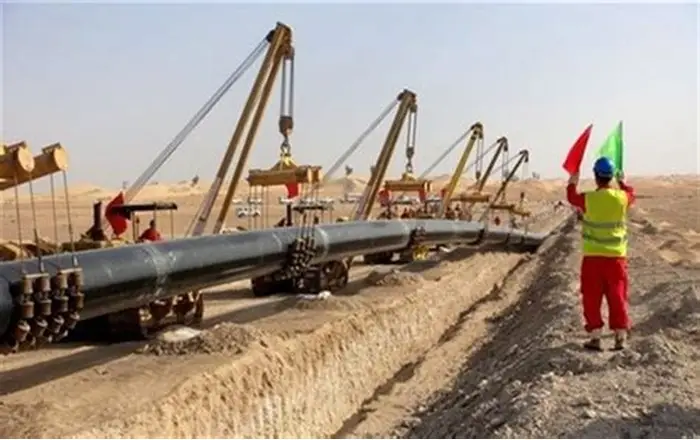
Africa’s energy sector is on the cusp of a monumental transformation, with Niger asserting itself as a crucial component. The Trans-Saharan Gas Pipeline (TSGP) initiative, formally inaugurated on June 4 in collaboration with key partners Algeria and Nigeria, has reached a critical juncture. Spanning over 4,000 kilometers, this ambitious undertaking aims to transport natural gas from Nigeria directly to European markets, traversing the entirety of Nigerien territory.
For Niamey, the significance of this endeavor extends beyond mere infrastructure development; it represents a profound declaration of economic sovereignty and an elevation of its geopolitical standing on the global stage.
Niger’s Corridor: Africa’s Energy Nexus
The TSGP’s planned route will link the substantial gas reserves of Nigeria’s Delta region to Algeria’s established pipeline network, which includes the Medgaz and Transmed systems, providing direct access to the European market. At the very core of this vast transit equation lies Niger.
Key Project Metrics:
- Total Length: Exceeding 4,000 kilometers, with a substantial section traversing Niger from its southern to northern borders.
- Annual Capacity: Approximately 30 billion cubic meters of natural gas designated for international export.
- Estimated Investment: Over 13 billion US dollars.
By providing a secure and highly efficient transit infrastructure, Niger establishes itself as the essential enabler for the Abuja-Alger axis. Far from being a passive observer within this crucial transit corridor, the nation intends to leverage its unparalleled geographical advantage to invigorate its domestic economy.
Significant Local Benefits and Development Prospects
Beyond the broader macroeconomic advantages and the transit royalties that will bolster state coffers, the TSGP offers an unparalleled catalyst for industrial growth within Niger. Preliminary agreements specifically incorporate provisions for local gas supply.
- Electrification and Energy Access: A portion of the transported gas will be allocated to power local thermal electricity plants, presenting a significant opportunity to alleviate the nation’s energy deficit.
- Job Creation and Skill Transfer: Both the construction phase and the subsequent operation of compression stations within Nigerien territory are projected to generate thousands of direct and indirect employment opportunities, fostering the development of indigenous expertise in gas engineering.
A Strategic Response to European Demand
The timing of this project’s initiation is far from coincidental. The European Union, actively pursuing an assertive strategy to diversify its energy supply and achieve long-term independence from Russian gas, identifies the TSGP as a prime alternative.
By assuming the crucial role of ensuring the security of this energy flow towards Europe, Niger significantly enhances its diplomatic leverage with Western partners. The nation unequivocally demonstrates its capability to engage in complex, large-scale multinational industrial collaborations.
Overcoming Challenges: Security and Financing
While palpable enthusiasm resonates across Niamey, Algiers, and Abuja, the path ahead remains fraught with complexities. The foremost challenge involves safeguarding a 4,000-kilometer route that traverses Sahelian regions experiencing persistent security concerns. The three partner nations will need to implement unprecedented levels of coordination among their defense forces to ensure the infrastructure’s inviolability.
Furthermore, securing the final financial arrangements and attracting international investments will necessitate both political stability and a transparent regulatory framework—signals that the Nigerien government is actively striving to convey to global markets, reinforcing confidence in African governance.
The inauguration on June 4 signaled the dawn of a new epoch. By positioning itself as the indispensable link between Nigeria, a prominent gas producer, and Algeria’s extensive distribution infrastructure, Niger is no longer merely reacting to regional geopolitics; it is actively shaping them. The successful realization of the TSGP has the potential to fundamentally transform Niger into an indispensable energy hub connecting Sub-Saharan Africa with the European continent, a key development in continent news.