
 Mariama Hamani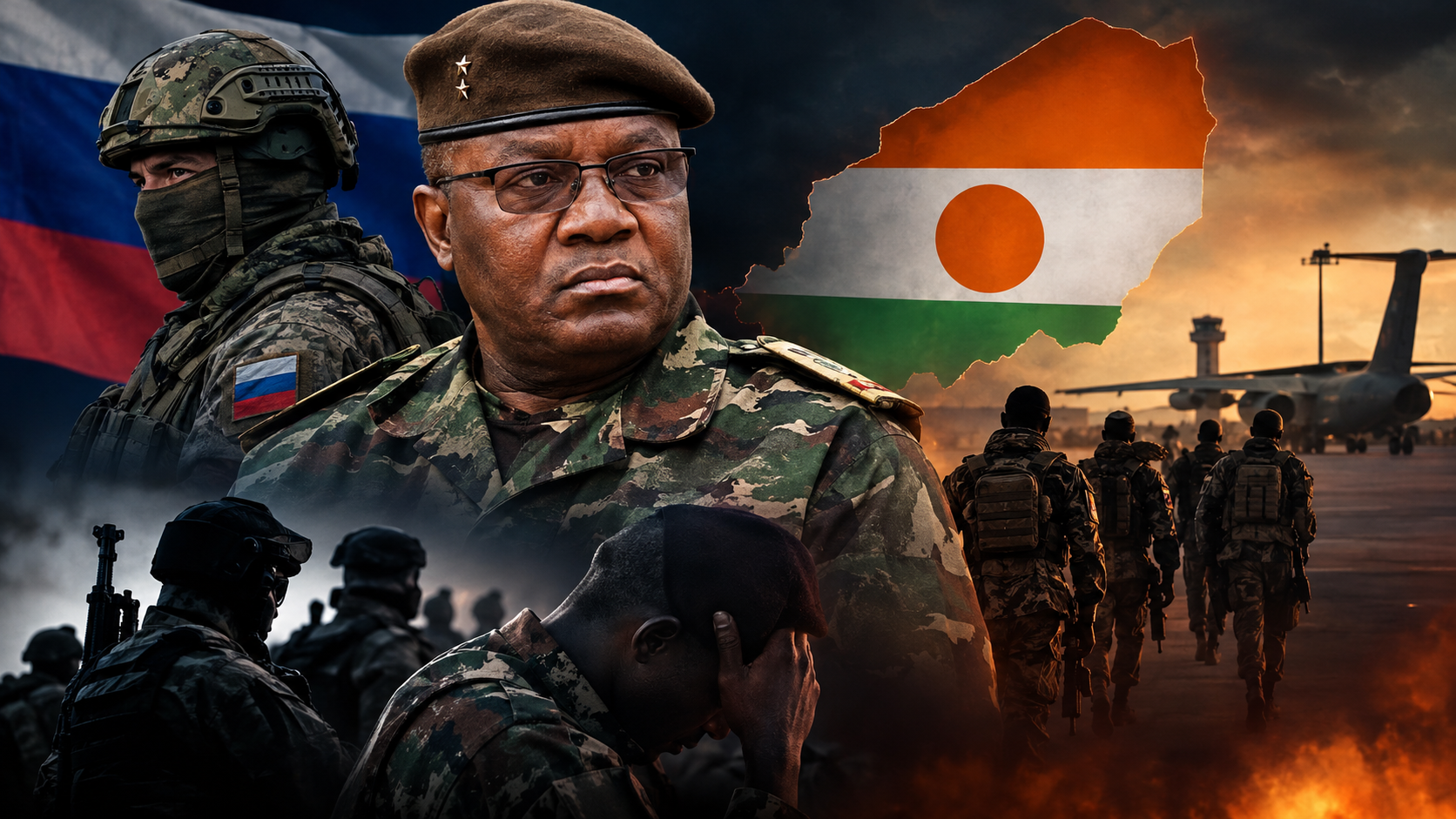
The night of 28 to 29 August 2026 is now etched into Niger’s modern history as one of the most turbulent episodes of Abdourahamane Tiani’s rule. What began as a mutiny by young soldiers, most of them from the special forces, quickly escalated into a nationwide crisis with consequences that continue to ripple through barracks, households and markets across the country.
At Niamey’s Diori-Hamani international airport, the 101st base and other sensitive sites came under attack. For nearly twenty-four hours, the military government teetered. When the dust settled, the human and economic cost became painfully clear: at least 500 soldiers arrested, an unknown number killed or missing, a top general removed from his post, and a security apparatus left deeply fractured.
From mutiny to mass purge: the human toll
What happened after the gunfire stopped has drawn intense scrutiny. More than 500 military personnel were detained, the vast majority from the special forces. Others are believed to have vanished or fled the country. The scale of the arrests has left entire units hollowed out and families scrambling for information about their relatives.
The purge did not stop at the rank and file. On 11 September, Moussa Salaou Barmou chief of defence staff and a former commander of the special forces was dismissed and replaced by General Mamane Sani Kiaou. Within days, Barmou was placed under surveillance, reportedly confined to his residence.
Officially, the government blamed “dysfunctions” in the chain of command during the mutiny. But that explanation leaves far too many questions unanswered.
A general who knew too much
Barmou was no ordinary officer. He had led the special forces from within and knew their inner workings better than almost anyone. He had also played a role in the July 2023 coup that brought Tiani to power, making him one of the regime’s key figures.
Yet his military background and past ties to certain American networks set him apart from the pro-Russian orientation Tiani had embraced. When the special forces became the epicentre of the mutiny, the chief of defence staff automatically became a central figure and a potential liability.
Could the regime still trust him? Could his adversaries pin the insubordination of units he once commanded on him? And what exactly transpired between him and Russian officials during the most critical hours of the crisis? The answers remain incomplete, but one fact is documented: days after the crisis, Barmou lost his job.
Russia’s decisive role and its price
The involvement of Russian Africa Corps fighters has become one of the most sensitive aspects of the affair. Since 2023, Tiani has redirected Niger’s security policy squarely toward Moscow, breaking with several Western partners in the process. When his grip on power was directly threatened, the Russian Africa Corps found itself at the heart of the counter-operation.
Russian forces provided ground and air support to troops loyal to Tiani, helping to retake the air base. The symbolism is stark: Nigerien soldiers rising up against their own command, and a Nigerien regime relying on foreign fighters to restore order.
The consequences extend well beyond the battlefield. The intervention not only saved Tiani’s government it also reshaped the balance of power within Niger’s armed forces, with units purged, commanders replaced and loyalties tested.
What the crackdown means for citizens and the economy
For ordinary Nigeriens, the fallout is not abstract. A weakened and distrustful army raises questions about the country’s ability to confront the jihadist insurgencies that have destabilised vast swathes of the Sahel. Security vacuums in border regions threaten farming, trade and transport the backbone of local livelihoods.
The mass arrests have also placed enormous strain on military families. With hundreds of soldiers detained and many unaccounted for, households have lost breadwinners and face an agonising wait for information. The uncertainty feeds resentment and fear, particularly in communities with strong ties to the armed forces.
Economically, the crisis compounds existing pressures. Niger already contends with sanctions, reduced foreign investment and disrupted supply chains. A demoralised military and heightened internal instability risk further deterring investors and deepening the economic hardship felt by millions.
The unanswered questions that still haunt Niamey
Accounts circulating today describe the events as an attempt by Tiani to “liquidate” special forces units seen as hostile to the regime. The accusation is extremely serious. Available information does establish a major crackdown after the mutiny mass arrests and a sweeping restructuring of the military hierarchy. But it does not yet allow the public to conclude that a general order to “liquidate” the special forces was issued by Tiani.
That is precisely where the real investigative work begins. Who gave the orders during the clashes? Which units opened fire? How many soldiers were killed? How many are detained, and under what conditions? Which officers were interrogated or sidelined? And what exact role did Russian fighters play in ground and air operations?
These are questions the Nigerien government has still not answered publicly and completely.
A regime that promised to restore the army now fighting it
Tiani justified seizing power in 2023 by citing the need to restore security and place the army at the centre of national defence. Three years later, part of those armed forces turned against the government. When crisis struck, the regime called on a foreign military partner to retake a strategic installation before launching a deep reorganisation of its own military apparatus.
The problem goes far beyond Barmou alone. It strikes at the very heart of the security model Tiani has built. When a military regime must lean on foreign forces to contain a mutiny of its own soldiers, then sideline part of its command after the fighting, it is no longer just a disciplinary crisis. It is a sign of a profound fracture within the very apparatus that holds power.
And behind the official statements, the appointments and the arrests, one question lingers: how much more blood will be spilled before the truth about the night of 28 to 29 August finally leaves the barracks?
By Boureima Amadou — Reporter
By Mariama Hamani — Analyst


 Boureima Amadou





