Boureima Amadou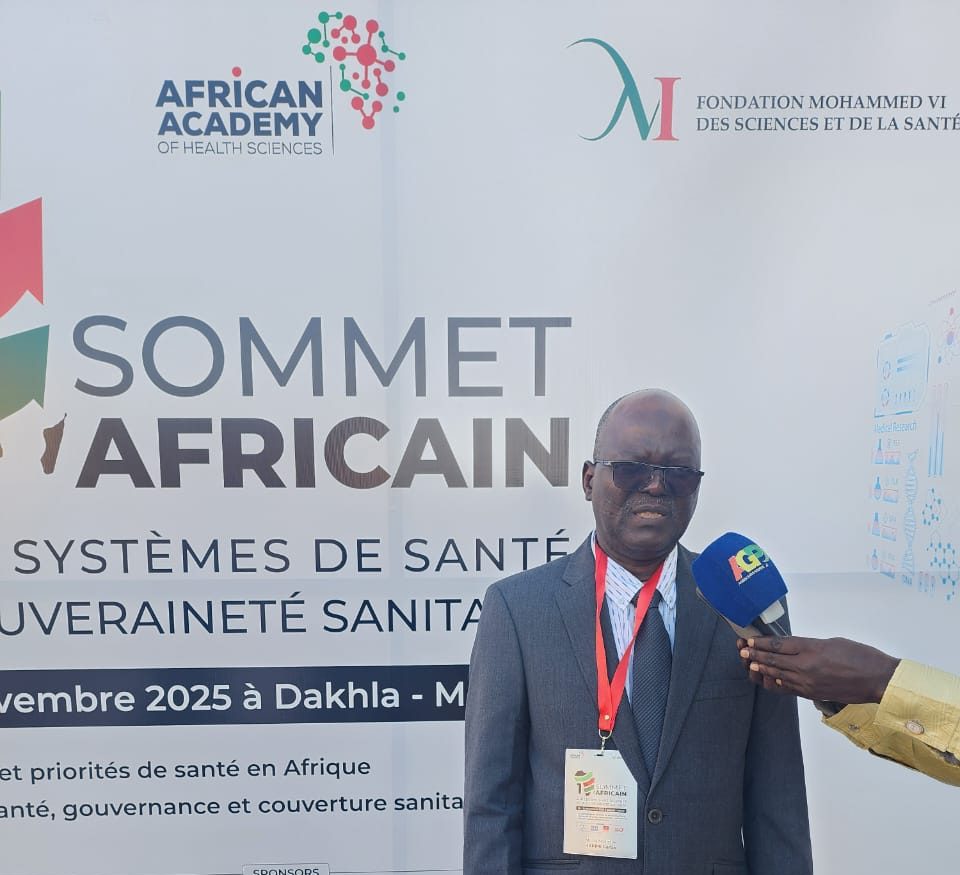
Colonel Major Garba Hakimi, Niger’s Minister of Health and Public Hygiene, declared on Saturday, November 29, in Dakhla, Morocco, that Niger is actively pursuing health sovereignty. This statement came during an interview with ANP, following the conclusion of the inaugural African Summit on Health Systems and Health Sovereignty, a two-day event in which he participated in the Moroccan province.
The pursuit of health sovereignty is a central tenet of Niger’s highest authorities, led by General of the Army Abdourahmane Tiani, President of the Republic and Head of State, alongside the Prime Minister, Minister of Economy and Finance. These leaders are committing substantial efforts to bolster the health sector, as highlighted by the government official.
Significant progress has been made in this endeavor, with new health infrastructure being developed across the nation in recent years. This includes the construction of hospitals and integrated health centers throughout Niger. The minister underscored that “these facilities will be instrumental in enhancing primary healthcare at the community level,” asserting that a robust healthcare system relies fundamentally on basic infrastructure capable of delivering primary care services.
Minister Hakimi further explained that this dynamic also encompasses the acquisition of cutting-edge medical equipment, representing considerable investments nationwide. The aim is to empower technicians and doctors to make precise diagnoses and effectively manage diseases, particularly concerning curative care. He added, “Beyond equipment, training is crucial; having advanced tools is not enough without qualified personnel. Therefore, health workers are undergoing specialized training and continuous professional development programs.”
As part of these strategic initiatives by Nigerien authorities, the health sector receives substantial budgetary allocations. Additionally, measures have been implemented to provide free healthcare for certain vulnerable social groups and a 50% reduction in service fees at public health facilities, as detailed by the Minister of Health and Public Hygiene.
He emphasized that free services for specific procedures, such as childbirth and care for children under five, coupled with infrastructure development at all levels, improve healthcare access for everyone. “This renewed momentum will propel us towards the universal health coverage advocated by all authorities. I believe Niger is fully engaged in this trajectory, and God willing, we will achieve it,” he affirmed.
Reflecting on the outcomes of the Dakhla summit, Minister Hakimi noted that African experts spent 48 hours meticulously reviewing the continent’s health systems. While progress was acknowledged, numerous challenges were identified. Among these, he specifically cited the inherent fragility of African health systems, alongside issues of governance and financing.
For the Nigerien official, the critical task extends beyond merely identifying challenges; it involves formulating effective strategies to cultivate a more robust, resilient, and ultimately higher-performing health system. This is essential to achieve the overarching goal of health sovereignty. He stressed, “These are fundamental conditions for truly advancing towards health sovereignty.”
The minister continued, “This summit was an outstanding success, allowing us to acknowledge and appreciate the vision of His Majesty the King of Morocco – a vision for a health-sovereign Africa. In line with this vision, we participated this morning (Saturday, November 29) in the inauguration of the African Academy of Health Sciences headquarters.”
He clarified that Morocco is deeply committed to this undertaking, evidenced by “the construction of university hospitals, alongside universities and other health facilities, including a comprehensive complex in Dakhla that we visited.” Colonel Major Garba Hakimi, a medical professional, observed, “You understand that human resources are paramount for health sovereignty; a strong, robust, and efficient health system cannot exist without quality human capital.” He further opined, “I believe this vision of His Majesty the King should be embraced by other heads of state to truly enable Africa’s progress.”
In this context, the Minister of Health and Public Hygiene recalled past initiatives by heads of state recommending the allocation of 15% of national budgets to the health sector. This funding is crucial to ensure sufficient resources for acquiring equipment, developing adequate human resources, and building a solid health system capable of achieving the desired health sovereignty. “We should not rely on aid from others, from the West or partners, to attain sovereignty. It is achievable; we simply need to make the effort,” asserted Colonel Major Garba Hakimi.
He further noted that beyond direct budgetary allocations for health, an increasing number of countries are recognizing the necessity of innovative financing mechanisms. This blend of funding approaches is expected to forge a strong and sustainable health system.
The minister expressed optimism regarding the Dakhla Declaration roadmap, which is structured around five key pillars: Epidemiology; Human Capital/Training; Research and Innovation; Financing/Governance; and Infrastructure and Equitable Access. He conveyed, “I believe that by focusing on these five axes, we can indeed achieve the much-desired health sovereignty; it is entirely feasible. The main thing is to get back to work.”
The 1st African Summit on Health Systems and Health Sovereignty convened approximately 200 African experts in Dakhla from November 28 to 29, 2025, to deliberate on health sovereignty, a project strongly supported by the King of Morocco.