Boureima Amadou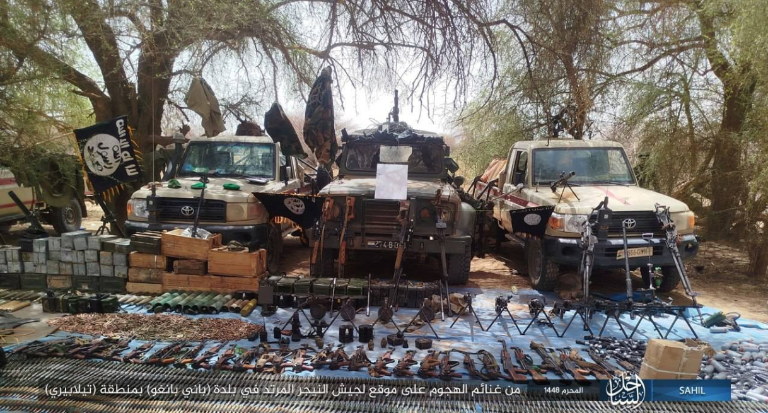
The Nigerien military faced its darkest day on Wednesday, June 24, 2026, when the Islamic State in the Sahel (IS Sahel) launched two synchronized, devastating attacks on strategic outposts in Inates and Banibangou. The militant group’s claims of responsibility paint a grim picture: at least 80 fatalities, scores of military vehicles obliterated, and critical hardware seized. The assault has left these border communities—already grappling with instability—choking under a wave of terror that threatens both lives and livelihoods.
a calculated and devastating offensive
The precision and timing of the assaults underscored the group’s lethal capabilities. On a day when military movements are least predictable, IS Sahel struck with calculated ferocity. In Inates, a hotspot in the volatile Three Borders region shared with Mali and Burkina Faso, the militants overran a military detachment, killing at least 70 soldiers, destroying 22 vehicles, and seizing 24 more. Within hours, a second column descended upon Banibangou, adding another 10 fatalities, 16 vehicles lost, and 6 captured to the grim tally.
Military analysts warn that the coordinated strikes reveal a persistent threat: despite ongoing regional operations, IS Sahel retains alarming mobility and operational freedom, exploiting porous borders to carry out high-impact attacks.
economic paralysis grips the Tillabéri region
The human toll is only part of the story. The attacks have also throttled the economic lifeblood of the Tillabéri region, where Inates and Banibangou serve as critical commercial hubs. Markets lie dormant, trade routes are severed, and the cost of staples has skyrocketed within 48 hours.
The economic fallout unfolds in three devastating layers:
- Collapse of weekly markets: These bustling trade centers, vital for livestock and grain exchanges, now stand empty as fear of further violence keeps buyers and sellers away.
- Road closures and transport paralysis
- The loss of nearly 70 vehicles—military and civilian—has choked supply chains, isolating communities and deepening their vulnerability.
- Farmland abandonment: With the rainy season approaching, farmers and herders hesitate to venture into fields, risking long-term food insecurity.
grief and defiance in the face of terror
The shockwaves reverberate across Niamey and Tillabéri, where families mourn fallen soldiers and civilians recount harrowing scenes of devastation. While IS Sahel’s strategy seeks to erode public morale and force submission or displacement, pockets of resilience are emerging. Blood donation drives surge in hospitals to aid the wounded, and civil society is urging the government to prioritize these embattled regions, ensuring they are not abandoned to the peripheries of national security.
reassessing Niger’s security strategy
The attacks in Inates and Banibangou force a reckoning with the effectiveness of surveillance and early warning systems. For the ruling junta and military command, this setback demands urgent tactical recalibration. Stabilizing the region, however, will require more than firepower. To regain ground, Niger must restore economic confidence—reopen trade routes and reinvigorate local markets. The coming weeks will test a dual mandate: rolling back the militant threat through decisive counteroffensives while injecting life into economies on the brink of collapse.