Boureima Amadou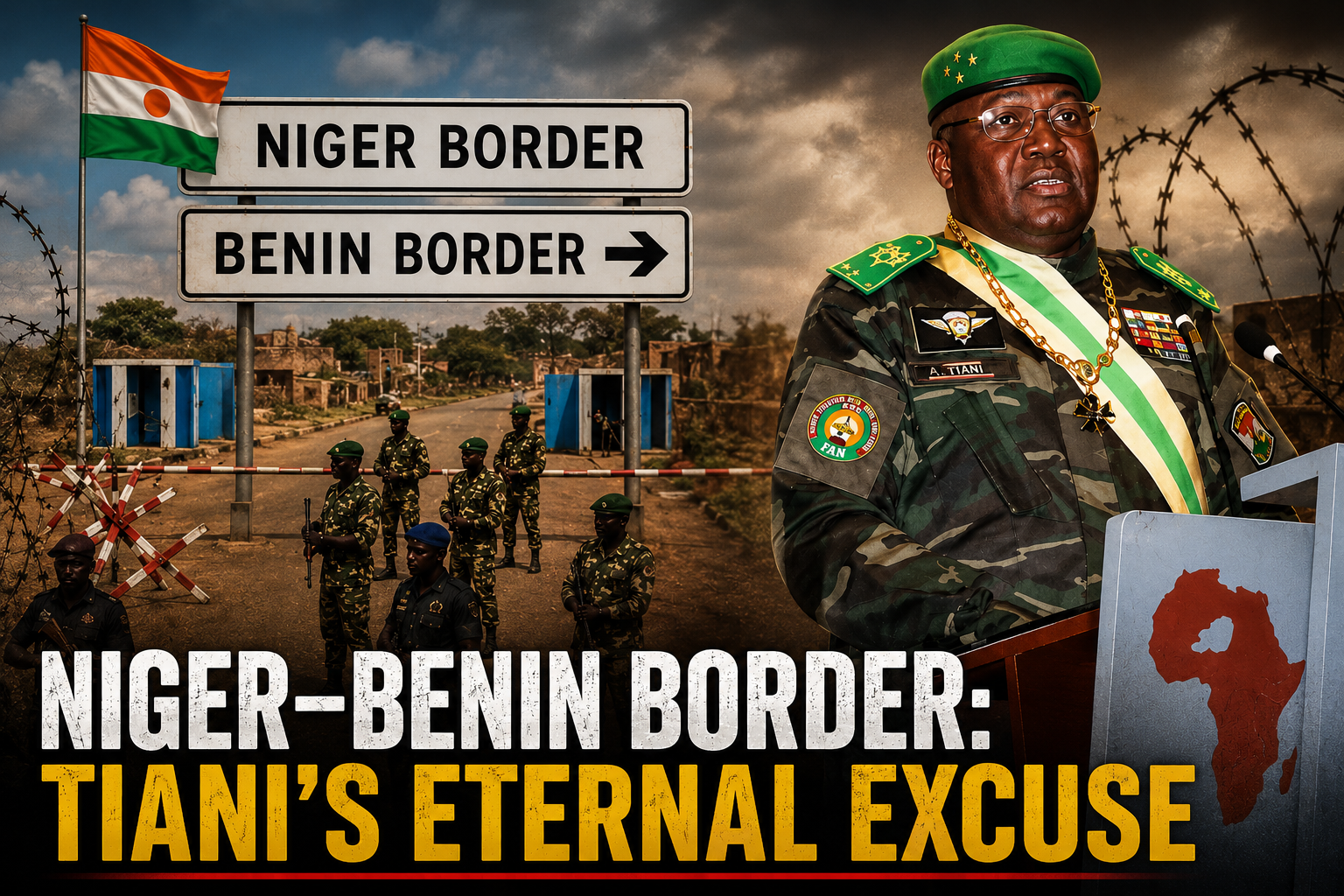
The diplomatic overtures between Niger and Benin, following recent technical discussions, initially suggested a potential resolution to the prolonged border closure. Yet, the recent remarks by Niger’s transitional leader, General Abdourahamane Tiani, have once again dashed hopes for an imminent reopening. During a national address marking the first anniversary of his administration, he emphasized that certain unspecified conditions must be met before any irreversible decision is made regarding the border.
An ambiguous stance yielding political dividends
The absence of concrete details regarding these so-called “prerequisites” serves a deliberate purpose. By withholding specifics on criteria, timelines, or benchmarks, the military-led government maintains unchecked flexibility to prolong the closure indefinitely. Each new demand can be introduced ad hoc, ensuring the dispute remains unresolved and reinforcing a narrative of sovereign defiance against Benin.
Security rhetoric losing its persuasive power
Since the July 2023 change in leadership, Niger’s government has consistently cited the risk of armed groups or foreign actors using Benin as a rear base to justify the border closure. However, these claims lack verifiable public evidence, particularly as terrorist attacks persist in Niger’s Tillabéri, Tahoua, and Diffa regions. The contradiction is glaring: if the closure were truly a security measure, why do these violent incidents continue unabated?
Earlier technical consultations between experts from both nations had aimed to reconcile security concerns with the restoration of trade flows. Yet, the rejection of these efforts signals a clear prioritization of political messaging over practical solutions.
Economic repercussions disproportionately affecting Niger
While Benin faces reduced transit traffic through the Port of Cotonou and diminished customs revenue, the consequences for landlocked Niger are far more severe. Reliant on regional corridors for essential imports, Niger’s businesses and consumers bear the brunt of diverted trade routes, leading to:
- Surging food prices
- Increased costs for construction materials
- Higher expenses for pharmaceuticals and imported goods
- Supply chain disruptions for small-scale traders
- Erosion of competitiveness for local enterprises
Local merchants along the border have seen their livelihoods vanish, while once-thriving communities now grapple with economic stagnation.
Regional cooperation eroding amid closed borders
Beyond trade, the closure undermines broader collaboration, from academic exchanges to joint security initiatives. Ironically, the absence of legal commercial pathways has not stifled illicit activity; instead, cross-border smuggling networks have flourished, complicating oversight for authorities on both sides.
The sovereignty paradox: isolation vs. protection
General Tiani’s framing of the closure as an “irreversible” act of sovereignty suggests a deliberate conflation of hardline posturing with national security. Yet, the enduring human and economic costs raise a critical question: Does true sovereignty lie in isolating an economy or in safeguarding the welfare of its people? For many analysts, the prolonged closure appears less a measured security strategy and more a tool to sustain internal political legitimacy.
Human toll obscured by political posturing
The true victims of this impasse are the families separated by the closure, transport workers deprived of income, students barred from travel, and entrepreneurs trapped in uncertainty. With each passing week, the cumulative burden intensifies, pushing the prospect of normalized relations further out of reach.
A stalemate designed to persist
Three years into the crisis, the Niger–Benin border closure has evolved from a security measure into a political lever. By invoking opaque conditions, Niger’s leadership retains the unilateral power to maintain the status quo indefinitely. Unless political imperatives yield to pragmatic cooperation, the daily hardships faced by citizens on both sides will continue unaddressed, while the region’s economic and social fabric frays further.

 theafricantribune