
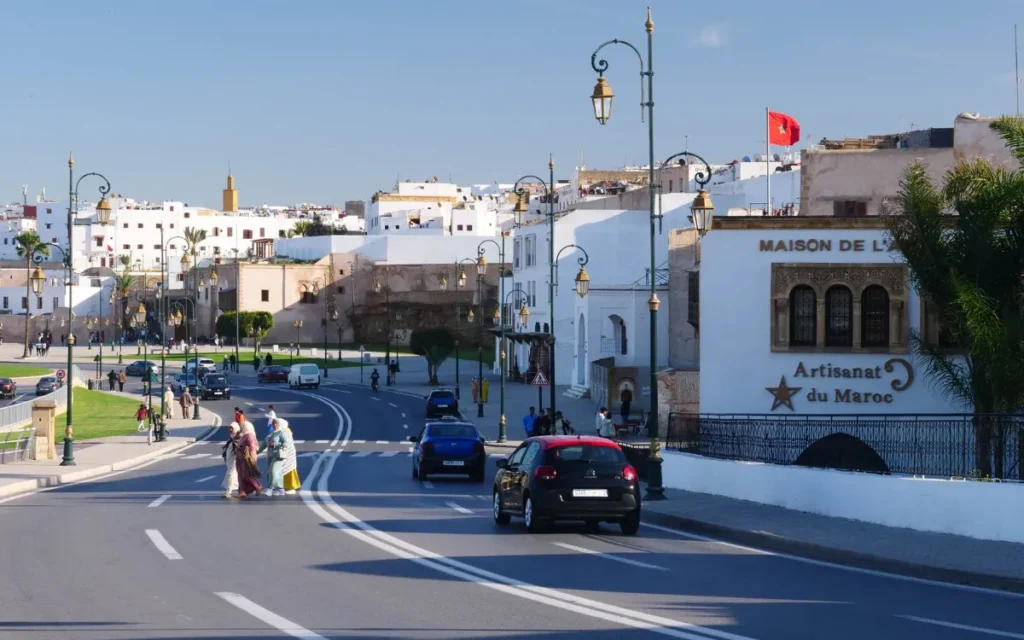
Morocco’s economic landscape in 2025 has been marked by an impressive acceleration in growth, with the country recording its strongest performance in nearly a decade. The Gross Domestic Product (GDP) expanded by 4.9%, yet this headline figure masks a striking disparity: while investment surged by 16.3%, household spending crept up by just 1.2%.

Economic momentum in Morocco has been primarily driven by large-scale public investments, particularly in infrastructure projects tied to the upcoming 2030 FIFA World Cup. Construction activity alone expanded by 6.7%, while public sector spending rose by 5.1% as social protections expanded and public services were enhanced.
Public investment fuels growth
Investment in Morocco has been on a steep upward trajectory, climbing 16.3% in 2025 following a 14% increase in 2024. This surge reflects the nation’s aggressive push to modernize its infrastructure, with projects ranging from transportation networks to urban development initiatives. Private investment has also shown signs of recovery, though at a slower pace.
Since the global pandemic, public spending has consistently outpaced GDP growth, reinforcing the economy’s reliance on state-led initiatives. While this strategy has delivered robust economic expansion, the benefits have yet to trickle down to ordinary households at the same rate.
Households feel the squeeze
The slowdown in household spending is striking. After growing by 4.7% in 2023, private consumption decelerated to 3% in 2024 and further to just 1.2% in 2025. Despite easing inflation—down to 0.8%—and improving consumer confidence, families have not yet experienced a proportional boost in purchasing power.
This lag suggests that Morocco’s growth remains heavily dependent on public projects, with limited spillover effects into daily household budgets. The disconnect underscores a structural challenge: while the economy expands, the average Moroccan citizen sees fewer tangible improvements in their economic well-being.
What the future holds for Moroccan households
Looking ahead, economic projections indicate a gradual rebalancing. As the current investment cycle matures, analysts anticipate a shift toward stronger private consumption. With inflation projected to remain subdued and real incomes expected to rise, household spending could accelerate to 4.8% by 2028.
Until then, Morocco’s economic engine will continue to rev on public spending and large-scale developments. For households, the wait for a more inclusive recovery continues.
More Stories
Kjell Scherpen va être transféré en Premier League pour au moins 10 millions d’euros
Morocco’s economy grows but household incomes lag behind
Morocco’s economy booms but household spending lags behind