Mariama Hamani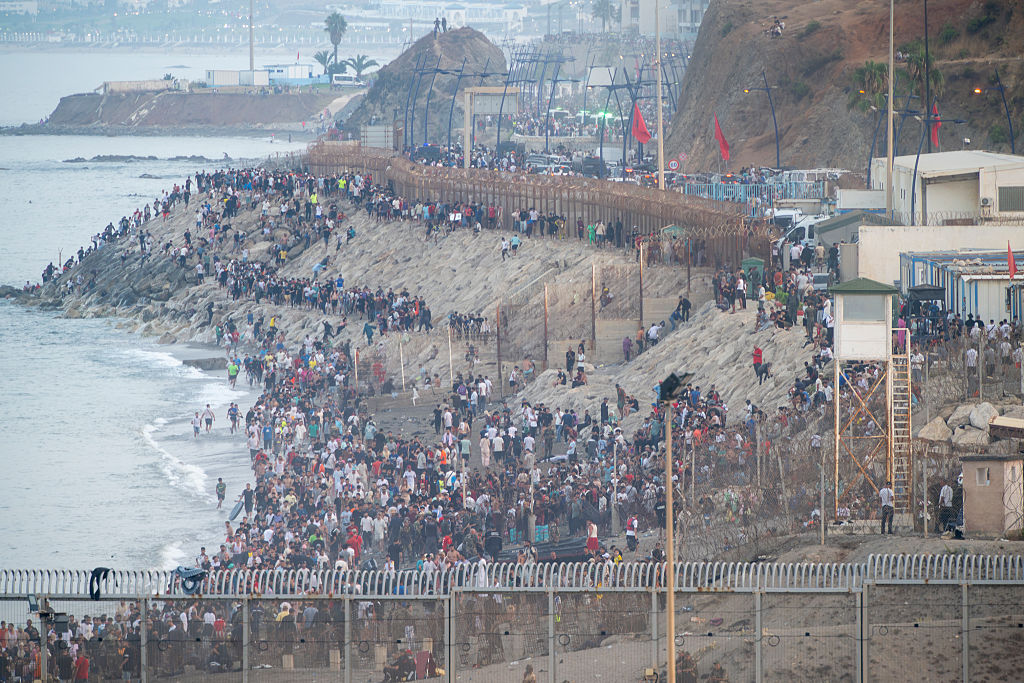
The unresolved dispute over Ceuta: how a territorial claim fuels migration crises
An unprecedented surge of migration has thrust the long-standing territorial dispute between Morocco and Spain into the spotlight. Over 72,000 migrants arrived in Ceuta, a Spanish enclave in North Africa, in late July, triggering political shockwaves across Europe and reigniting debates over sovereignty that have simmered for decades.
Jorge Dezcallar, former Spanish ambassador to Morocco and former director of Spain’s intelligence services, has warned that Rabat shows no signs of abandoning its claims over Ceuta and Melilla. In his assessment, the recent migrant influx was not merely a humanitarian crisis but a calculated move by Morocco to test the resolve of a perceived weakened Spanish government under Prime Minister Pedro Sánchez.
Dezcallar highlighted the deep frustration within Moroccan leadership, particularly as Madrid’s policies on immigration and its vocal criticism of the United States have increasingly diverged from European consensus. “Relations between Spain and Morocco are driven more by emotion than reason, marked by sharp fluctuations,” he observed. Despite these tensions, the two nations remain economically intertwined, relying on each other for critical cooperation in migration control, counter-terrorism, and regional stability.
Ceuta and Melilla: territories rooted in history and sovereignty
Morocco has consistently reiterated its claim to Ceuta and Melilla, territories that have been under Spanish control for centuries, predating the modern Moroccan state. The issue resurfaces repeatedly in diplomatic exchanges, with Moroccan officials framing it as a matter of national sovereignty.
“This question is always present. Every time we meet with Spanish counterparts, we raise it,” stated Justice Minister Abdellatif Ouahbi earlier this week. “We remain steadfast in our territorial integrity… it is a matter that will be resolved through negotiation and with patience,” he affirmed.
In a swift response, Spain’s Defense Minister Margarita Robles emphasized the unshakable nature of Spanish sovereignty over Ceuta and Melilla. “Let there be no doubt: Ceuta and Melilla are Spanish, and they are non-negotiable,” she declared during a visit to the enclaves. Notably, King Felipe VI of Spain has never visited Ceuta or Melilla, and a Spanish foreign minister made the first such trip in modern democratic history only this week—a gesture analysts suggest was intended to avoid provoking Morocco.
Diplomatic friction and the role of migration pressure
Madrid and Rabat have attributed the latest crisis to human trafficking networks exploiting a Spanish Supreme Court ruling in July that restricted the immediate deportation of migrants arriving by sea. However, Dezcallar suggested that Moroccan authorities may have exhibited a degree of permissiveness or oversight in enabling the crisis.
He cautioned that Spain lacks the necessary resources to prevent such influxes, particularly given their recurrent nature. “One can forgive an error once, but not twice,” he remarked, recalling warnings from Ceuta authorities about a gradual rise in irregular arrivals in the days leading up to the surge. Intelligence sources had also alerted authorities to a potential migrant wave targeting Ceuta on August 15, with calls to storm the city circulating on social media. Police and Civil Guard unions confirmed these threats.
The 2021 diplomatic rupture serves as a stark reminder of how territorial disputes can escalate into migration crises. After Spain permitted the hospitalization of Sahrawi leader Brahim Ghali, Morocco retaliated by facilitating the arrival of nearly 10,000 migrants in Ceuta, an act Spanish authorities described as “blackmail.”
“If anyone believes Morocco will abandon its claims on Ceuta and Melilla, they are mistaken,” Dezcallar concluded.


 Boureima Amadou