Mariama Hamani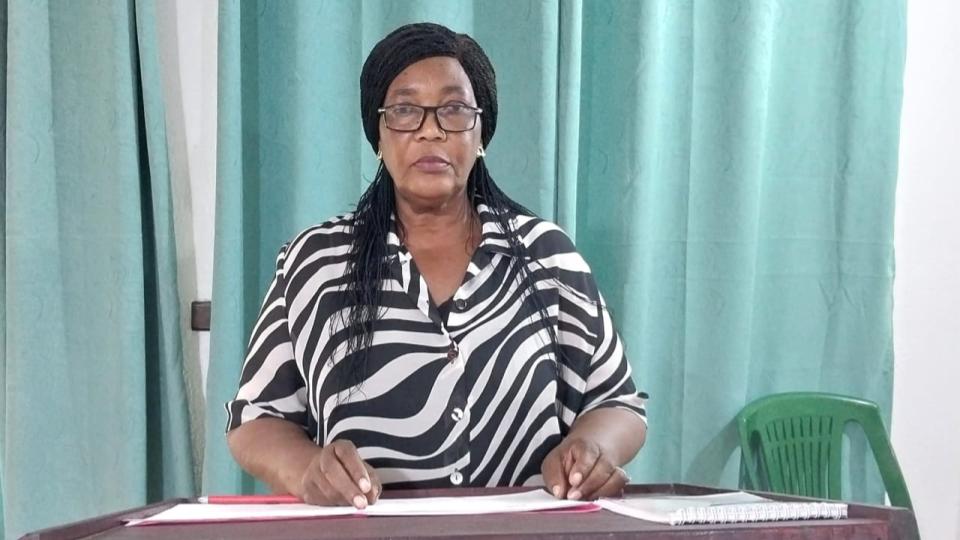
The Union du Peuple Gabonais (UPG) has entered a new chapter in its history. On Thursday, June 25, 2026, in Libreville, following a highly anticipated extraordinary congress, Marie Joselle Itsana was elected party president. This event marks a historic milestone: she becomes the very first woman to rise to the head of this emblematic political formation.
The vote proved particularly tight, reflecting the liveliness of internal debates. Out of 43 ballots cast, Marie Joselle Itsana garnered 23 votes, narrowly ahead of her rival Roger Mouloungui, who obtained 20.
The challenge of unity and rebuilding
Far from denying the fault lines that ran through this congress, the new president chose to turn them into a force for unity. “Our congress expressed different sensitivities, sometimes divergent opinions. This shows that our party is alive,” the leader expressed, accepting her victory with humility tinged with gravity given the scale of the task.
For Marie Joselle Itsana, the urgent need now is cohesion. Aware of the tensions that have weakened the movement in the past, she made a vibrant call for an end to clan wars. Her leitmotif is clear: turn the page on internal divisions to launch a collective reconstruction.
Becoming a major political force again
The new president’s ambition is to restore to the UPG the prominent stature it once held on the Gabonese political chessboard. To achieve this, the roadmap is dense. It notably includes rebuilding the party’s territorial presence across the entire country, while embodying a project resolutely focused on sovereignty, justice, transparency, and development.
An heritage to honor, a youth to mobilize
While looking to the future, Marie Joselle Itsana did not fail to pay tribute to the memory of the party’s historic figures, starting with its emblematic founder-president, the late Pierre Mamboundou, as well as activists who fell for democracy. “We must prove worthy of the heritage we have received and responsible for the one we will pass on,” she stressed.
Finally, turning to the future, she invited the new generation of activists to actively engage in upcoming strategic choices, affirming that a new stage was beginning “today and now” for the UPG.

 Boureima Amadou