
 Mariama Hamani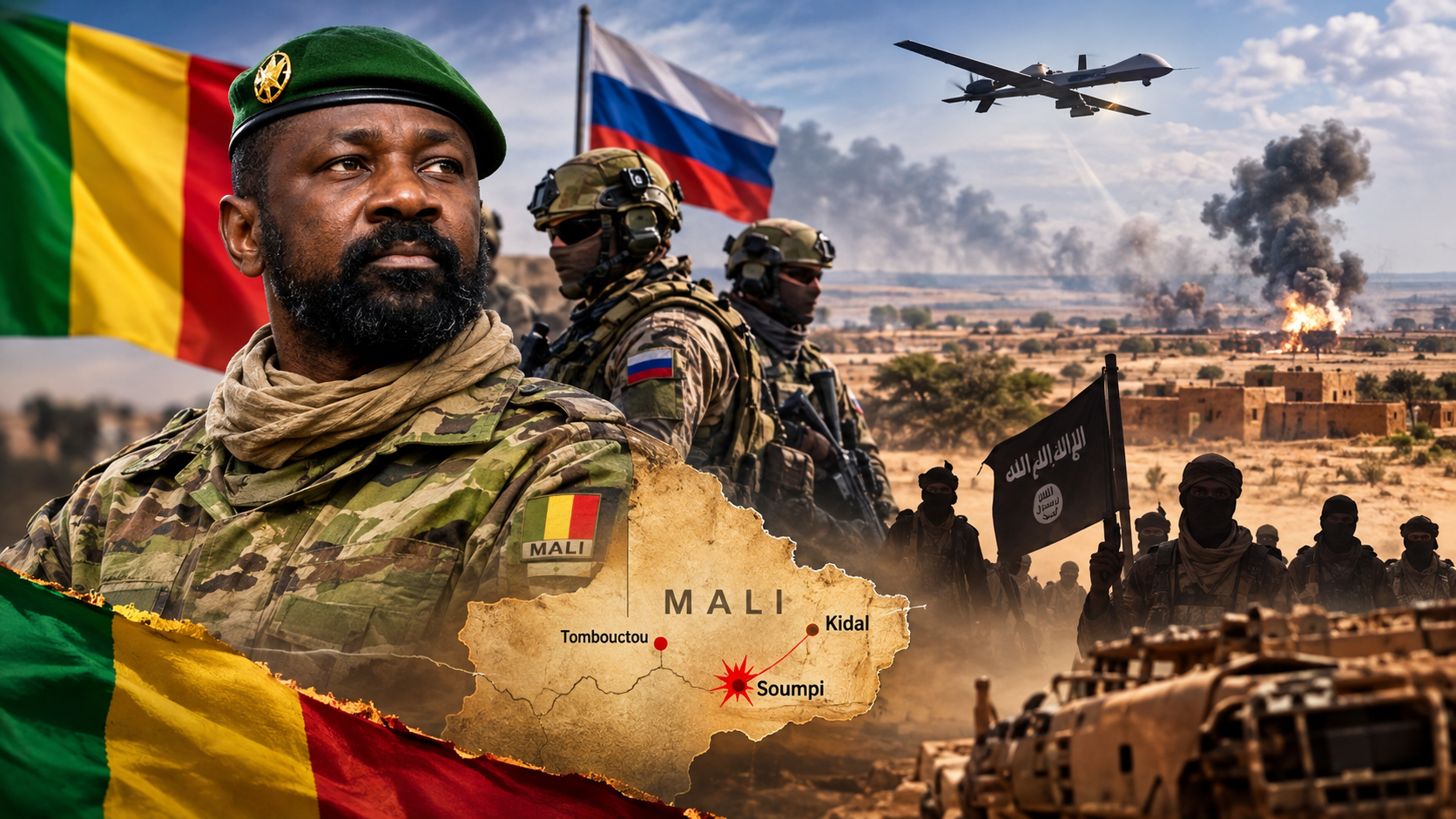
Drone assault exposes weaknesses in Mali’s Russian-backed military strategy
The October 10, 2026 drone strike by the Front de Libération de l’Azawad (FLA) against joint Malian-Russian positions in Soumpi, Tombouctou region, has reignited fundamental questions about Bamako’s security strategy. After four years of military rule and a pivot toward Moscow, citizens and analysts alike are questioning whether this partnership can deliver the long-promised stability.
Colonel Assimi Goïta’s administration staked its legitimacy on breaking from Western security alliances and asserting national sovereignty through Russian cooperation. Yet the persistence of attacks despite this strategic shift raises critical doubts about the efficacy of external military support as a standalone solution.
At issue is not merely the tactical setback in Soumpi, but the broader failure to translate military cooperation into sustainable security gains. Recent operations, including the October 6 reoccupation of Kidal under Russian-backed firepower, have yielded symbolic victories. However, analysts caution that these do not equate to decisive progress against armed groups operating across the Sahel.
Why foreign partners cannot substitute for national resilience
The Mali-Russia security framework has delivered advanced equipment and tactical advantages, yet vulnerabilities remain apparent. The Soumpi attack underscores a harsh reality: no foreign partner, irrespective of firepower, can resolve domestic insurgency without robust Malian-led countermeasures. The crisis demands more than the replacement of one external ally with another it requires a holistic national strategy.
Key considerations central to this debate include:
Autonomy of Malian forces: Are national troops sufficiently trained and equipped to operate independently?
Long-term stabilization: Can recaptured territories remain secure without continuous external intervention?
Civil protection: Are populations in recovered zones safe from reprisals or renewed attacks?
Governance and development: Are administrative services functional, and can displaced communities return home in safety?
These questions strike at the heart of Mali’s security dilemma. Military partnerships can provide critical support, but they cannot replace the need for Mali to build its own sustainable defence architecture.
Transparency and accountability in military cooperation
Discussions around Russian military engagement in Mali must address more than operational outcomes. The financial and strategic dynamics of this alliance warrant scrutiny, particularly regarding resource management and public accountability. While allegations of deliberate prolonging of conflict for profit remain unsubstantiated without verifiable evidence, the opacity of agreements raises legitimate concerns.
For such a partnership to serve Mali’s interests, transparency in contracts, cost assessments, and measurable outcomes must be prioritized. Military cooperation should not be evaluated solely by its ability to sustain a government in power, but by its tangible impact on civilian safety and regional stability.
The path forward: Mali must lead its own recovery
National sovereignty, in this context, transcends rhetoric. It demands that Malian authorities military and civilian demonstrate tangible progress in reducing violence, restoring governance, and fostering local reconciliation. External support is vital, but it cannot substitute for Mali’s agency in shaping its own destiny.
Colonel Goïta’s government faces a pivotal moment. The time has come to move beyond announcements of operational victories and toward a sustainable, people-centred security strategy. This means investing in intelligence, strengthening community defence initiatives, and addressing the socio-economic drivers of instability.
The Soumpi assault serves as a stark reminder: Mali’s security future cannot hinge on the presence or absence of foreign partners alone. Lasting stability will only emerge when the nation’s institutions, its leaders, and its people stand united in the pursuit of peace.
By Mariama Hamani — Journaliste / Rédacteur


 Boureima Amadou



