
 Boureima Amadou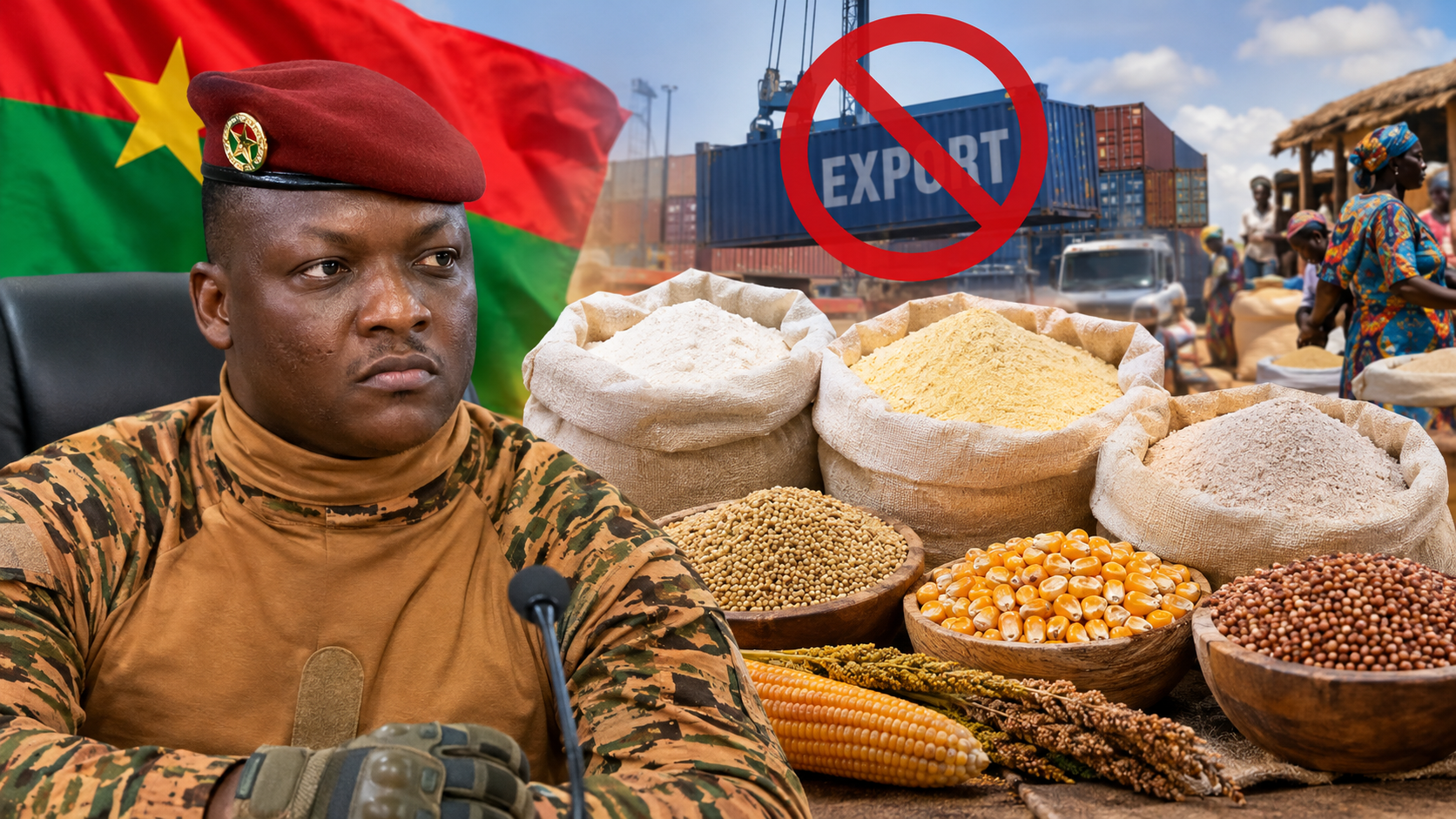
The Burkinabè government has enacted an immediate suspension on the export of millet, maize, and sorghum flours, effective until further notice. The decision, announced in a communiqué from the Ministry of Trade, also revokes all previously issued special export permits for these products.
Government cites food security as driving force behind export ban
The move is framed by authorities as a necessary measure to bolster domestic food supplies amid rising concerns over national food security. However, the rationale behind such restrictions raises broader questions about the limits of state intervention in economic affairs.
Under what circumstances should governments restrict trade to protect internal markets? And do such measures ultimately serve the public interest, or merely centralize control under the guise of consumer protection?
Economic ripple effects raise concerns over long-term impact
While the intent to ensure sufficient local supply may seem reasonable, the consequences for different stakeholders remain uncertain. Farmers, millers, and traders who rely on export markets for their livelihoods now face financial strain. Meanwhile, domestic consumers may not see immediate price relief without parallel interventions in production, distribution, or pricing mechanisms.
The viability of the policy hinges on several factors:
the actual volume of available stockpiles within Burkina Faso;
the ability of local producers to meet demand;
the effectiveness of market monitoring to prevent hoarding or price manipulation;
the potential unintended consequences for rural economies dependent on export revenue.
Local diets under scrutiny: are restricted flours indispensable to Burkinabè households?
The government’s decision assumes that millet, maize, and sorghum flours are universally consumed staples. Yet dietary habits vary significantly across the country. Some urban populations, for instance, may have limited access to these grains or prefer alternatives like rice or wheat-based products.
By cutting off export channels, the state may inadvertently reduce the variety of available foodstuffs, limiting consumer choice and potentially exacerbating food insecurity for certain demographic groups. The measure also overlooks the role of international trade in stabilizing food prices and ensuring year-round availability of essential goods.
Freedom of enterprise at risk amid expanding state controls
This export ban reflects a broader pattern in Burkina Faso, where state authority increasingly dictates economic activity. Critics warn that such restrictions, while justified in the name of food security, could set a precedent for further limitations on economic freedoms. The absence of robust public consultation or transparent justification intensifies concerns about the government’s long-term intentions.
Questions now emerge: will this policy be reviewed in light of its real-world impact? Could additional sectors soon face similar restrictions? And does the public have avenues to challenge these measures or demand accountability?
Accountability must follow intervention
An export ban alone does not constitute authoritarianism. However, in a democracy, such decisions must be justified, time-bound, and subject to review. Citizens have the right to demand measurable outcomes beyond political rhetoric such as stable prices, equitable producer payments, and sustainable livelihoods for traders.
The fundamental issue is not whether the government has the authority to restrict exports, but whether this power is being used responsibly to improve living conditions for all Burkinabè. Food security cannot be achieved through isolation; it requires coordinated policies addressing production, distribution, affordability, and trade.
Ultimately, the success of this measure will be measured not by compliance with decrees, but by tangible improvements in the daily lives of the people it aims to protect.
By Mariama Hamani — Journaliste / Rédacteur



 Mariama Hamani


