Mariama Hamani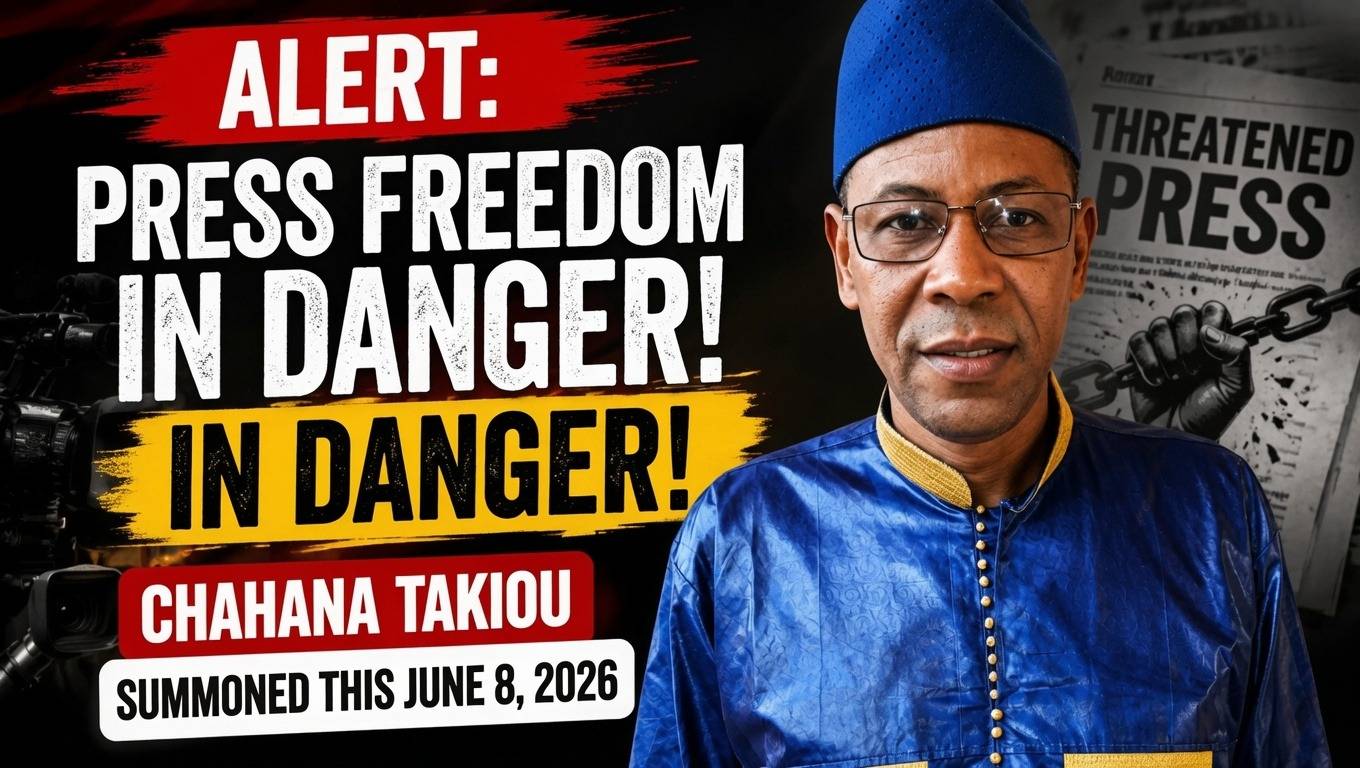
In a stark escalation of judicial pressure against dissenting voices, Chahana Takiou, editor-in-chief of the Malian newspaper Le 22 Septembre, has been summoned by the cybercrime unit prosecutor in Bamako for Monday, June 8, 2026, at 1 PM. The move follows his recent public criticisms of the military junta’s governance, particularly its handling of political, economic, and security affairs. This development underscores the deepening repression facing journalists and citizens who refuse to align with the official narrative in Mali’s transitional government.
The cybercrime unit: a tool for silencing critics
For Chahana Takiou, a respected journalist and director of one of Mali’s most influential weekly publications, the summons is not an isolated legal formality but a calculated warning. The cybercrime unit, originally established to combat digital offenses, has increasingly become the junta’s preferred weapon to target dissent. Under the guise of regulating online discourse, authorities are weaponizing the justice system to intimidate media professionals, turning routine journalistic work into a high-risk endeavor.
Press freedom under siege: Mali’s democratic erosion
The once-vibrant Malian press now operates under suffocating conditions. Once a symbol of democratic resilience, press freedom has been systematically eroded since the military takeover. Journalists face an environment of fear and self-censorship, where even neutral reporting is treated as a subversive act. The junta demands unquestioning loyalty to its version of events, punishing outlets that deviate from official propaganda with suspensions, administrative sanctions, and relentless harassment by the High Authority for Communication (HAC).
In this climate, independent journalism is no longer just a challenge—it is an act of defiance. Those who dare to ask critical questions about the country’s future or expose systemic failures risk being labeled traitors or destabilizers, further shrinking the space for pluralistic debate.
From judicial harassment to forced disappearances: a climate of terror
The summons of Chahana Takiou is part of a broader pattern of repression. Dissent is met with severe consequences, whether from politicians, human rights activists, civil society leaders, or ordinary citizens expressing dissent online. The situation has worsened with a surge in abductions and enforced disappearances. Unidentified armed groups, widely believed to be tied to state intelligence, have detained individuals for weeks without charge, instilling a paralyzing fear across the population. The goal is clear: crush any form of opposition and enforce a suffocating silence nationwide.
Journalists stand firm, but the odds are daunting
Despite the mounting threats, Mali’s media community is rallying in support of Chahana Takiou. Professional unions have issued urgent calls for solidarity and vigilance, emphasizing that constructive criticism is vital for national resilience, especially during crises. Yet this collective resistance faces an immovable obstacle: an authoritarian state apparatus where constitutional and judicial safeguards are routinely disregarded.
For the junta, any critique is tantamount to betrayal. The result is a democracy hollowed out by fear, where the free exchange of ideas is replaced by a monolithic narrative enforced through intimidation and coercion.
A chilling precedent: what’s next for Mali’s press?
The summons of June 8, 2026, signals a dangerous new phase in Mali’s democratic backsliding. By targeting a journalist of Chahana Takiou’s stature, the transitional government sends a blunt message: no dissent will be tolerated. This obsession with enforced unanimity—through arrests, imprisonment, and intimidation—only deepens the country’s isolation and fractures its social fabric.
As Mali grapples with severe security and humanitarian crises, silencing truth-seekers is not a solution. The future of independent journalism and civic freedoms in the country is increasingly being decided not in public forums, but in the shadowy corridors of Bamako’s courtrooms.


 Boureima Amadou