

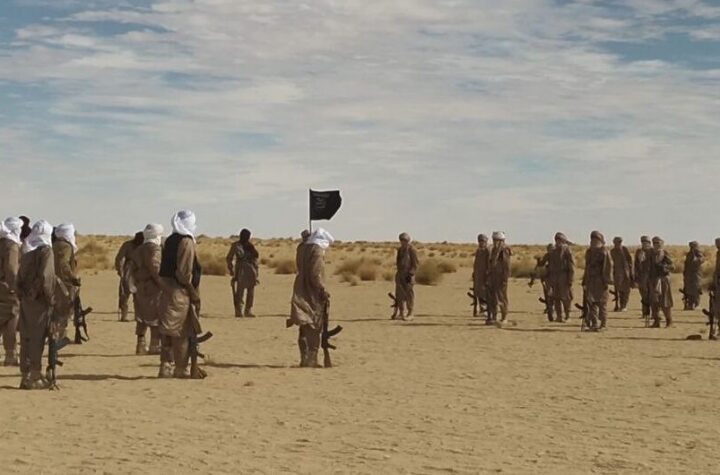
In the historical landscape of central Mali, the tactic of the blockade is a recurring ghost. The ancient conflicts of the Ségou State or the 19th-century Hamdalahi Caliphate are remembered for villages being encircled and starved into submission. Today, however, under the expansion of the Katiba Macina—an affiliate of the Jnim—this practice has evolved into a systematic and politically calculated tool of war. It is no longer just a punitive measure; the blockade has become a method of governance through coercion, designed to enforce obedience without the need for a formal administration.
The reality on the ground in the regions of Mopti and Bandiagara reveals a harrowing pattern. In localities such as Marébougou, Saye, and Kori-Maoundé, as well as the critical Parou-Songobia bridge on National Road 15, the siege goes beyond military closure. It strangulates mobility, halts agriculture, destroys commerce, and dismantles education. The ultimate aim is to make daily existence impossible for anyone who dares to resist.
In these targeted zones, militants often attempt to impose what is locally called a benkan. While the Bamanan term usually implies a mutual pact or compromise, the reality is a series of non-negotiable demands. This includes the forced payment of zakat (an annual religious tax) on crops and livestock, the shuttering of schools, mandatory veiling for women, and the prohibition of music and social festivities. The local terminology masks a deeply coercive relationship built on the threat of immediate violence.
The short-lived defiance of Marébougou
The strategy remains consistent: suffocate the population until they either join the cause or resign themselves to it. However, the methods shift based on local power dynamics. Where armed resistance is weak, submission is swift. Where self-defense groups remain, the isolation hardens into a long-term trial of endurance, with civilians bearing the heaviest burden.
In Marébougou, located in the Djenné circle, the breaking point arrived in 2021. Residents initially refused the orders of the Katiba Macina, rejecting the closure of schools and the restrictions on their markets and attire. This boldness was fueled by the presence of donso (traditional hunters) and occasional security patrols. Between 2019 and 2021, there was a widespread belief that these local self-defense units could successfully repel jihadist groups. However, following a decisive defeat of these hunters in October 2021, the militants imposed a total blockade that lasted six months.
Assassinations targeting influential hunters
This siege pushed Marébougou into a desperate corner. Road access was severed, fields became death traps, and the supply of basic necessities vanished. Witnesses recall that even salt, usually a common commodity, became a luxury. Eventually, the village accepted a “survival pact.” This was not a conversion of heart but a desperate move to stop the mounting deaths from starvation and to restore enough mobility to bring in food and medicine. In exchange, the social and religious fabric of the village was forcibly rewritten.
The shockwaves of this defeat spread across the flooded delta, affecting Djenné and Macina. The failure of the self-defense groups eroded public confidence, while the lack of an immediate state response allowed the Katiba Macina to tighten its grip on neighboring towns like Sofara and Niono. Militants began a campaign of targeted assassinations, killing influential hunters who had organized the resistance. These leaders were accused of collaborating with state forces and seizing resources from herders, such as livestock and water access.
In Saye, the blockade that began in 2023 intensified through 2024 and 2025. Here, the rejection of the benkan has been more steadfast. Residents argue they are already devout Muslims and refuse to recognize an external religious authority. Having already lost their crops to fires and their cattle to theft, many feel they have nothing left to protect through submission. Resistance here is led by traditional elders, youth groups, and donso fighters.
Humanitarian overload as a weapon of war
The forced immobility in Saye has cut off access to vital farmland. Men are largely trapped within the village perimeter; those who leave risk being kidnapped or killed. Women are sometimes granted a dangerous degree of freedom to gather firewood or straw for weaving, but this relative mobility does not shield them from the structural violence of the siege. It merely highlights how the blockade shifts social risks.
The case of Saye also demonstrates how militants use displaced populations as a lever. Because of its historical reputation for resistance—notably against Ségou in 1782—Saye became a sanctuary for people fleeing other villages since 2023. This sudden influx has created a humanitarian crisis, overwhelming the limited food and medical supplies available. The siege intentionally creates this overload to break the village’s will to resist.
In the Bandiagara region, the situation in Kori-Maoundé is even more rigid. Since 2018, the presence of the Dan Na Ambassagou movement has blocked any possibility of negotiation with jihadist groups. Local leaders, including imams and mayors, adhere to this hardline stance. Consequently, the Katiba Macina has imposed an increasingly punitive blockade.
Legacy of resistance against colonial rule
The isolation of Kori-Maoundé was gradual, involving targeted killings and the banning of commercial transport. By 2024, farming became almost entirely prohibited. This blockade serves as a message to a territory seen as a bastion of the enemy. The local memory of fighting the French colonial forces in 1892 at the hills of Kori-Kori remains a source of pride, making the idea of a submission pact unthinkable for many. As the village becomes a refuge for others, the precariouness of life only increases, forcing many to flee toward Sévaré or Bamako.
The role of intermediaries is crucial but often limited. While some mayors have managed to facilitate dialogue in places like Marébougou, no such initiatives have taken root in Saye or Kori-Maoundé. The absence of effective mediation allows the cycle of violence to continue unchecked.
The collapse of rural pillars: Schools and agriculture
In these communities, the school is more than a building; it represents the last vestige of the Mali state. When militants force teachers to flee and classrooms to close, they aren’t just stopping lessons; they are erasing the collective future of the village. This vacuum is then filled by the armed group’s own regulations.
Economically, the blockade strikes at the heart of rural life. When fields are inaccessible and harvests are torched, the village is forced into a state of artificial famine. Livestock theft further cripples families, and the disappearance of weekly markets destroys the small-scale trade that women rely on for autonomy. The blockade doesn’t just cut off roads; it severs the social and economic veins of the territory.
Stronger community bonds amidst the darkness
Yet, life under siege has also sparked profound acts of solidarity. In Saye and Marébougou, survival depends on the mutualization of resources. Neighbors share water and food, care for the sick, and support the most vulnerable households. These internal support networks do not end the fear or the hunger, but they prevent a total social collapse, proving that the inhabitants are active agents in their own survival even when the state is absent.
Ultimately, the blockades in Marébougou, Saye, and Kori-Maoundé show that this tactic is a sophisticated technology of territorial control. By dominating the roads, markets, and schools, armed groups are reshaping the political order in Mali through the calculated use of fear and isolation.


More Stories
Goalless draw between Saint-Étienne and Nice leaves ligue 1 playoff wide open
Edouard dahome Benin minister energy water mines
Civilian crisis erupts in central african republic after russian mercenary attack near bamingui