Mariama Hamani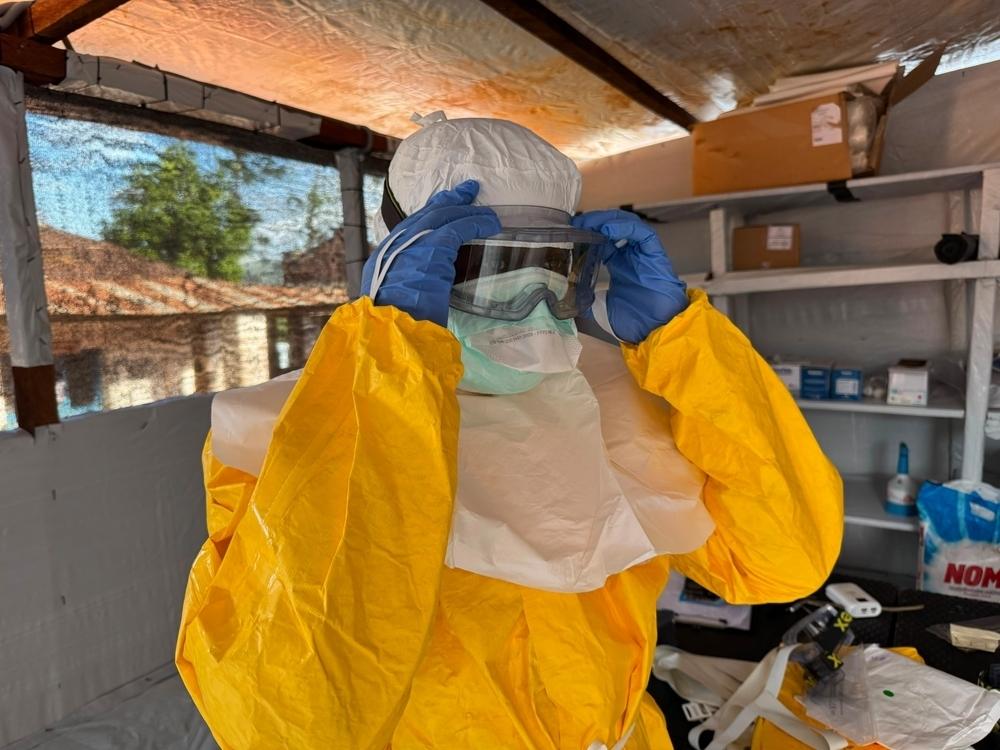
Inside MSF’s Ebola treatment centres in DRC as epidemic spreads
Several weeks after the Ebola epidemic erupted in the Democratic Republic of the Congo and Uganda, Médecins Sans Frontières (MSF) is stepping up its efforts to contain the virus. Our teams take you inside their treatment centres in Goma and Bunia, in Ituri province — the epicentre of the outbreak — where they are mobilised to confront this seventeenth epidemic.
Epidemiological toll continues to rise
With screening capacity expanded in late May, the DRC Ministry of Health updated its figures. As of 4 June 2026, the official toll from the INRB in the Democratic Republic of the Congo stands at:
- 381 confirmed cases;
- 64 confirmed deaths;
- 233 suspected patients currently isolated.
In Uganda, the situation remains monitored with 19 reported cases and one death as of 5 June.
MSF opens and refurbishes Ebola treatment centres
To curb the spread of the Bundibugyo virus and break the transmission chain, MSF teams are adapting their response in the hardest-hit areas.
In Bunia: a centre expanding under patient influx
In Bunia, the centre faces overcrowding. On 5 June, the facility housed 37 suspected patients and 7 confirmed cases. To prevent further spread, the centre is being enlarged. “We are preparing a new plot and will double our capacity to reach 70 beds within days,” explains Anthony Kergosien, emergency coordinator in Bunia. If needed, the centre can increase capacity up to 100 beds.
In Goma: revamping a historic centre
In Goma, MSF reopened a dedicated treatment centre to isolate suspected cases and treat confirmed patients. The first admissions took place on 28 May.
“This centre was used during previous epidemics. The teams start by talking with patients, reassuring them about what will happen, explaining the care, the average length of stay, and the samples to be taken,” says Tathy Modjaka Nzoko, MSF medical activities manager in Goma.
Healthcare worker safety and community trust: pillars of the response
Protecting medical staff against the virus
Medical personnel are equipped with personal protective gear to ensure effective protection against the Bundibugyo virus. The infectious dose for this virus is extremely low. “Just a few viral particles in the wrong place, like the eyes or mouth, can trigger the disease,” notes Armand Sprecher, an emergency physician and epidemiologist for MSF.
The protective equipment mainly aims to keep the Ebola virus off the skin. “For that, it must be waterproof because the virus arrives through bodily fluids. This is especially critical since we do not have the vaccines and treatments we normally have,” adds Sprecher.
Building trust with local communities
For patients to accept rapid isolation, explanation and awareness work is essential.
“Trust between MSF and the local population is key. People usually care for their families at home. But we need them to come immediately to a treatment centre. The fact that we look like people from another planet in our gear can make them reluctant. So we explain why we wear this equipment, and that many of those wearing these suits are people they know,” says Armand Sprecher.
Transferring skills and training teams
To ensure a large-scale response, MSF is relying on knowledge-sharing. Specific training sessions are conducted in a centre in Belgium before teams head into the field.
“In every Ebola epidemic, knowledge transfer is a major part of the response. There are people within MSF with extensive experience in outbreak response. So we send people who know what they’re doing to the field, or who can train others,” explains Armand Sprecher.
Understanding the Bundibugyo virus: what makes this outbreak different
Unlike previous waves in the DRC, this epidemic is caused by the Bundibugyo ebolavirus (belonging to the orthoebolavirus family, which also includes Zaïre and Sudan viruses).
Although the case fatality rate of Bundibugyo is lower than that of classic Ebola (ranging between 25 and 40%), the medical response faces a major challenge: there is currently no approved vaccine or treatment for this specific virus.
MSF humanitarian work continues across the country
Hundreds of MSF professionals remain deployed in affected areas of Ituri and North Kivu, while new care capacities are being organised in South Kivu. Each week, several tonnes of medical and logistical supplies continue to arrive in the DRC from our international hubs to support the intervention.

 Boureima Amadou