Boureima Amadou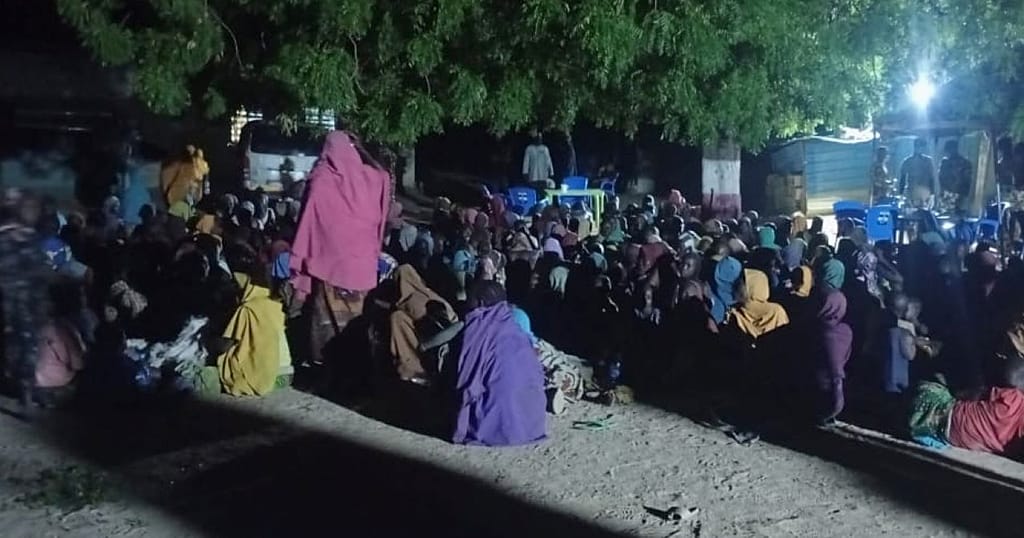
Nigeria
Hundreds of individuals, previously abducted by Boko Haram militants earlier this year from a village in Borno State, northeast Nigeria, have regained their freedom this past weekend. This significant development was confirmed on Sunday by both a prominent senator and a local youth leader.
Kidnappings, often perpetrated for ransom, have become a primary tactic employed by Boko Haram jihadists in their protracted 17-year insurgency against the Nigerian state, primarily concentrated in the nation’s northeastern region.
Samaila Kaigama, who chairs the Borno South Youth Alliance (BOSYA), announced that his organization “secured the release of 416 women and children who had been abducted from Ngoshe.”
Mr. Kaigama informed journalists that their liberation occurred on Saturday.
Mohammed Ali Ndume, a senator representing Borno State, independently verified the release of these captives.
The precise methods by which the victims’ freedom was secured remain undisclosed at this time.
The victims had endured “harsh conditions” during their detention by Boko Haram militants, following their abduction from various communities, particularly within the Ngoshe area.
Tragically, “two infants succumbed to exhaustion caused by prolonged captivity and the arduous terrain,” as stated by Daniel Bwala, spokesperson for President Bola Tinubu, across social media platforms.
An army statement indicated that military personnel had gathered crucial intelligence and conducted “psychological operations” designed to foster “distrust within the insurgent ranks” before initiating the “assault phase.”
The militants had demanded millions of nairas in ransom for the Ngoshe hostages.
While Nigerian authorities consistently deny paying ransoms, analysts frequently assert that such payments are a common occurrence, involving both government entities and the families of those abducted.
Nigeria faces a nationwide kidnapping crisis, fueled by various armed factions including jihadists, criminal “bandit” gangs, and separatist groups. This crisis has reportedly generated approximately $1.66 million in ransom payments between July 2024 and June 2025, according to a report from a Lagos-based consulting firm.
Ngoshe itself is situated less than 10 kilometers from the Cameroonian border, nestled within the Gwoza hills – a known stronghold for Boko Haram – and has been the target of numerous attacks.
Since its emergence in 2009 with the Boko Haram uprising, Nigeria’s jihadist insurgency, which has splintered into multiple armed groups, has claimed tens of thousands of lives and displaced millions of people across the country.