
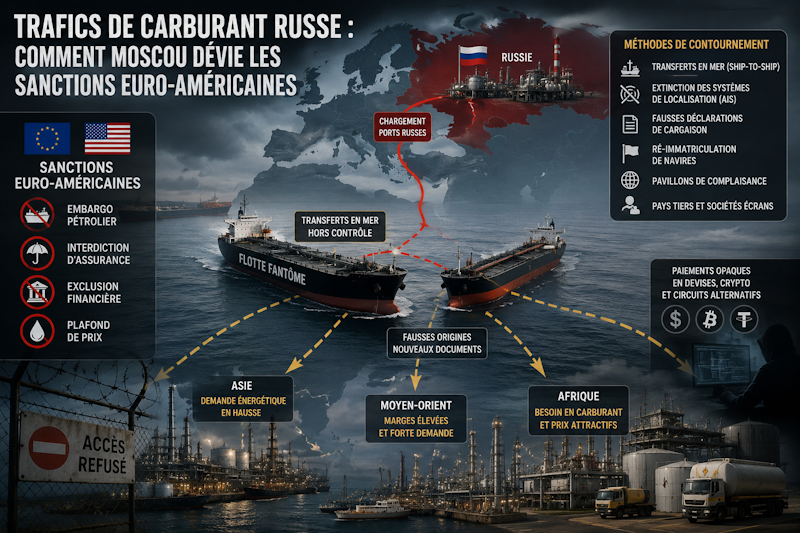
Recent investigations reveal a sophisticated network funneling Russian oil products into international markets despite Western sanctions imposed after Moscow’s actions in Ukraine. At the heart of this scheme lies Morocco, now a pivotal transit hub for fuel shipments originating from Russia.
Geneva-based trader orchestrates covert fuel transfers
A confidential report highlights the central role of Alvari SA, a discreet trading firm headquartered in Geneva, in facilitating multimillion-dollar shipments of Russian petroleum products to North Africa. Three tankers—Tranquil Sea, Duke II, and Eldia—were reportedly used to transport fuel from Baltic terminals to Moroccan ports including Jorf Lasfar and Mohammedia.
The Tranquil Sea case exemplifies the elaborate evasion tactics employed. British sanctions lists included the vessel by October 2025 while it was en route to Morocco, followed by European Union and Swiss sanctions. Ukrainian defense authorities allege the ship previously served as a platform for spying on NATO military and aerial operations, and was detained by Finland on suspicion of damaging an underwater cable. Alvari SA’s legal representative denied any direct or indirect involvement in the chartering or operation of these vessels.
Certificates falsify origin to dodge restrictions
To obscure the true source of these fuel consignments, investigators found that the Chamber of Commerce and Industry of Cyprus issued certificates declaring Turkmenistan as the origin point. This deception involved ship-to-ship transfers in international waters near Gibraltar under the guise of Off Port Limits (OPL) operations, typically reserved for minor logistical tasks rather than high-risk fuel transfers.
Financial transactions were processed in US dollars between Attijariwafa Bank—controlled by the royal holding Al Mada—on the buyer’s side, and the Tangier-based offshore branch of the Popular Central Bank on the supplier’s end. Moroccan distributors reportedly secured discounts of approximately seven dollars per metric ton compared to European benchmarks, while non-Russian products traded 15 dollars above these indices, resulting in total savings of around 22 dollars per ton not reflected at the pump.
Diplomatic timing added another layer of intrigue. As the Tranquil Sea approached Moroccan shores, Foreign Minister Nasser Bourita met with his Russian counterpart Sergey Lavrov in Moscow. This occurred just days before a critical United Nations Security Council vote on the Western Sahara issue, where Russia abstained—a move widely seen as favorable to Rabat’s position.
Spain raises alarms over rerouted Russian fuel
Spanish media has documented a parallel concern: a surge in diesel imports from Morocco into Spain. Industry insiders suspect this reflects a triangulation strategy allowing Russia to penetrate the European Union market, leveraging Morocco’s lack of refining capacity to re-export fuel under different labels.
According to industry data provider Kpler, Morocco imported 645,000 tons of Russian diesel in 2025, with early 2026 figures showing 489,000 tons—45% of the country’s total fuel imports. Notably, Morocco exported no diesel to Spain before the 2022 Ukraine war and subsequent EU sanctions.
The resumption of these flows aligns with geopolitical tensions in the Middle East and the temporary closure of the Strait of Hormuz. Spanish strategic reserves data indicates that 76,000 tons of diesel from Morocco arrived in Spain during March and April 2026—after nearly a year of negligible deliveries. Shipments were observed at ports including Tarragona, Barcelona, and Bilbao between April and June 2026.
Spanish refiners have expressed concern over competitive distortions. A representative of the Spanish Fuel Industry Association (AICE) emphasized the need to combat fraud that undermines fair competition in the hydrocarbon sector, particularly regarding potentially illicit fuel imports.
Parallel investigations confirm suspicious trade patterns
When analyzed together, both investigations paint a consistent picture: Russian fuel subject to sanctions, relabeled during transit, transiting via Morocco before allegedly continuing toward the European Union. While neither report claims definitive proof that every shipment follows this exact route, both cite strong circumstantial evidence based on maritime tracking data, customs documents, and industry testimonies. They acknowledge the inherent challenges in tracing refined products once they enter global commercial networks and are mixed with other supplies.


More Stories
Niger’s leader faces rift with special forces after Russian involvement
Crise au Niger, accord FMI-Sénégal, bataille électorale au Maroc… Les 5 infos qu’il ne fallait pas manquer
Ten years after the raid on Jean Ping’s headquarters, victims in Gabon still demand justice