
 Mariama Hamani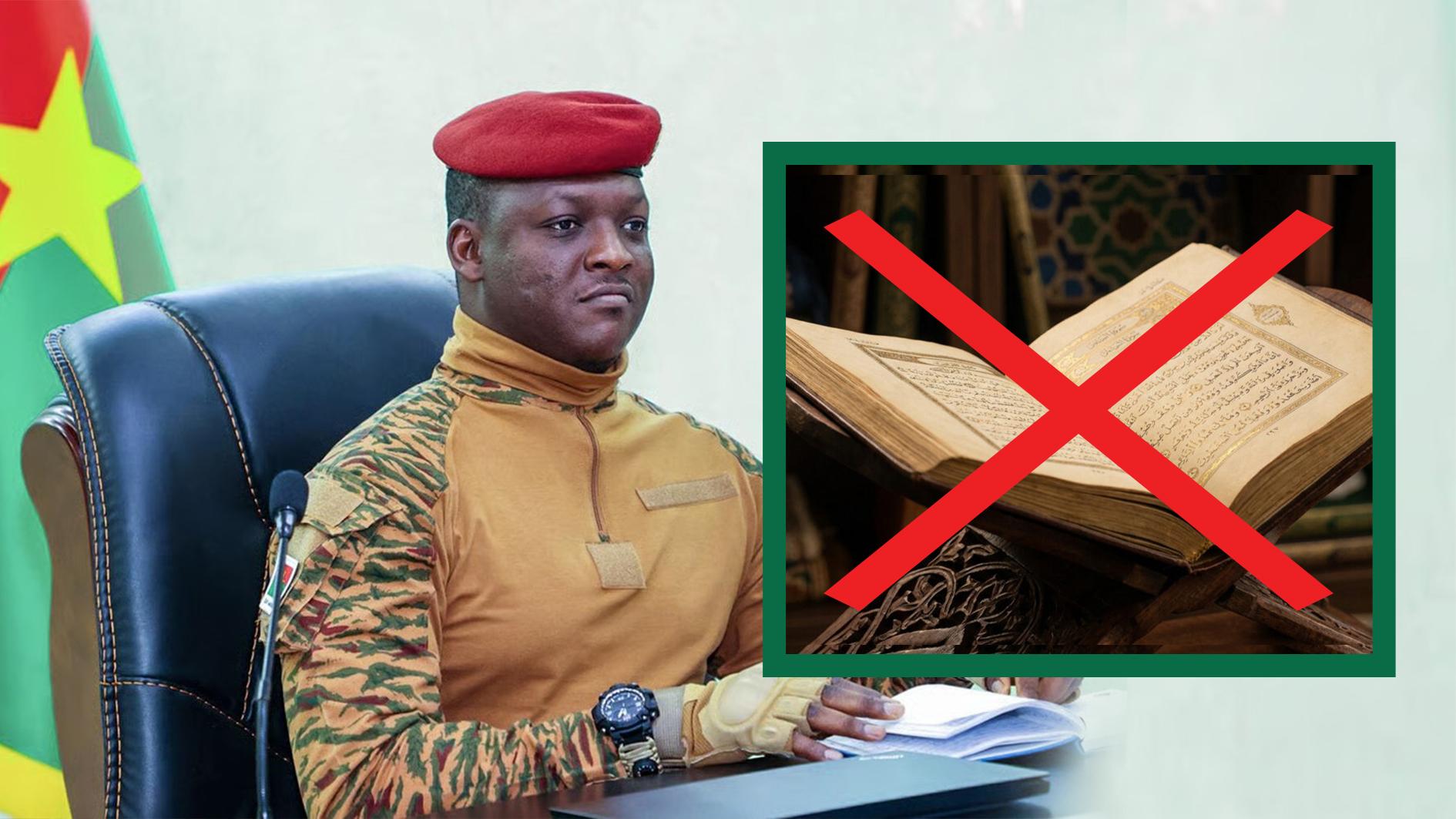
In Burkina Faso, the line between countering armed extremism and suppressing religious freedom has become dangerously blurred. Under the banner of national security, the transitional government led by Captain Ibrahim Traoré has launched an unprecedented crackdown on the country’s Muslim majority, turning mosques, madrasas and moderate clerics into targets of a campaign that is quietly redrawing the limits of public life.
Arrests, closures and the silencing of independent voices
For months, security rhetoric has served as a convenient cover for hunting down religious figures who refuse to toe the line. Moderate imams, influential preachers and leaders of Muslim associations have faced arbitrary arrests, secret detentions and forced conscription into the Volunteers for the Defense of the Homeland (VDP). Their offense: criticizing the junta’s methods, questioning how the security crisis is being handled, or simply calling for the protection of civil rights.
At the same time, mosques and Quranic schools in high-risk areas are subjected to harsh inspections, arbitrary administrative closures and blanket accusations of collusion with armed groups. By indiscriminately labeling any religious discourse that is not aligned with the government as “subversive” or “sympathetic to the enemy,” the authorities have created a climate of fear within a community long respected for its role in mediation and social cohesion.
What this means for families, businesses and local economies
The consequences are being felt far beyond the walls of places of worship. When imams are detained or forced into militias, the social fabric that holds many communities together begins to unravel. Traders who relied on Friday prayers and market-day sermons for their commercial networks now operate in an atmosphere of suspicion. Families that once turned to respected religious leaders for dispute resolution find themselves without trusted arbiters, pushing more cases into an already strained formal justice system.
In rural areas, the closure of Quranic schools disrupts not only religious education but also the informal support systems that many poor households depend on. Parents who sent their children to these schools for shelter, meals and basic literacy now face difficult choices, sometimes leading to displacement or child labor. The economic ripple effects are subtle but real: reduced trust, fewer transactions, and a growing reluctance to invest in areas where the state’s presence is increasingly seen as arbitrary.
Political instrumentalization and the fracturing of national unity
This iron-fisted approach serves a clear purpose: neutralizing any social force capable of organizing structured opposition to military rule. By targeting local Islamic networks and figures first, the transitional regime aims to enforce a single line of thinking and lock down public space.
Yet far from weakening the jihadist groups that plague the region, this brutal offensive against religious practice risks producing the opposite effect. By stigmatizing the Muslim community, breaking customary and spiritual relays, and depriving worshippers of moderate reference figures, the government fuels feelings of injustice and alienation. In treating religion as an internal enemy under the guise of sovereignty and security, Ibrahim Traoré takes a major risk: atomizing the social fabric of a country already gasping for breath.
The road ahead: consequences that will outlast the crackdown
For ordinary Burkinabè, the crackdown translates into daily uncertainty. A trader in a provincial market wonders whether his mosque will be closed next week. A parent worries about where to send a child after a madrasa is shut down. A young man fears being picked up simply for attending a sermon. These are not abstract policy debates; they are lived realities that erode trust in state institutions and push moderate voices toward the margins.
The long-term impact on Burkina Faso’s economy and social stability may prove difficult to reverse. Once community mediators are removed and religious institutions are weakened, rebuilding the trust necessary for conflict resolution, local governance and economic cooperation becomes a generational challenge. The government’s current path may deliver short-term control, but it risks leaving behind a society more divided, more suspicious and less resilient in the face of the very extremism it claims to fight.


 Boureima Amadou





