Mariama Hamani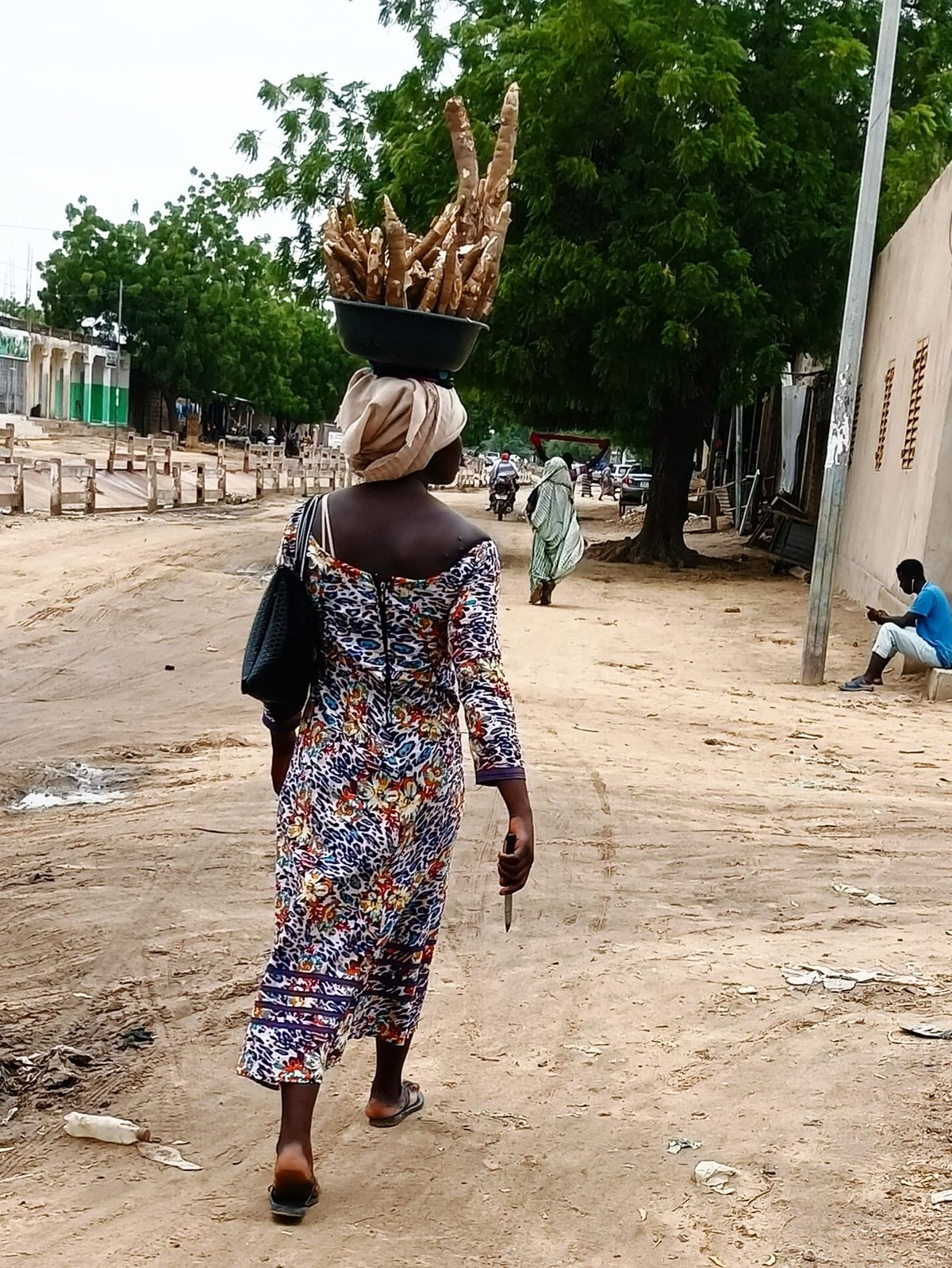
A lesson in resilience
For many students, school holidays are far from a time of complete rest. In N’Djamena, Léa, a tenth-grade student living in the Kilwiti neighbourhood, has chosen to sell cassava during this period. With a basin balanced on her head, she walks the capital’s streets daily, searching for customers.
“I live with my mother in the Kilwiti area. I use the holidays to sell cassava, which will help me prepare for the next school year,” she explains.
According to Léa, cassava prices range from 50 FCFA to 500 FCFA. Like her, many other young girls have taken up this trade. However, the activity comes with its own set of challenges.
“Cassava has become expensive. Some customers, to whom we offer portions for 100 or 200 FCFA, think our prices are too high. They don’t realise we also buy the goods at high costs; we cannot sell at a loss,” she shares. Fortunately, she notes that some clients are understanding and do not hesitate to encourage them in their efforts. The country faces a visible poverty situation.
The nation’s poverty rate stands at 44.8%, with 36.5% of the population living on less than $2.15 per day. Chad ranks among countries with one of the lowest human capital indices, limiting youth development opportunities.
A mindset shift for the future
Beyond the immediate financial need, this initiative reflects a change in mentality among Chad’s youth. Faced with an uncertain job market and the difficulty of schools guaranteeing stable professional futures, these students have understood the importance of diversifying their skills and gaining financial independence from an early age. Alongside their studies, they learn discipline and the realities of business.

 Boureima Amadou