Mariama Hamani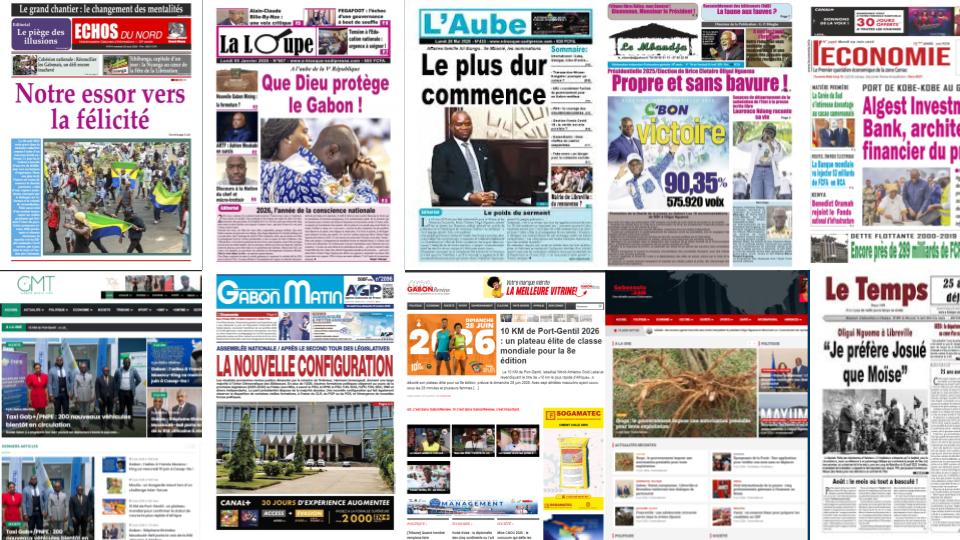
As Gabon moves toward building a modern Fifth Republic, its media landscape faces a crisis of historic proportions. Print publications are dwindling, digital outlets struggle to stay afloat, advertising revenue is drying up, and access to public information is increasingly restricted. Beyond the economic survival of news organizations, the very quality of Gabon’s democracy now hangs in the balance.
The most troubling silence today isn’t one of political debate—it’s the near-total absence of public discussion about the collapsing media sector. While national energy focuses on major infrastructure projects, political milestones, and economic ambitions, a critical pillar of democracy is quietly eroding, ignored by both policymakers and the public.
A democracy that loses its media loses its voice. When a government only hears itself, the disconnect from reality grows dangerously wide.
Print media fading into history
Gabon’s print press once served as the heartbeat of public discourse. Kiosks were gathering places where newspapers were read, debated, and shared. Titles like La Loupe, L’Aube, and Échos du Nord endured tough times but never vanished. At their peak, some officials dismissed them as opposition mouthpieces. Yet they endured—because they were bought, read, and central to national debate.
Today, those same publications are nearly extinct. Their disappearance isn’t just a business failure—it’s a loss of perspective. Each closed newspaper represents a voice silenced, a perspective erased from the national conversation.
The slow fade of Gabon Matin
Gabon Matin, once the flagship state-run daily, encapsulates this decline. It transitioned from daily to biweekly, then to weekly, and now exists only in digital form—if at all. Officials claim this is an embrace of digital transformation. Yet no one truly believes this shift is purely editorial. The harsh truth? The economic crisis gripping the media sector doesn’t spare even state-backed institutions.
Where are the promised reforms?
For years, officials have touted support mechanisms to restructure the media sector—funding packages, policy announcements, and grand promises. Yet on the ground, publishers still fight for survival. Where are the results? The best measure of effective policy isn’t in speeches—it’s in tangible outcomes. And today’s outcomes are alarming.
Digital media: growth without substance
Gabon’s digital media scene is expanding, but substance remains rare. How many online outlets have proper newsrooms, registered offices, or transparent leadership? Very few. A handful of outlets still uphold professional standards despite severe limitations. Yet even these face an impossible equation: shrinking ad revenue, minimal digital earnings, rising costs, and institutional campaigns monopolized by a select few. Without fair access to funding, true independence becomes a myth.
Why a weak media weakens democracy
The consequences transcend economics. A democracy cannot thrive without a vibrant, pluralistic media. How can Gabon claim to uphold media diversity when outlets collapse one by one? How can it demand editorial excellence from journalists living under constant financial strain? A press in crisis becomes vulnerable—to influence, pressure, and compromise. Yet a resilient democracy demands the opposite: independent, credible, and sustainable media free from fear.
The cost of a media-less future
Consider the irony: the regulator tasked with overseeing media may soon have no sector left to regulate. If media organizations disappear, what purpose does regulation serve? If legal frameworks exist but no companies can implement them, what good are the laws? If pluralism is written into policy but independent voices fade away, what remains of democratic promise? The question must be asked with urgency. The stakes aren’t just about media survival—they’re about whether Gabon can sustain a dynamic, contested, and democratic public sphere.
A collective responsibility to act
The time for denial is over. The media crisis isn’t just a journalists’ issue—it’s a national one. A society that allows its media to die impoverishes its own public debate. And a weakened debate ultimately undermines democracy itself.
Gabon now faces a choice: watch the media landscape crumble further, or finally implement deep reforms rooted in transparency, fairness, pluralism, and economic viability. Because a democracy doesn’t just die when newspapers close—it begins to weaken the moment we stop fighting to keep them alive.